
Why Compostable Dog Poop Bags Matter for Pet Owners and the Planet
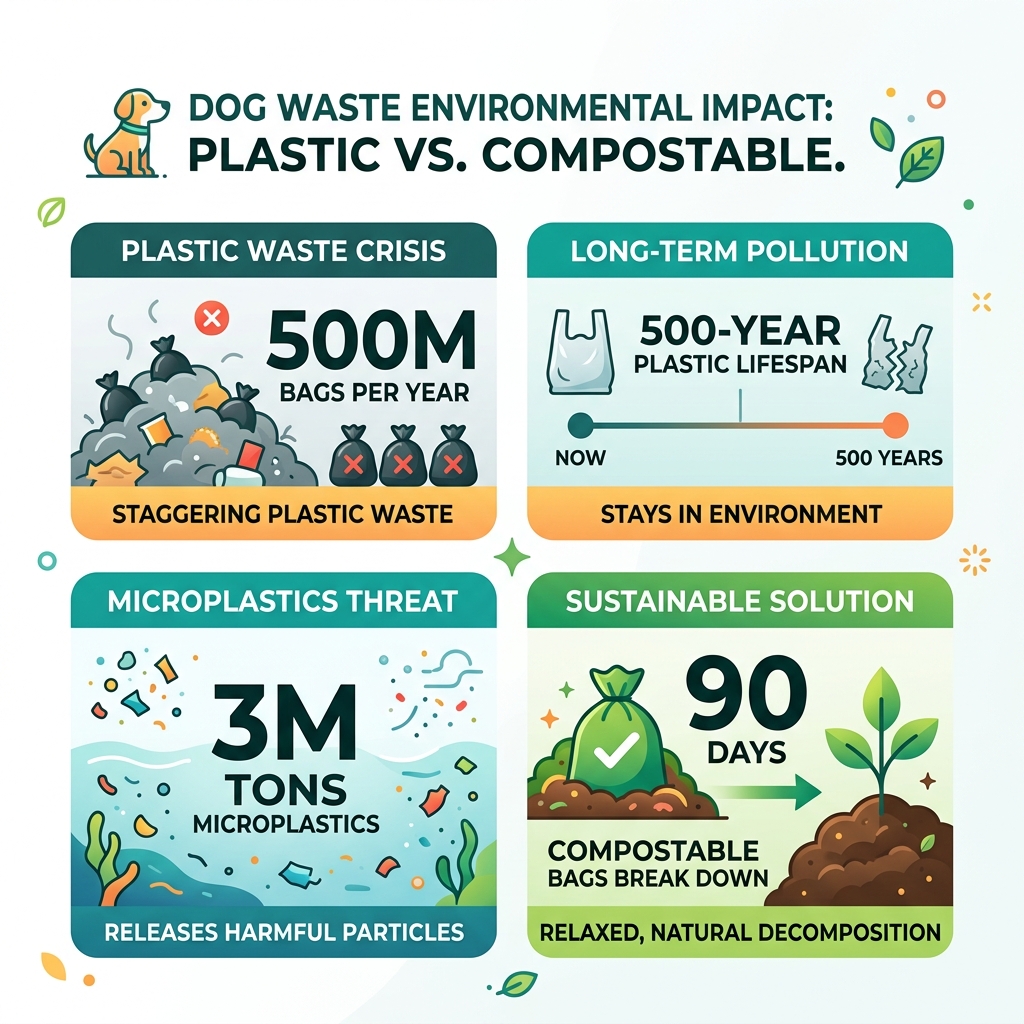
Compostable dog poop bags are plant-based waste bags designed to break down into water, CO₂, and nutrient-rich matter — instead of sitting in a landfill for 500 years like traditional plastic bags.
Quick answer: Best eco-friendly dog waste bags to look for:
- Certified compostable bags (look for ASTM D6400 or EN 13432 certification)
- Plant-based materials like PLA, PBAT, or cornstarch
- Home compostable options if you have a backyard compost setup
- Landfill-friendly bags (65%+ recycled plastic) if composting isn’t available to you
Here’s a number that’s hard to ignore: picture one thousand football fields, each filled one foot deep with dog poop. That’s how much waste American dogs produce every single year.
And right now, 500 million plastic pet waste bags enter landfills annually. Each one takes over 500 years to degrade. Along the way, plastic bags fragment into microplastics — contributing to the 3 million tons of microplastics released into the environment every year. Over 1 million marine animals die from plastic pollution each year.
The good news? Switching to compostable bags is one of the smallest changes you can make with a surprisingly large impact.
This guide breaks down which bags actually work, what certifications to trust, and how to dispose of them correctly — so your eco-switch isn’t wasted effort.
Understanding Compostable Dog Poop Bags and Certifications
When we talk about compostable dog poop bags, we aren’t just talking about “green-colored plastic.” True compostable bags are a feat of modern chemistry. Unlike traditional polyethylene (PE) bags derived from petroleum, these eco-warriors are crafted from biological building blocks.
The Science Behind the Bag
Most high-quality compostable options use a blend of three primary ingredients:
- PLA (Polylactic Acid): Usually derived from fermented plant starch like corn or sugarcane.
- PBAT (Polybutylene Adipate Terephthalate): A biodegradable polymer that provides the flexibility and “stretch” we need so the bag doesn’t snap mid-pickup.
- Cornstarch: Acts as a natural filler that helps the bag break down once it hits the right microbial environment.
These materials are designed to be consumed by microorganisms. Under the right conditions, they don’t just “disappear”—they turn into nutrient-rich soil, water, and carbon dioxide.
Certifications: Your Shield Against Greenwashing
You might see bags labeled “biodegradable” or “earth-friendly,” but without a certification seal, those words are often just marketing fluff. We always look for these specific gold standards:
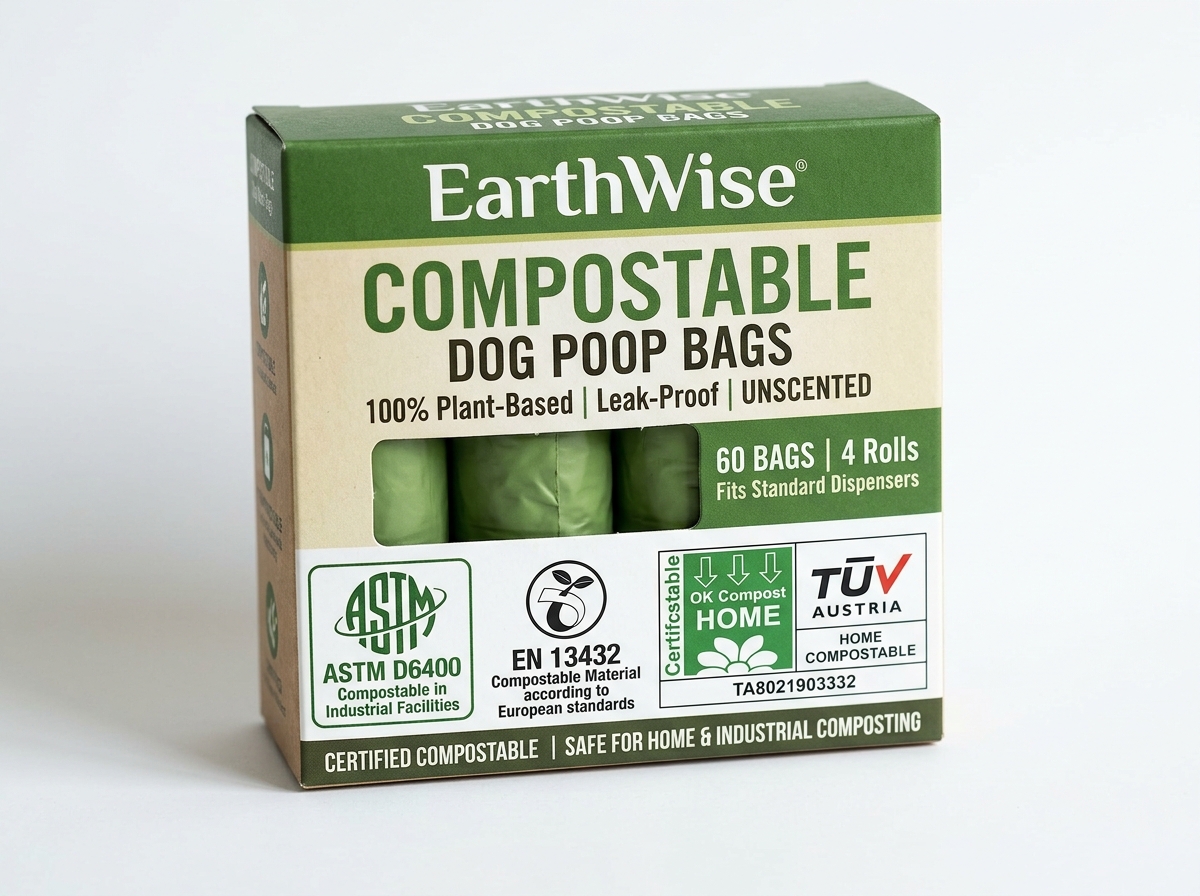
- ASTM D6400 (USA): This is the industry standard for compostable plastics in the United States. It ensures the bag will break down in a commercial composting facility within a specific timeframe.
- EN 13432 (Europe): The European equivalent, ensuring the material leaves no toxic residue behind.
- TÜV Austria OK Compost Home: This is a crucial one for backyard enthusiasts. It means the bag can break down at lower temperatures, like those found in a home compost pile, rather than needing the high heat of an industrial facility.
- ASTM 5511-02 standards for PE film biodegradation: This standard is often cited for bags engineered to break down specifically in landfill conditions.
If you are just starting your journey into waste management, we recommend checking out our composting-guide-for-beginners to see how these materials fit into a broader sustainable lifestyle.
The Environmental Impact of Traditional vs. Eco-Friendly Bags
It is easy to think, “It’s just one little bag,” but when we multiply that by the millions of dogs in our communities, the math gets scary. Traditional plastic bags are essentially “forever” products used for a five-minute task.
| Feature | Traditional Plastic Bags | Biodegradable Bags | Compostable Dog Poop Bags |
|---|---|---|---|
| Material Source | Petroleum/Fossil Fuels | Often Plastic + Additives | Plant-based (Corn, PLA) |
| Degradation Time | 500+ Years | Variable (can be years) | 90 – 180 Days |
| End Product | Microplastics | Microplastics | Nutrient-rich Humus |
| Marine Safety | High Risk (Ingestion) | Moderate Risk | Low Risk |
| Methane Impact | High in Landfills | High in Landfills | Low (if composted properly) |
Traditional bags contribute heavily to the 3 million tons of microplastics released into our soil and waterways every year. These tiny particles eventually climb the food chain, ending up in the wildlife we love and even in our own food. By choosing compostable dog poop bags, we are actively choosing to keep these toxins out of the ecosystem. For more ways to swap out plastic, see our list of eco-friendly-alternatives-to-plastic.
How to Properly Dispose of Your Waste Bags
This is where many well-intentioned pet parents get tripped up. Buying the bag is only half the battle; how you toss it matters just as much.
Industrial vs. Municipal Composting
In a perfect world, we would all toss our bags into a municipal “green bin.” However, reality is a bit more complicated. Currently, very few industrial waste management facilities in North America accept pet waste. In fact, only a handful of cities (like Nantucket, MA and Brattleboro, VT) have the infrastructure to handle the pathogens found in dog poop at a commercial scale.
If your local facility doesn’t accept pet waste, do not put it in the yard waste bin! This can contaminate entire batches of compost meant for local farms.
Anaerobic Digestion and Landfills
If you must use the regular trash, some bags are “landfill-friendly.” These are often made with a percentage of recycled plastic and organic additives that help them break down in the oxygen-poor environment of a landfill in about 5 years, rather than 500. While not as ideal as composting, it’s a significant improvement for urban dwellers.
Best Practices for Home Composting Compostable Dog Poop Bags
If you have a backyard, you can manage your dog’s “contributions” yourself! But remember: dog waste contains pathogens like E. coli and roundworms.
- The 90-Day Rule: Most certified compostable dog poop bags will break down in about 90 days in a well-managed pile.
- Carbon-to-Nitrogen Ratio: Dog poop is high in nitrogen. To keep the pile healthy and smell-free, you need to balance it with plenty of “browns” (carbon), such as dried leaves, sawdust, or shredded cardboard.
- Temperature Requirements: To kill off harmful bacteria, a compost pile needs to reach high temperatures (around 140°F).
- Non-Edible Use Only: Never, ever use dog-waste compost on your vegetable garden or fruit trees. Keep that nutrient-rich soil for your flower beds, shrubs, or lawn.
For a deeper dive into setting up your first bin, our a-composting-guide-for-beginners is a great resource. We also have tips on minimizing-plastic-use-at-home that can help you streamline your entire waste system.
Choosing Durable and Leak-Proof Compostable Dog Poop Bags
We’ve all been there: the dreaded “finger poke-through.” Early versions of eco-friendly bags were notoriously thin, but today’s tech has changed the game.
- Micron Thickness: Look for bags that are at least 17 to 20 microns thick. This is the “heavy-duty” zone that ensures the bag is leak-proof and odor-resistant.
- Tensile Strength: High-quality PBAT blends offer great elasticity. If the bag feels slightly “silky” or “soft,” that’s usually a sign of a good plant-based polymer blend.
- Shelf Life: Because these bags are designed to break down, they do have an expiration date! Most should be used within 12 months of purchase. Store them in a cool, dry place to prevent them from starting to degrade in the box.
- Water-Based Inks: Check if the branding on the bag is printed with water-based or soy-based inks to ensure no heavy metals are being added to your compost.
Switching to these durable options is a fantastic way to support ways-to-reduce-packaging-waste in your daily routine.
Common Misconceptions and Greenwashing in Pet Waste Products
The “green” market is unfortunately full of confusing terminology. Let’s clear the air.
“Biodegradable” vs. “Compostable”
This is the big one. All compostable items are biodegradable, but not all biodegradable items are compostable.
- Biodegradable simply means a material will eventually break down by biological means. Even some plastics are labeled this way if they have additives that make them fragment. The problem? They often just turn into microplastics.
- Compostable means the item will break down into organic matter in a specific timeframe and leave no toxic residue. This is the only label we truly trust for pet waste.
The Oxo-Degradable Myth
Avoid bags labeled “oxo-biodegradable.” These are traditional plastics with a chemical additive that causes the bag to shatter into tiny pieces when exposed to sunlight or heat. It doesn’t actually “go away”—it just becomes invisible microplastic pollution faster.
Landfill-Friendly Claims
Some brands use “Eco-Accelerated” technology. This is often a middle-ground solution for those who cannot compost. These bags are often made of 65% recycled post-consumer plastic and are engineered to be “eaten” by microbes in a landfill environment within 5 years. While better than standard plastic, they aren’t meant for your compost bin.
When shopping, look for eco-friendly-packaging-ideas like FSC-certified cardboard boxes and rolls without plastic cores.
Frequently Asked Questions about Eco-Friendly Disposal
Do compostable dog poop bags break down in regular landfills?
This is a bit of a “yes and no” situation. Landfills are designed to be anaerobic (oxygen-free) tombs. They are compacted so tightly that even an organic banana peel can take years to decompose. While compostable dog poop bags are more likely to break down than plastic, they still need moisture, heat, and oxygen to do their job efficiently. In a landfill, they may break down very slowly and can produce methane gas in the process. This is why home composting or specialized pet waste digesters are always the “gold standard.”
What is the cost comparison between eco-friendly and plastic bags?
We won’t sugarcoat it: compostable bags are more expensive to manufacture than petroleum-based ones.
- Traditional Plastic: Often costs around $0.02 per bag.
- Compostable Bags: Usually range from $0.05 to $0.10 per bag.
However, you can bridge this gap with bulk pricing and subscriptions. Buying a 6-month or year-long supply at once can drop the price significantly. Plus, when you factor in the “long-term environmental cost”—the price of cleaning up microplastics and the loss of marine life—the extra few cents per walk feels like a very small investment in our planet’s future.
Conclusion
At Refugio do Jardim, we believe that sustainable pet ownership shouldn’t be a chore—it should be a natural part of the bond we share with our dogs. Choosing compostable dog poop bags is a powerful statement. It says that we care about the trails we walk on, the oceans our dogs splash in, and the world we will leave behind.
Whether you are building a backyard poop digester or simply switching to a certified plant-based bag for your daily walks, you are part of the solution. Every bag that turns into soil instead of a 500-year plastic ghost is a win for the Earth.
Ready to upgrade your walking kit? Explore our curated selection of Sustainable Products and join us in making the world a little cleaner, one scoop at a time.
