
Why a Rainwater Harvesting System Setup Is Worth Your Attention
A rainwater harvesting system setup is one of the most practical steps you can take toward sustainable living — and it’s simpler than most people think.
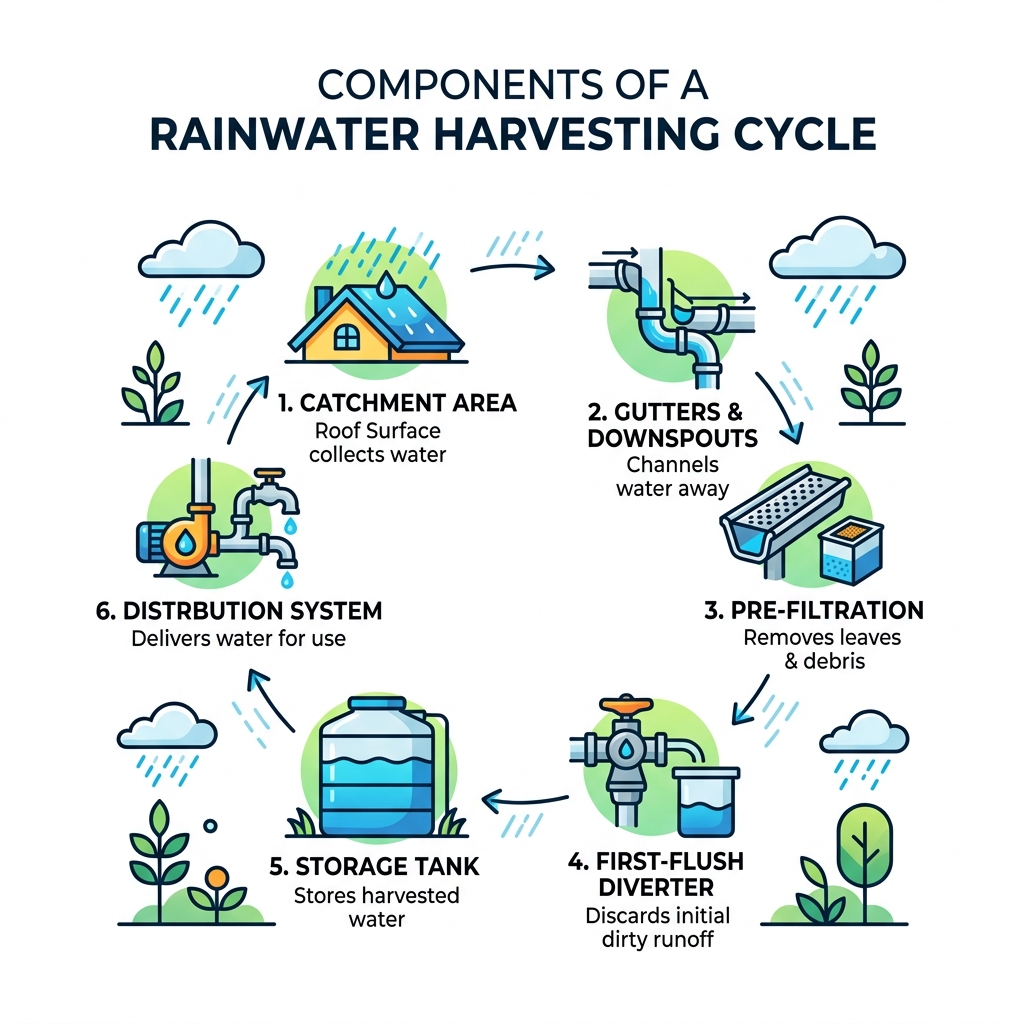
Here’s the quick version of how to set one up:
- Assess your roof — Calculate how much rain you can collect (roof area × rainfall inches × 0.623 = gallons)
- Clean your gutters — Remove debris and add leaf guards
- Install a first-flush diverter — Discards the initial dirty runoff before it reaches your tank
- Choose a storage tank — Size it based on your monthly water needs and local rainfall
- Add filtration — Sediment filters for irrigation; UV and carbon filters for indoor use
- Set up distribution — Gravity-fed spigot or pump system depending on your pressure needs
- Maintain regularly — Clean screens every 2-3 months, gutters every 6 months
A 2,000-square-foot roof can produce around 30,000 gallons of rainwater annually — that’s water that currently runs straight off your property and into the storm drain.
Whether your goal is cutting your water bill, reducing your environmental footprint, or simply being more self-sufficient, collecting rainwater is one of those rare green upgrades that pays for itself in real, measurable ways. And you don’t need to overhaul your home to do it.
This guide walks you through every step — from planning and component selection to installation and long-term maintenance — in plain language, without the overwhelm.
Planning Your Rainwater Harvesting System Setup
Before you start digging holes or buying massive tanks, we need a game plan. A successful rainwater harvesting system setup starts with a site assessment. We look at three main things: where the water comes from (catchment), how much of it actually makes it to the pipe (runoff coefficient), and how much the sky actually provides (annual precipitation).
Think of your roof as a giant funnel. Not all of that water is “catchable.” Some evaporates, some splashes out of the gutters, and some is absorbed by the roofing material itself. This is why we use a “collection factor” or efficiency rating, typically between 75% and 90%. To get started, you should check your local rainfall data to see what you’re working with on a monthly basis.

Calculating Your Harvesting Potential
Math can be scary, but this formula is your best friend for a rainwater harvesting system setup. The “magic number” is 0.623. For every 1 inch of rainfall, you can collect 0.623 gallons of water per square foot of roof area.
If you have a 1,000-square-foot roof and it rains 1 inch, you’re looking at about 623 gallons of water. If you want to get precise, you can estimate your potential yield with this calculator. Remember to multiply your total by an efficiency factor (like 0.80) to account for wind and gutter splashing. In places like San Antonio, a 2,000-square-foot roof can yield a staggering 30,000 gallons a year!
Determining Optimal Storage Tank Size
Size matters, but bigger isn’t always better if you don’t have the space or the rain to fill it. To find your “Goldilocks” tank, look at your monthly usage. Does your family use 2,000 gallons a month for the garden? How long is your typical dry period?
A good rule of thumb for beginners is the “1 gallon per square foot” rule. If you have a 1,500-square-foot roof, a 1,500-gallon tank is a great starting point to bridge the gap between rain events. You can also check U.S. household water use statistics to see how much you might need for indoor tasks like flushing toilets or laundry.
Essential Components for a High-Performance System
A professional-grade rainwater harvesting system setup is more than just a barrel under a spout. It’s a series of four main parts: the catchment surface (your roof), the conveyance system (gutters and pipes), the storage (the tank), and the distribution (pumps or gravity). When these work together, you’re well on your way to creating an eco-friendly home.
Preparing the Roof and Gutters for Rainwater Harvesting System Setup
Your roof material dictates what you can do with the water. Metal roofs are the “gold standard” because they are smooth and non-absorbent. If you have asphalt shingles, be aware they can leach toxins and grit, making the water less ideal for vegetable gardens and definitely not for drinking without extreme filtration.
Ensure your gutters are sloped toward the downspouts (about 1/16 inch per foot) and install high-quality leaf guards. Keeping the big stuff out early makes the rest of the filtration much easier. If you’re looking to use this water for a drought-resistant landscape, clean gutters are your first line of defense.
Filtration and First-Flush Diversion
Here is the secret sauce: the first-flush diverter. When it starts raining, the first few gallons of water wash off all the bird droppings, dust, and pollen that settled on your roof. We don’t want that in your tank!
A diverter acts as a “waiting room.” It fills up with that first bit of dirty water (usually about 1 to 2 gallons per 100 square feet of roof) and then seals off, allowing the clean water to flow into your tank. For high-quality water, we recommend using rain heads with stainless steel mesh and sediment traps. Scientific research on catchment contaminants shows that these simple mechanical steps can remove the vast majority of pollutants before they ever reach storage.
Selecting and Installing Your Storage Tank
The tank is the heart of your rainwater harvesting system setup. You have options: slimline tanks for tight spaces, massive 5,000-gallon cisterns, or even repurposed food-grade IBC totes. Whatever you choose, make sure it is opaque (dark-colored) to block sunlight and prevent algae growth. If you’re looking for sustainable home renovation tips, choosing a high-quality UV-stabilized polyethylene tank is a smart, long-term investment.
Gravity-Fed vs. Pump-Driven Distribution
How do you get the water out? If your tank is sitting higher than your garden, gravity might do the work for you. However, if you want to run sprinklers or drip emitters, you’ll likely need a pump. Most drip irrigation systems require a consistent 30 psi of pressure to work correctly. Solar pumps are a fantastic off-grid option, but always ensure you have a backflow prevention device to keep your harvested water from accidentally entering the municipal lines.
Site Safety and Structural Considerations
Water is heavy. A full 1,000-gallon tank weighs over 8,000 pounds! You cannot just plop that on the grass. You need a level, stable base—usually a reinforced concrete pad or a compacted gravel frame. Most residential soils are presumed to handle about 2,000 lb/sq ft, so always calculate your load first.
Safety also means placement. Keep tanks at least 24 inches away from any structure and 3 feet from property lines. And if you live in a shaky area, don’t forget earthquake safety for barrels—securing them with straps or chains can prevent a disaster during a tremor.
Advanced Treatment and Potable Rainwater Harvesting System Setup
Can you drink it? Yes, but it requires a “belt and suspenders” approach to safety. To meet potable standards, you need multi-stage filtration. This usually includes a 5-micron sediment filter followed by a 3.0-micron filter (which must remove 99% of particles that size) and finally UV sterilization or chlorine treatment to kill bacteria.
The Texas Manual on Rainwater Harvesting is an excellent resource for anyone going this route. It details the rigorous testing required, including daily water quality checks, to ensure your family stays safe.
Long-Term Maintenance and Legal Compliance
A rainwater harvesting system setup isn’t a “set it and forget it” project. It needs a little love to stay efficient.
- Every 2-3 months: Check and clean your tank screens.
- Every 6 months: Clean gutters, downspouts, and your first-flush diverter.
- Annually: Inspect the tank for sediment buildup (usually 2mm to 2 inches per year) and check all pump seals.
Regular maintenance is part of sustainable renovation that ensures your system lasts the 15 to 30 years it’s designed for.
Navigating Permits and Financial Incentives
Before you buy your tank, check your local laws. Some states offer amazing perks! In Texas, for example, you can use the Texas Sales Tax Exemption Form to save money on your equipment. Many cities also offer rebates or property tax exemptions for water conservation. You might even win a “Rain Catcher Award” for your efforts!
Frequently Asked Questions about Rainwater Harvesting
Can I use harvested rainwater for drinking?
Yes, but only with professional-grade filtration and disinfection. This involves sediment filters, carbon blocks, and UV sterilization to ensure all pathogens are removed. You must also check your local health codes, as some areas have specific rules about “dual-plumbed” homes.
How do I prevent mosquitoes in my rain barrel?
Mosquitoes only need a tiny bit of standing water to breed. The key is using mesh screens with openings smaller than 1mm on every entry and exit point. Some people also use a thin film of vegetable oil on the water surface to suffocate larvae, but tight seals and proper screens are the best defense.
Is rainwater harvesting legal in my state?
In almost all cases, yes! While there were old “water rights” myths suggesting it was illegal, most states now actively encourage it. However, some areas require permits for very large systems or have specific rules about how the water is used. Always check with your local building department first.
Conclusion
Setting up a rainwater harvesting system setup is a powerful way to reclaim a natural resource that literally falls from the sky. At Refugio do Jardim, we believe that sustainable living starts with these small, intentional steps. By capturing rain, you’re not just saving money—you’re building a more resilient, eco-friendly future for your home and your community.
Ready to start your journey toward water independence? Visit the Refugio do Jardim Homepage for more guides on turning your home into a green sanctuary.
