
Why Switching to a Plant Based Bathroom Cleaner Is a Smart, Simple Green Move
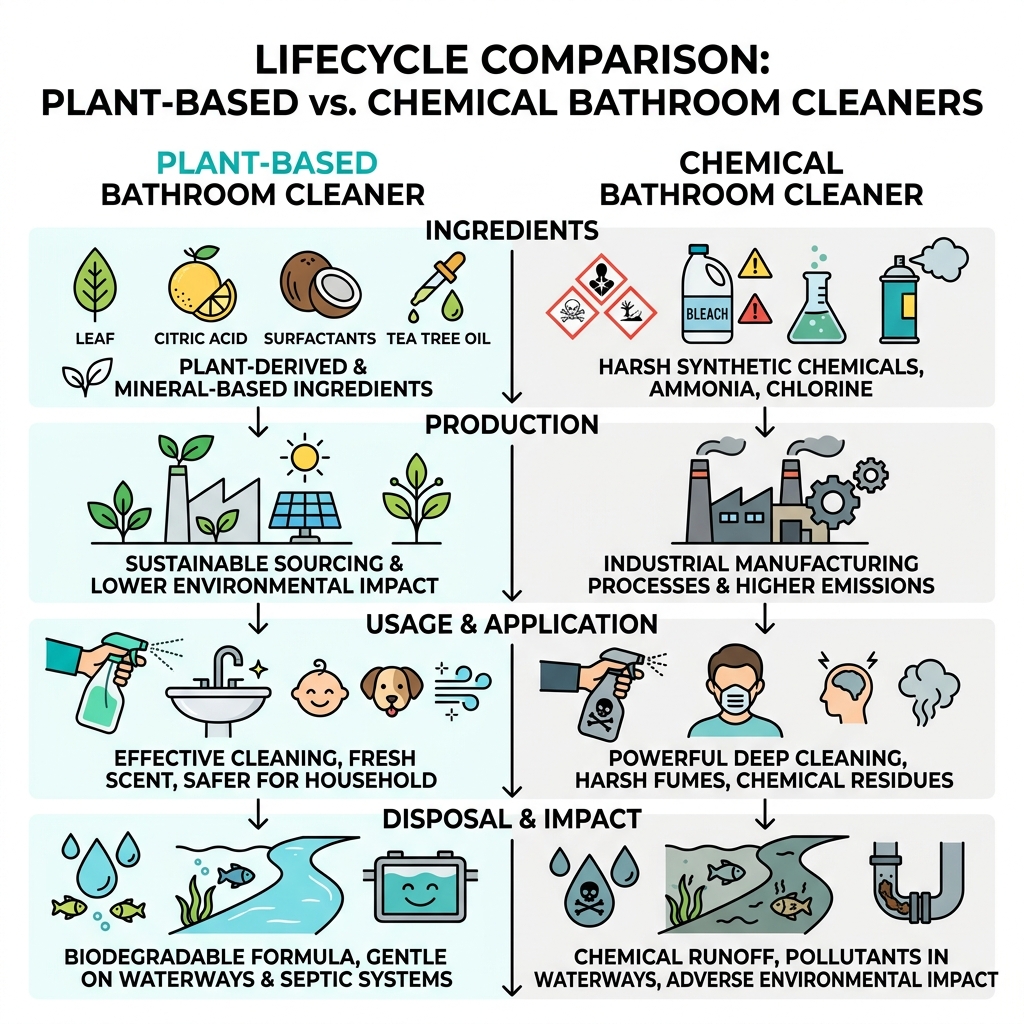
A plant based bathroom cleaner uses ingredients derived from plants and minerals — like citric acid, coconut oil, and tea tree oil — instead of harsh synthetic chemicals to clean your bathroom effectively and safely.
Quick answer: What makes plant-based bathroom cleaners worth it?
- Safer ingredients — formulated without ammonia, bleach, phosphates, or parabens
- Effective cleaning — tackles soap scum, limescale, mold, and mildew
- Eco-friendly — biodegradable formulas that are gentler on waterways
- Safe around kids, pets, and septic systems
- Less plastic waste — many come as concentrates or refillable tablets
Most people assume that cleaning the bathroom means reaching for the strongest chemical spray on the shelf. The logic makes sense: bathrooms are germ hotspots, so surely you need heavy-duty weapons.
But here’s the thing — you don’t have to choose between clean and safe.
Modern plant-based bathroom cleaners have come a long way. Some are formulated with 94% or more naturally derived ingredients, backed by third-party certifications, and independently tested against major conventional brands. You get a genuinely clean bathroom without the harsh fumes, toxic residue, or environmental damage.
For busy people who want to make greener choices without overhauling their entire routine, swapping your bathroom cleaner is one of the easiest, lowest-effort changes you can make — and the impact adds up fast.
The Science Behind Plant Based Bathroom Cleaner Efficacy
Many of us grew up believing that if a cleaner didn’t make our eyes water or our throat tickle, it wasn’t actually “working.” In reality, the efficacy of a plant based bathroom cleaner isn’t magic—it’s chemistry. Instead of using corrosive acids or volatile organic compounds (VOCs), these products utilize the natural properties of plants to break down grime.
The Power Players: Citric and Lactic Acids
If you’ve ever tried to scrub away white, crusty buildup on a faucet, you’ve met limescale. Traditional cleaners use harsh mineral acids to dissolve this. However, plant-based alternatives like Plant Based Bathroom Cleaner – Nuvera often use concentrated citric acid or lactic acid.
These organic acids are highly effective at breaking the chemical bonds in mineral deposits and soap scum. Citric acid acts as a natural descaler, while lactic acid helps to lift organic matter. Because they are less aggressive than hydrochloric acid, they are much safer for the user while still leaving surfaces sparkling.
Surfactants: The “Magic” Link
Surfactants are molecules that hold hands with both oil and water. One end of the molecule attaches to the grease (like body oils in soap scum), and the other attaches to the water you use to rinse. A common plant-derived surfactant is Decyl glucoside, which is often derived from corn or coconut. It is so gentle that it’s frequently found in baby shampoos, yet powerful enough to bind and lift bathroom sludge.
Natural Disinfectants and Oxidizers
For those worried about germs, we look to ingredients like hydrogen peroxide and essential oils. Bathroom Cleaner Concentrate 2x – Plantiful Clean uses a 6% hydrogen peroxide base. Hydrogen peroxide is a powerful oxidizer that destroys the cell walls of bacteria and fungi, eventually breaking down into nothing but water and oxygen.
To learn more about how these ingredients fit into a wider home routine, check out our guide on Mother Nature Approved: Natural Cleaner Products for Every Room.

Comparing Natural vs. Traditional Chemical Cleaners
When we put a plant based bathroom cleaner up against a traditional chemical bottle, the differences go beyond just the scent. It’s a matter of indoor air quality, aquatic safety, and long-term health.
| Feature | Plant-Based Cleaners | Traditional Chemical Cleaners |
|---|---|---|
| Primary Actives | Citric acid, surfactants (corn/coconut), essential oils | Ammonia, bleach, phosphates, phthalates |
| Indoor Air Quality | Low VOCs; generally safe for respiratory health | High VOCs; can trigger asthma or irritation |
| Aquatic Toxicity | Biodegradable; low impact on fish and algae | Can cause “dead zones” in waterways due to phosphates |
| Surface Safety | Non-corrosive for most sealed surfaces | Can pit or damage certain finishes over time |
| Septic Safety | Safe; maintains bacterial balance | Can kill beneficial bacteria in septic tanks |
Indoor Air Quality and VOCs
Traditional cleaners are often packed with VOCs that linger in the air long after you’ve finished scrubbing. For people with sensitive lungs or those who simply don’t want to breathe in “Bleach Breeze” all day, plant-based options are a revelation. Products like Powerizer Plant-Based Bathroom Cleaner, 23 oz (3 PACK) meet strict VOC limits set by the government, ensuring your home smells like actual plants rather than a chemistry lab.
Environmental Stewardship
When you rinse a chemical cleaner down the drain, it doesn’t just disappear. Phosphates found in some traditional soaps can lead to nutrient pollution in lakes and rivers. In contrast, plant-based formulas are designed to be biodegradable. For a deeper dive into why this matters, read our article on Environmentally Safe and Sound: The Best Eco-Friendly Cleaning Products for Your Home.
Sustainability and Cost Savings with Refills and Concentrates
One of the biggest myths about “going green” is that it’s always more expensive. While the initial purchase of a high-quality glass bottle might cost more, the long-term savings of concentrates and refills are significant.
Reducing Plastic Waste
The statistics are staggering. Some refillable systems can save 1.003 pounds of plastic per year per product. By using a concentrate like the Clean Duo Bathroom – Plantiful Clean, you aren’t paying for the company to ship you 90% water in a single-use plastic bottle. You are getting the active ingredients and adding your own water at home.
Carbon Footprint
Shipping heavy bottles of liquid around the country creates a massive amount of CO2. Refillable tablets or small concentrate pouches take up 10x less space than a traditional bottle. This results in up to 91% less emissions during transport.
Better Value for Your Wallet
Refill tablets can start as low as $2.25 per bottle once you have your “forever” container. Subscription models often offer up to 40% off, making the cost-per-ounce lower than many premium traditional brands. For a look at how these products stack up, see our Eco-Friendly Home Cleaning: A Product Review.
Best Practices for Using Your Plant Based Bathroom Cleaner
To get the most out of your plant based bathroom cleaner, you might need to slightly adjust your technique. Because these cleaners don’t rely on “scorched earth” chemicals, they work best when given a little time to do their job.
- Dwell Time is Key: For tough soap scum or mineral deposits, spray the surface and let it sit for 5 to 10 minutes. This allows the citric acid or surfactants to fully penetrate the grime.
- Use the Right Tools: A microfiber cloth is excellent for polishing faucets, while a stiff-bristled brush is better for grout. For glass shower doors, a squeegee is your best friend to prevent water spots.
- Surface Compatibility: Most plant-based cleaners are safe for ceramic, porcelain, and sealed tile. However, always test an inconspicuous area first. Some acid-based cleaners (even natural ones) can etch unsealed marble or limestone.
- Ventilation: Even though the fumes aren’t toxic, it’s always a good practice to keep a window open or a fan running to help surfaces dry quickly and prevent mold regrowth.
- The “No-Wipe” Trick: Products like ECOS Plant Powered Bathroom Cleaner, Tea Tree Scent can be sprayed on shower walls immediately after bathing and left to dry, preventing soap scum buildup before it even starts.
For more maintenance tips, visit our Eco-Friendly Cleaning Products Guide.
Frequently Asked Questions about Natural Cleaning
Does a plant based bathroom cleaner kill germs?
Yes, many do! While some plant-based cleaners are designed primarily for removing dirt and grime (cleaning), others are formulated to disinfect. Look for ingredients like hydrogen peroxide, which is a proven antiseptic, or alcohol (40-100% concentrations can kill E.coli and salmonella within seconds).
Additionally, tea tree oil has been shown to have broad-spectrum antimicrobial activity in concentrations as low as 0.25%. If you need a heavy-duty germ killer, check the label for specific “antibacterial” or “disinfectant” claims, such as those found in some Bathroom Cleaner Nature+ I ATTITUDE formulations.
Is a plant based bathroom cleaner safe for septic systems?
Absolutely. Traditional cleaners containing bleach or harsh antibacterial chemicals can kill the “good” bacteria in your septic tank that breaks down waste. Plant-based cleaners are generally biodegradable and non-corrosive, meaning they won’t disrupt the delicate bacterial balance of your system. This makes them the preferred choice for rural homes and eco-conscious households alike. You can find more details in our Eco-Friendly Cleaning Products Guide 2.
Can these cleaners remove tough soap scum and limescale?
Yes, and often better than you’d expect! The key is the acidic pH. Ingredients like citric acid and lactic acid are specifically targeted at mineral deposits. By lowering the pH, the cleaner dissolves the “glue” that holds soap scum to your tub. For the best results on stubborn stains, we recommend a pre-treatment: spray the area, wait 10 minutes, and then use a non-abrasive scrub pad.
Conclusion
Making the switch to a plant based bathroom cleaner is one of those rare “win-win-win” scenarios. You get a bathroom that is sparkling clean, a home that is safer for your family and pets, and a significantly smaller environmental footprint.
When shopping, keep an eye out for trusted certifications that guarantee the product is truly what it says it is:
- EPA Safer Choice: Meets stringent safety criteria for human health and the environment.
- EWG Verified: Ensures full ingredient transparency and avoids chemicals of concern.
- Leaping Bunny: Guarantees the product was never tested on animals.
Whether you choose a refreshing cedar scent like the Ecos – Toilet Cleaner – Cedar or a fragrance-free concentrate, you are taking a meaningful step toward a more sustainable lifestyle.
At Refugio do Jardim, we believe that a clean home should never come at the cost of a clean planet. For more tips on transforming your living space into a non-toxic sanctuary, explore The Natural Home: An Essential Guide to Eco-Friendly Cleaning Products. Your toilet—and the Earth—will definitely thank you.
