
How to Choose the Best Eco Disinfectant Spray for a Germ-Free Home
Why an Eco Disinfectant Spray Belongs in Every Home
Eco disinfectant sprays are cleaning products that kill germs using plant-based or mineral-derived ingredients — instead of harsh synthetic chemicals like bleach, ammonia, or quats.
Most people assume “eco-friendly” means less effective. That’s not true anymore.
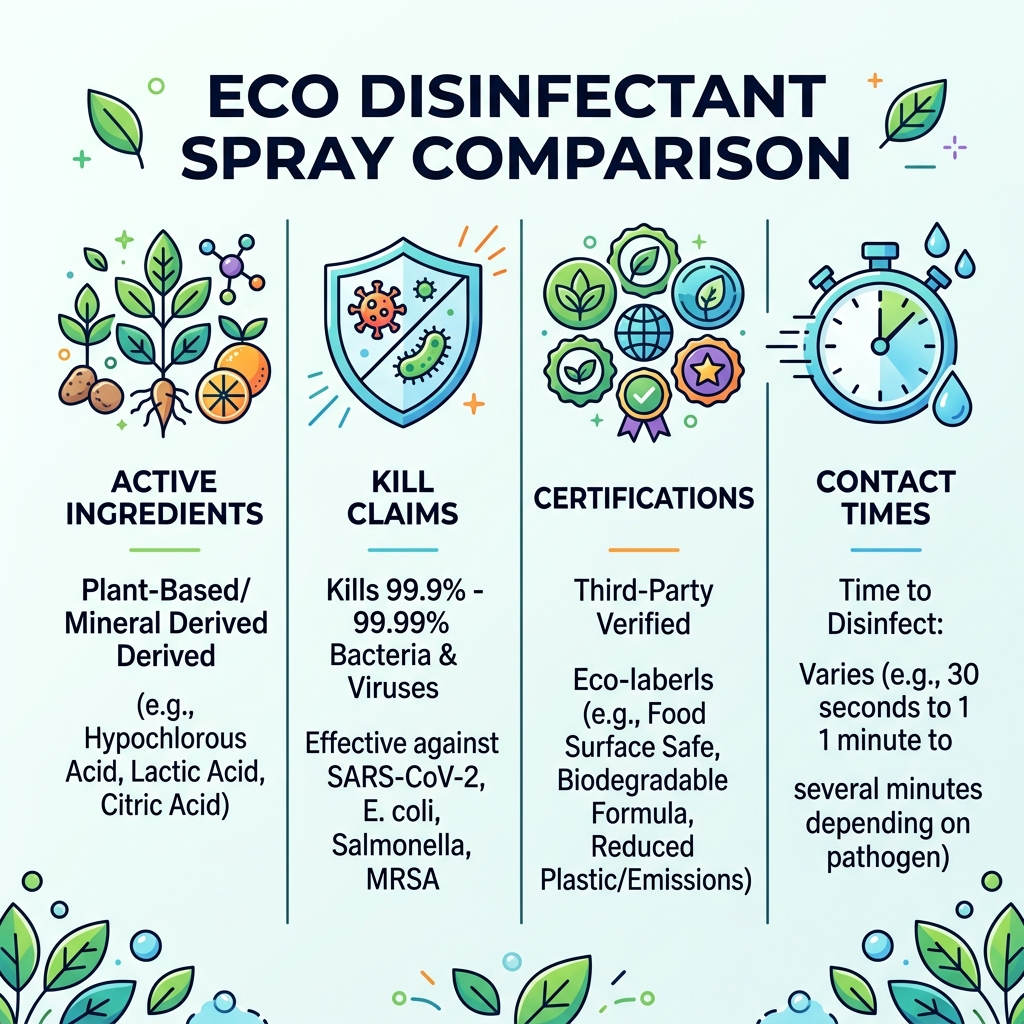
Today’s plant-powered disinfectants use ingredients like hypochlorous acid, lactic acid, and citric acid — all proven to eliminate dangerous pathogens including E. coli, Salmonella, MRSA, and even SARS-CoV-2. Many of these formulations are recognized by the EPA’s List N for their efficacy against emerging viruses.
And the environmental benefits are real. Some refill-based systems save up to 1.02 pounds of plastic per year and produce 91% less emissions than conventional plastic bottles.
If you’re short on time and just want a safer, greener way to keep your home clean — these products deliver both.
Understanding the Power of an Eco Disinfectant Spray
When we think about cleaning our homes, we often associate the “smell of clean” with harsh, stinging chemicals. However, that sharp scent is often the result of Volatile Organic Compounds (VOCs) that can irritate our lungs and skin. An eco disinfectant spray offers a different path. These products are designed to bridge the gap between high-level hygiene and environmental stewardship.
But how do they differ from the blue or yellow liquids we grew up with? Traditional disinfectants often rely on quaternary ammonium compounds (quats), bleach, or phenol. While effective at killing germs, these substances can linger in the environment, harm aquatic life, and cause respiratory issues for sensitive individuals. In contrast, eco-friendly alternatives use plant-based actives and biodegradable formulas that break down into harmless components like water and oxygen.
That difference matters in everyday spaces like kitchen counters, bathroom sinks, doorknobs, light switches, toys, pet areas, and dining tables. In many homes, these are the surfaces cleaned most often, which means repeated exposure to whatever ingredients are in the bottle. Choosing a lower-toxicity formula can help reduce that cumulative exposure while still supporting a hygienic routine.
It is also helpful to understand the difference between cleaning and disinfecting. Cleaning removes dirt, grease, and debris from a surface, while disinfecting targets bacteria and viruses using specific active ingredients and required contact times. A well-formulated eco disinfectant spray can often help with both jobs, especially when used on lightly soiled surfaces as directed. This makes it a practical option for busy households that want fewer products under the sink without sacrificing performance.
If you are looking to transition your entire cleaning cabinet, our eco-friendly cleaning products guide provides a deep dive into making your home a sanctuary without the chemical residue. The core philosophy here is simple: we shouldn’t have to choose between a germ-free kitchen and a healthy planet.

Key Ingredients in Natural Disinfectants
The “magic” behind an eco disinfectant spray isn’t magic at all—it’s science. Manufacturers are increasingly looking toward nature to find compounds that naturally inhibit or destroy pathogens.
The Role of Hypochlorous Acid in Eco Disinfectant Spray
One of the most exciting developments in green cleaning is the rise of Hypochlorous Acid (HOCl). It sounds intimidating, but it is actually a chemical compound naturally produced by the human body’s white blood cells to fight off infections.
In a lab or manufacturing setting, HOCl is created through electrolysis—applying a low electric charge to a simple mixture of salt and water. The result is a powerful antimicrobial agent that is non-corrosive and incredibly safe. Many HOCl sprays are so gentle they require no rinsing, even on food contact surfaces. Scientific research confirms that HOCl is highly effective against a broad spectrum of viruses and bacteria, yet it is safe enough to use around children and pets without a second thought.
Lactic and Citric Acid: Plant-Powered Germ Killers
If HOCl is the “immune system” approach, then lactic and citric acids are the “botanical” approach.
- Lactic Acid: Often derived from fermented corn, lactic acid is a natural byproduct of fermentation. It works by disrupting the pH balance of bacterial cells, effectively neutralizing 99.9% of harmful bacteria like E. coli and Salmonella. Professional-grade eco-disinfectants utilize this natural origin ingredient to provide high-level hygiene.
- Citric Acid: Found naturally in citrus fruits, citric acid is a powerhouse for removing soap scum and grime while simultaneously acting as an antimicrobial agent. It is often classified as a “no hazard” substance under GHS (Globally Harmonized System), making it a favorite for multi-surface cleaners that need to deodorize and disinfect in one step.
What to Look for: Certifications and Efficacy
With so many products claiming to be “natural,” how do we know which ones actually work? The secret lies in the labels and the regulatory registrations.
Choosing an EPA-Registered Eco Disinfectant Spray
In the United States, if a product claims to kill germs, it must be registered with the Environmental Protection Agency (EPA). An EPA registration number on the bottle is your guarantee that the product has been tested and proven to perform as advertised.
During the pandemic, the EPA’s “List N” became the gold standard for identifying products effective against SARS-CoV-2. Many eco disinfectant spray options made this list. Some can even kill the virus in as little as 30 to 60 seconds. For those interested in the broader impact of these choices, you can read more about environmentally safe and sound cleaning products on our blog.
Safety Labels and Environmental Certifications
Beyond the EPA, there are several third-party certifications that tell us a product is truly eco-conscious:
| Certification | What It Means |
|---|---|
| EPA Safer Choice | Ingredients have been screened for human health and environmental safety. |
| Design for the Environment | Specifically for disinfectants that meet stringent safety and efficacy criteria. |
| NSF D2 | Certified for use on food contact surfaces without the need for a rinse. |
| Cradle to Cradle | Measures circularity, including material health and water stewardship. |
| Leaping Bunny | Guarantees that no animal testing was involved in the product’s development. |
Maximizing Effectiveness and Sustainability
Buying the right eco disinfectant spray is only half the battle; using it correctly is what ensures your home stays germ-free.
One of the most common mistakes we see is ignoring “contact time” (or dwell time). Disinfectants aren’t instant. To kill 99.9% of germs, the surface must remain visibly wet for a specific period-usually ranging from 30 seconds for some viruses to 10 minutes for tougher bacteria like MRSA. Always read the back of the bottle! If you wipe the spray away immediately, you might only be cleaning the surface of dirt rather than disinfecting it.
Another smart habit is pre-cleaning when a surface is visibly dirty. Grease, crumbs, soap residue, and food spills can interfere with how well a disinfectant works. Wiping away mess first, then applying the spray according to label directions, helps the active ingredients reach the microbes more effectively. This is especially important in kitchens, bathrooms, and high-touch family spaces.
Sustainability is also about the “how.” Many modern eco-brands are moving away from single-use plastic. For example, some use a “Forever Bottle” system where you drop a small tablet into water. This reduces plastic waste significantly; tablets take up 10x less space than traditional bottles. By switching to a refillable system, a single household can save over a pound of plastic and significantly reduce carbon emissions associated with shipping heavy, water-filled bottles.
Small usage choices can make a difference too. Spray only what you need, store the bottle away from direct sunlight if the label recommends it, and use reusable cleaning cloths when appropriate. These steps help reduce waste while making the most of each bottle or refill. Over time, a simple routine built around proper use and refillable packaging can make your cleaning habits both more effective and more environmentally responsible.
For more tips on building a sustainable cleaning routine, check out the natural home: an essential guide to eco-friendly cleaning products.
Frequently Asked Questions about Eco Disinfectants
Are eco disinfectant sprays safe for use around pets and children?
Yes, most eco disinfectant spray options—especially those based on hypochlorous acid or citric acid—are significantly safer than traditional cleaners. HOCl is non-toxic and non-irritating, meaning it won’t harm your dog’s paws or your toddler’s hands. However, we always recommend storing any cleaning product out of reach and testing a small area first.
Do natural disinfectants require rinsing on food contact surfaces?
Many do not! Look for the NSF D2 certification or a label that explicitly states “no rinse required.” High-quality eco-formulations are designed so you can spray them on a cutting board or a high chair, let them air dry, and use the surface immediately. This is a huge time-saver in a busy kitchen.
How long is the contact time for eco-friendly sprays to kill viruses?
It varies by brand and pathogen. For example, some plant-based disinfectants can kill SARS-CoV-2 in just 30 seconds, while other botanical sprays might require 5 to 10 minutes for full disinfection against a broader range of bacteria. Always check the specific “kill claims” on the label to ensure you’re giving the product enough time to work.
Conclusion
Choosing an eco disinfectant spray is a powerful way for us to protect our families while also protecting the earth. By opting for ingredients like hypochlorous acid and plant-derived acids, we can achieve a hospital-grade clean without the toxic trade-offs.
At Refugio do Jardim, we believe that a sustainable lifestyle starts with the small choices we make every day in our homes. Whether you are switching to a refillable tablet system or simply looking for a safer way to sanitize your kitchen counters, there is an eco-friendly solution that fits your needs. Explore more eco-friendly home solutions and join us in creating a cleaner, greener world—one spray at a time.
