
Ditch the Paper with These Eco Friendly Dish Towels
Why Every Kitchen Needs to Rethink the Paper Towel Habit
Eco friendly dish towels are reusable kitchen cloths made from sustainable materials like organic cotton, recycled plastic bottles, or upcycled fabric scraps — and they’re one of the simplest swaps you can make for a greener home.
The best eco friendly dish towels at a glance:
| Material | Best For | Key Benefit |
|---|---|---|
| GOTS-certified organic cotton | Everyday drying and wiping | No toxic pesticides or chemicals |
| Recycled plastic (post-consumer) | Quick drying, high absorbency | Diverts plastic bottles from landfills |
| Upcycled cotton scraps | Soft, low-lint use | Reduces textile waste and water use |
Here’s the uncomfortable truth: paper towels are used once and thrown away. That single-use habit adds up fast — in waste, in cost, and in environmental impact.
The good news? Switching to reusable dish towels is one of the easiest green swaps out there. No major lifestyle change. No steep learning curve. Just grab a towel, use it, wash it, repeat.
This guide breaks down exactly what to look for — materials, certifications, performance, and brands — so you can make a confident choice without spending hours researching.
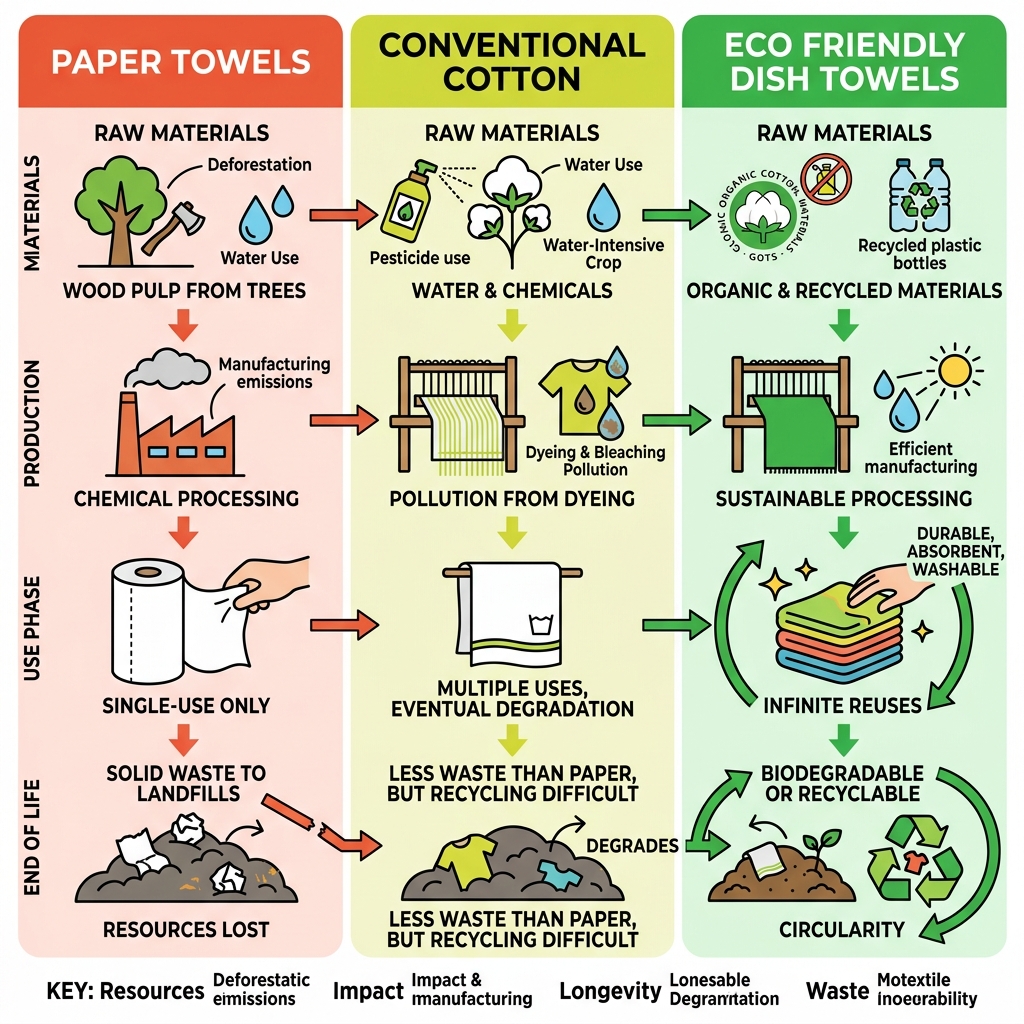
Why You Should Switch to Eco Friendly Dish Towels
When we look at our kitchen counters, we often see a roll of paper towels as a “cleaning essential.” However, the environmental toll of that convenience is staggering. Every year, approximately 3.2 billion trees are cut down globally to produce paper packaging and fabrics like viscose rayon. By choosing eco friendly dish towels, we directly reduce the demand for deforestation.
But it isn’t just about saving trees; it’s about fixing the problems inherent in conventional textile production. Conventional cotton is often referred to as the “world’s dirtiest crop.” It relies heavily on synthetic pesticides and genetically modified seeds. In fact, the application rate of glyphosate (a powerful herbicide) has tripled on conventional cotton farms due to the rise of “Roundup Ready” cotton resistance. When we use these traditional towels, we are inadvertently supporting a system that degrades soil health and pollutes local waterways.
By shifting to sustainable alternatives, we achieve several major wins:
- Landfill Diversion: High-quality reusable towels can last for years, replacing thousands of single-use paper sheets.
- Water Conservation: Producing conventional textiles is incredibly water-intensive. Using upcycled cotton can save over 30 million gallons of water annually—that is the equivalent of 4,000 people taking a shower every day for a year!
- Chemical-Free Living: Choosing GOTS-certified organic cotton ensures that no toxic heavy metals, formaldehyde, or aromatic solvents are used in the production process, making your kitchen safer for food preparation.
If you are looking to overhaul your kitchen habits further, check out our waste-free-kitchen-guide for more tips on reducing your environmental footprint.

Comparing Materials: Organic Cotton, Recycled Plastic, and Upcycled Fibers
Not all eco friendly dish towels are created equal. Depending on whether you prioritize “ultra-fast drying” or “natural softness,” your choice of material will vary. Here is how the heavy hitters compare:
| Feature | Organic Cotton (GOTS) | Recycled Plastic (Polyester) | Upcycled Cotton Scraps |
|---|---|---|---|
| Absorbency | High (improves with age) | Very High (DischWeave tech) | Moderate to High |
| Drying Speed | Moderate | Fast | Moderate |
| Sustainability | No pesticides; biodegradable | Diverts landfill waste | Zero-waste manufacturing |
| Feel | Soft, plush | Lightweight, textured | Crisp, low-lint |
| Best Use | Drying hands & large pots | Wiping spills & glassware | Polishing & daily wiping |
Performance Features of Eco Friendly Dish Towels
Performance is where sustainable towels actually outshine their conventional counterparts. Many modern eco-towels utilize a 350 GSM (grams per square meter) weight. This is the “Goldilocks” zone—heavy enough to be highly absorbent but light enough to dry quickly, preventing that musty “old towel” smell.
- Waffle Weave: This honeycomb-like texture increases the surface area of the towel, allowing it to trap more water and dry faster.
- DischWeave: Some recycled plastic towels use specialized weaving that allows the fabric to absorb up to 3x its weight in water.
- Lint-Free: Organic cotton tea towels are often woven to be lint-free, making them perfect for drying wine glasses without leaving tiny fibers behind.
- Hanging Loops: It sounds small, but a corner hanging loop is essential for air circulation, ensuring your towel stays fresh between uses.
For a deeper dive into how these products fit into a non-toxic household, see the-natural-home-an-essential-guide-to-eco-friendly-cleaning-products.
Environmental Impact of Eco Friendly Dish Towels
The “eco” in these towels is backed by hard data. When you buy a towel made from recycled post-consumer waste, you are participating in a circular economy. For instance, some eco-friendly towels repurpose approximately 8 recycled plastic bottles for every single kitchen towel they produce.
However, we must be mindful of the trade-offs. Synthetic fibers (even recycled ones) can release microplastics during washing. It is estimated that 9 million plastic microfibers are released into the ocean every time synthetic textiles are washed, accounting for 35% of primary microplastics in our seas. To mitigate this, we recommend using a microplastic-catching wash bag.
On the other hand, upcycled cotton—made from garment factory scraps—is a hero for water conservation. By repurposing existing cotton, we bypass the water-heavy growing stage entirely. This is a vital part of adopting reusable-products-for-daily-life to protect our natural resources.
Certifications and Avoiding Greenwashing
In eco friendly dish towels, “greenwashing” is a common tactic. You might see a towel labeled “natural” or “made with organic cotton,” but without third-party certifications, these claims are often unregulated and misleading.
To ensure your purchase is truly sustainable, look for these “gold standard” logos:
- GOTS (Global Organic Textile Standard): This is the ultimate certification. It ensures the entire supply chain-from harvesting to labeling-is free from toxic chemicals, GMOs, and unfair labor practices. A label saying “Made with Organic Cotton” only requires 70% organic fibers, whereas the full GOTS seal requires 95%. You can learn more about the standard on the official GOTS website.
- GRS (Global Recycled Standard): This verifies the recycled content in products (like those 8 plastic bottles) and tracks the material from the source to the final product.
- Oeko-Tex Standard 100: This certification focuses on safety. It guarantees that the finished towel has been tested for hundreds of harmful substances, ensuring it is safe for your skin and your kitchen.
- B Corporation: This indicates the company meets high standards of social and environmental performance, transparency, and accountability.
Greenwashing Tactics to Avoid:
- “Bamboo Viscose” or “Rayon”: While bamboo grows quickly without pesticides, the process of turning it into soft fabric often involves highly toxic chemicals that are harmful to workers and the environment.
- Vague “Natural” Claims: If a brand cannot tell you where their cotton was grown or how it was dyed, it’s likely not as green as they claim.
- Unregulated “Organic” Labels: Always look for the GOTS logo. Without it, “organic” is just a marketing word.
Care and Maintenance for Longevity
To get the most out of your eco friendly dish towels, you need to treat them right. Proper care doesn’t just make them last longer; it actually improves how they work!
- The First Wash: Always wash your towels before the first use. This “opens up” the fibers (especially in organic cotton), significantly boosting absorbency.
- Temperature Matters: Use a cold machine wash on a gentle cycle. Cold water protects the integrity of the natural fibers and prevents the “melting” of recycled polyester fibers.
- Skip the Bleach and Softener: Bleach weakens fibers and ruins eco-friendly dyes. Fabric softeners are even worse—they coat the fibers in a waxy layer that actually repels water, making your towel less absorbent.
- Drying: Tumble dry on low or, better yet, hang dry in the shade. If you use a dryer, consider wool dryer balls to naturally fluff the towels without chemicals.
- Snag Prevention: Wash your towels separately from items with zippers or hooks (like jeans or bras) to prevent snags and tears.
By following these steps, you maximize the lifespan of your towels, ensuring they remain a staple in your kitchen for years to come.
Frequently Asked Questions
What are the best materials for sustainable dish towels?
The “best” material depends on your needs. For heavy-duty drying and a classic feel, GOTS-certified organic cotton is the winner. For quick-drying performance and cleaning up spills, recycled polyester (from plastic bottles) is incredibly effective. For those who want to minimize textile waste, upcycled cotton offers a great balance of sustainability and utility.
How many plastic bottles are in a recycled towel?
Most high-quality recycled kitchen towels repurpose between 6 and 8 post-consumer plastic bottles. This process diverts plastic from landfills and oceans, giving it a new life as a functional kitchen tool.
Do organic towels dry faster than conventional ones?
Generally, organic cotton towels are more breathable than conventional ones, which helps them dry efficiently. However, if speed is your primary concern, a waffle weave or a recycled microfiber towel will dry significantly faster than a standard plush cotton towel.
Conclusion
Making the switch to eco friendly dish towels is more than just a kitchen upgrade—it’s a small, daily act of environmental stewardship. Whether you choose the luxurious, chemical-free softness of organic Turkish cotton or the high-performance, bottle-saving tech of a quick-dry recycled towel, you are helping to reduce deforestation, save millions of gallons of water, and keep plastic out of our oceans.
At Refugio do Jardim, we believe that every home can be a sanctuary for sustainability. By ditching the paper and investing in quality, ethically manufactured linens, you revitalize your kitchen while protecting the planet.
Ready to take the next step in your sustainability journey? Join the movement for an eco-friendly home and discover more ways to live in harmony with nature.
