
Living with Less Waste Without Losing Your Mind
Why Most of Us Are Drowning in Trash (And What to Do About It)
The best zero waste lifestyle tips for beginners focus on small, practical swaps — not perfection:
- Conduct a trash audit — look at what you actually throw away each week
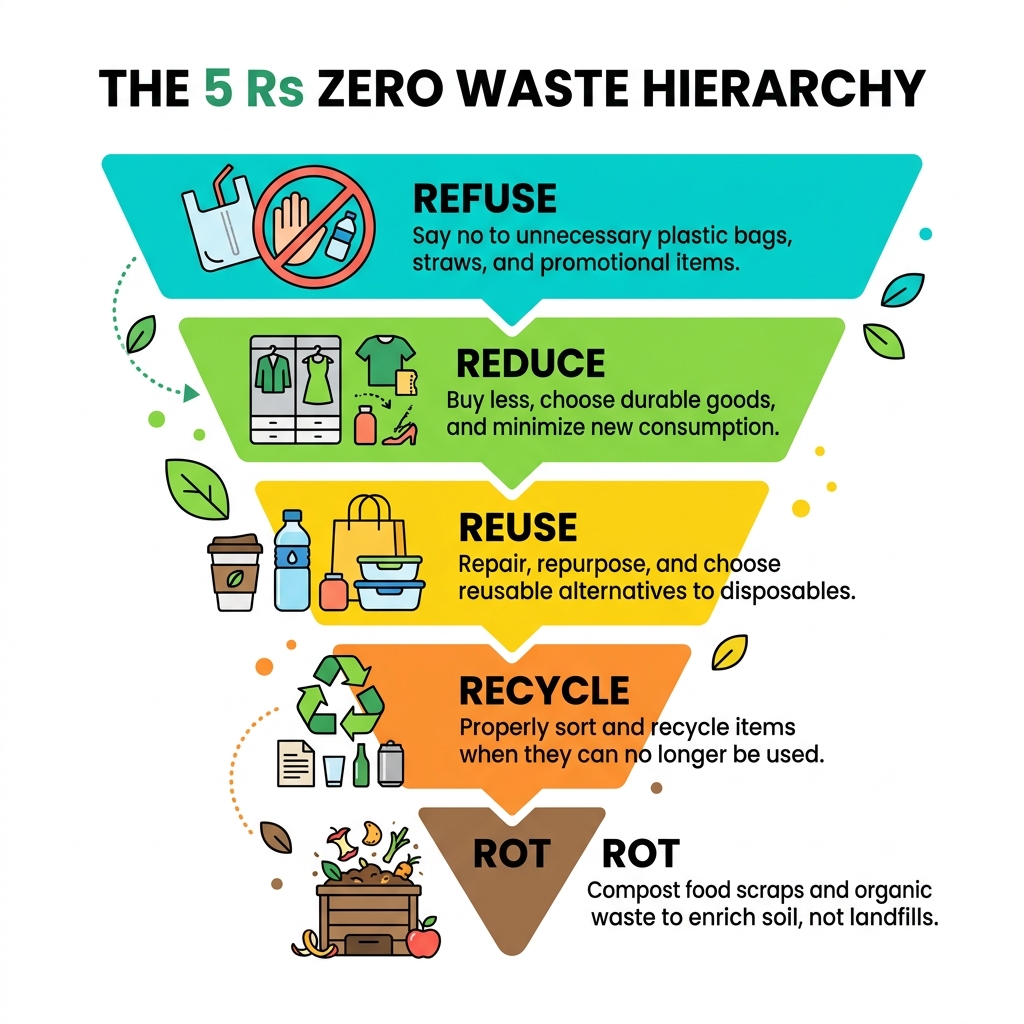
- Follow the 5 Rs — Refuse, Reduce, Reuse, Recycle, Rot (in that order)
- Start with one swap — a reusable bag, water bottle, or coffee cup
- Tackle food waste first — it’s the single biggest win for most households
- Build habits gradually — consistency matters more than doing everything at once
Here’s a number that’s hard to ignore: the average American throws away about 4.9 pounds of trash every single day. That adds up to roughly 292 million tons of waste across the country each year.
And most of it? Completely avoidable.
The zero waste movement isn’t about fitting a year’s worth of trash into a mason jar. That’s a nice Instagram photo, but it ignores the real picture. We live in what’s called a linear economy — we take resources, use them once, and throw them away. True waste reduction requires changing that cycle, one habit at a time.
The good news: you don’t need to overhaul your entire life this weekend. Small, consistent changes genuinely add up. This guide is built for real people with busy schedules — not for sustainability influencers with perfectly curated pantries.
Getting Started: Your First Zero Waste Lifestyle Tips
When we first hear about “zero waste,” it can feel like a mountain too steep to climb. We see images of people living out of a single jar of trash for five years and think, “I could never do that.” And you know what? You don’t have to.
A zero waste lifestyle is a personal approach to minimizing waste. It’s about being intentional and recognizing that while literal “zero” might be impossible in our current society, a 20% or 30% reduction makes a massive difference. We are operating within a system designed for disposal, so our goal is to navigate that system as thoughtfully as possible.
To begin, we need to shift our mindset from “disposal management” (recycling) to “waste prevention” (refusing and reducing). This is where Habits for a Zero-Waste Lifestyle come into play. By Zero Waste Living: Transforming Your Home into a space that supports these choices, we make the sustainable path the easiest path. For a deeper dive, you can explore this Zero Waste Lifestyle: A Complete Guide to Sustainable Living.
The 5 Rs of Sustainable Living
The framework for almost all zero waste lifestyle tips is the 5 Rs. Most of us grew up with the “3 Rs” (Reduce, Reuse, Recycle), but the modern movement adds two critical steps: Refuse and Rot. The order is extremely important because it represents a hierarchy of impact.
- Refuse: This is the most powerful step. It means saying “no” to things you don’t need before they ever enter your home. Think of plastic straws, promotional pens, junk mail, and single-use bags. If you don’t take it, you don’t have to figure out how to get rid of it.
- Reduce: Look at what you actually use and need. Can you do more with less? This involves decluttering and being mindful of new purchases.
- Reuse: Before you throw something away, ask if it has a second life. Can that glass salsa jar hold your bulk-bought lentils? Can that old t-shirt become a cleaning rag?
- Recycle: Contrary to popular belief, recycling is a last resort, not a first step. Only 9% of plastic globally is actually recycled. We should prioritize the first three Rs before relying on the blue bin.
- Rot: This is composting. About 30% of what Americans throw away is organic matter (food scraps and yard waste) that could be returned to the soil.
Conducting a Personal Trash Audit
If you want to change your habits, you first have to understand them. A trash audit sounds gross, but it’s the most eye-opening thing we can do. It involves looking at your garbage (literally) to identify patterns.
Are you throwing away a lot of takeout containers? Maybe meal prepping is your next step. Is your bin full of paper towels? It might be time to switch to cloth rags. By identifying these “unconscious disposals,” we can set measurable goals.
Tracking your progress—perhaps by noting how many days it takes to fill your bin—helps sustain motivation. To ensure you’re handling the “Recycle” step of the 5 Rs correctly during your audit, check out our guide on How to Recycle Properly at Home.
Room-by-Room Swaps and Kitchen Strategies
Once you’ve audited your trash, it’s time for the fun part: the swaps. We recommend taking this one room at a time so you don’t get overwhelmed. The kitchen and bathroom are usually the biggest “waste generators” in a household.

Many people worry that sustainable living is expensive. While some items have an upfront cost, they almost always save money over time.
| Item | Single-Use Cost (Annual) | Reusable Cost (Initial) | Long-Term Savings |
|---|---|---|---|
| Paper Towels | $150 – $200 | $20 (Cloth Rags) | High |
| Plastic Water Bottles | $250+ | $20 – $30 (Stainless Steel) | Very High |
| Disposable Razors | $80 – $100 | $30 (Safety Razor) | High |
| Plastic Wrap | $20 – $30 | $15 (Beeswax Wraps) | Moderate |
When looking for Eco-Friendly Alternatives to Plastic, focus on durability. Items like bamboo toothbrushes, solid shampoo bars, and Reusable Products for Daily Life are excellent starting points because they replace items we use every single day.
Essential Zero Waste Lifestyle Tips for the Kitchen
The kitchen is where we can make the biggest dent in our waste footprint. Globally, 1.3 billion tons of food is thrown away every year. In the U.S., the average family wastes over $640 annually by tossing food that could have been eaten.
- Meal Planning: This is the ultimate waste-killer. By only buying what you have a plan for, you stop food from rotting in the back of the fridge.
- Bulk Shopping: Buying from bulk bins allows you to use your own jars and avoid the plastic packaging that comes with pre-bagged goods.
- Farmers Markets: Not only is the produce fresher, but it’s rarely wrapped in plastic. Plus, you’re supporting the local economy!
- “Ugly” Produce: Many grocery stores toss perfectly good fruit and veg just because they look a bit funny. Buying these prevents them from heading to a landfill.
For a comprehensive approach, see our Waste-Free Kitchen Guide and our specific Reducing Food Waste Tips.
Composting and Managing Food Scraps
When food ends up in a landfill, it doesn’t just “break down” naturally. Because landfills are packed tight, there’s no oxygen, which causes organic matter to produce methane—a greenhouse gas 20 to 30 times more potent than CO2. In fact, landfills account for 34% of all methane emissions in the U.S.
Composting is the solution. It turns that waste into “black gold” for your garden. Even if you don’t have a yard, you can still compost!
- Bokashi: A fermentation method that can handle meat and dairy and fits under a kitchen sink.
- Worm Farms (Vermicomposting): Great for apartments; the worms do all the work for you.
- Countertop Containers: Many cities now offer curbside organic pickup. You just need a small bin with a filter to hold scraps until pickup day.
If you’re ready to start, our A Composting Guide for Beginners will walk you through the process step-by-step.
Navigating Challenges and Systemic Barriers
We have to be honest: living a zero waste lifestyle isn’t equally easy for everyone. It involves a degree of privilege—having the time to cook from scratch, the money for upfront reusable costs, and the physical access to bulk stores or farmers markets.
There are also systemic barriers. We live in a linear economy where manufacturers aren’t held responsible for the packaging they create. This is why community is so vital. We can’t just “shop” our way to a better planet; we have to advocate for it.
- Environmental Justice: Waste facilities and landfills are disproportionately located near low-income communities and communities of color. Reducing our waste is a small act of solidarity with those on the front lines of pollution.
- Community Groups: Joining a local “Buy Nothing” group or a zero waste community allows you to share resources, tools, and advice.
- Letter-Writing: If your favorite brand uses excessive plastic, let them know! Corporate change often starts with customer pressure.
Check out these 7 Ways to Get Closer to a Zero Waste Lifestyle for more ideas on how to navigate these hurdles, and learn more about Ways to Reduce Packaging Waste at the source.
Frequently Asked Questions
Is a zero waste lifestyle expensive?
It’s a common myth that you need to be wealthy to go zero waste. While “Instagram-ready” glass jars and high-end reusables can be pricey, the heart of the movement is actually frugality.
The cheapest zero waste lifestyle tips involve using what you already have. You don’t need to buy a $20 glass jar when an old pasta sauce jar works perfectly. DIY cleaners made from vinegar and baking soda are far cheaper than store-bought chemicals. Over the long term, you save hundreds of dollars by simply not buying disposable items like paper towels, bottled water, and plastic bags. For more on saving money while cutting plastic, read about Minimizing Plastic Use at Home.
How do I find zero waste lifestyle tips for beginners?
The best way to start is small. Pick one “easy win” and master it before moving on. For most people, this is carrying a reusable water bottle or shopping bag. Once that feels like second nature, try a trash audit.
Don’t try to change your entire life in a week—that’s a recipe for burnout. Find a community (online or local) for support and celebrate your small victories. If you’re ready to hit the shops more mindfully, our Zero Waste Shopping Tips are a great resource.
Can I be zero waste without access to bulk stores?
Absolutely. While bulk stores are helpful, they aren’t the only way to reduce waste. If you don’t have one nearby, focus on what you can control:
- Choose items packaged in glass or metal (which are highly recyclable) over plastic.
- Buy the largest size available to reduce the ratio of packaging to product.
- Focus heavily on reducing food waste and composting.
- Embrace the “Repair and Share” culture. Fix what’s broken and borrow tools you only need once.
Learning How to Reuse Everyday Items is a skill that works no matter where you live or what stores are available to you.
Conclusion
At Refugio do Jardim, we believe that the world doesn’t need a handful of people doing zero waste perfectly; it needs millions of people doing it imperfectly. Every plastic bag refused, every scrap composted, and every item repaired is a victory for our planet and our future.
Transitioning to a lifestyle with less waste is a journey, not a destination. It’s about progress, intentionality, and recognizing our collective impact. By starting with these zero waste lifestyle tips, you’re taking a stand against the “throwaway culture” and moving toward a more sustainable, circular way of living.
Ready to keep going? Explore more Waste Reduction Tips on our blog and join us in making a difference, one small swap at a time.
