
Breathe Easy Tonight: Top Plants for Your Sleeping Space
Why the Air in Your Bedroom Matters More Than You Think
Air purifying plants bedroom choices can make a real difference to the quality of air you breathe for the 7–9 hours you spend asleep each night. Here are the best options at a glance:
Best air purifying plants for the bedroom:
| Plant | Key Benefit | Light Needs | Pet Safe? |
|---|---|---|---|
| Snake Plant | Releases oxygen at night | Low | No |
| Peace Lily | Removes mold spores & ammonia | Low | No |
| Spider Plant | Filters formaldehyde & CO | Low–medium | Yes |
| Areca Palm | Humidifies & removes benzene | Bright indirect | Yes |
| Golden Pothos | Absorbs VOCs; ultra low-maintenance | Low | No |
| Boston Fern | Removes xylene & toluene | Medium | Yes |
| Aloe Vera | Releases oxygen at night | Bright | No |
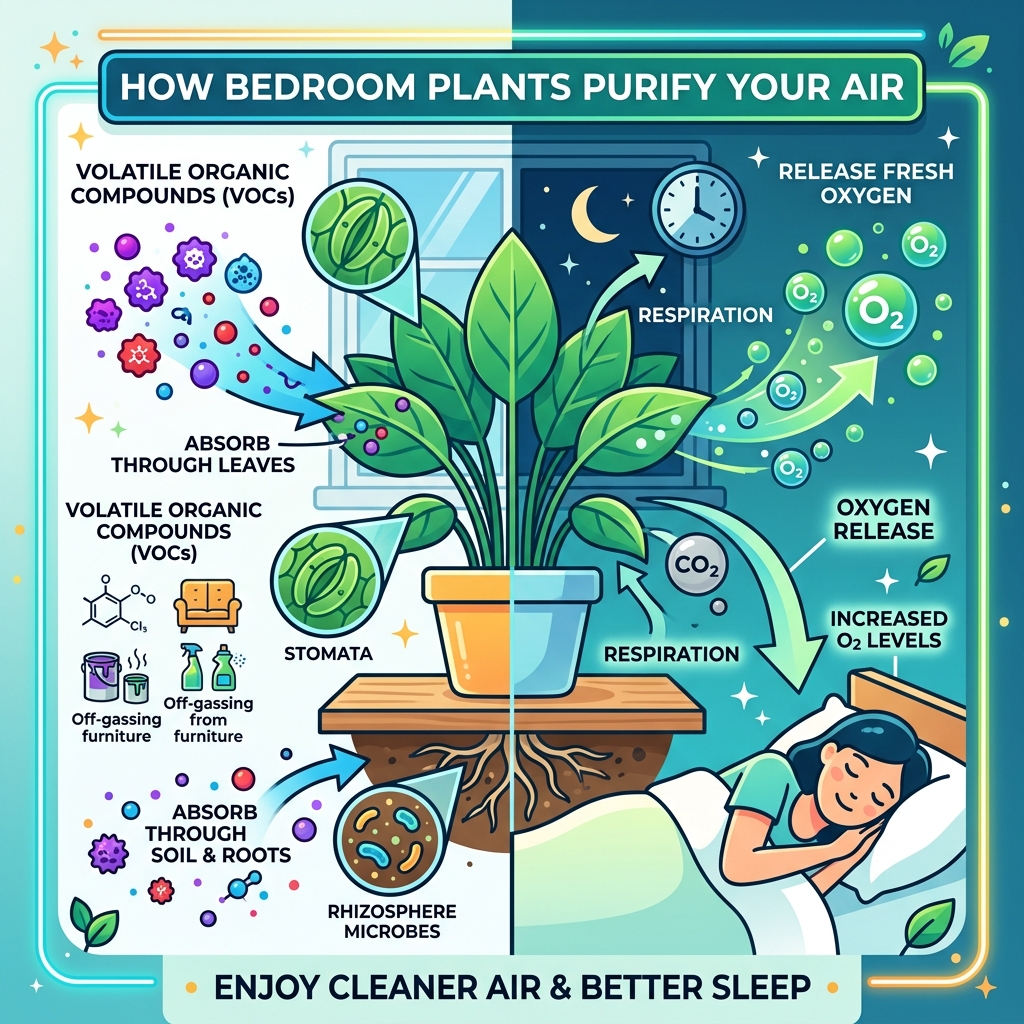
We spend up to 90% of our time indoors. Bedrooms are often the most polluted rooms in the house — filled with invisible chemicals called VOCs (volatile organic compounds) that off-gas from furniture, carpets, and cleaning products.
The good news? A few well-chosen plants can help. NASA’s landmark Clean Air Study found that certain houseplants remove up to 87% of VOCs within 24 hours. And follow-up research suggests that better bedroom air quality may increase deep sleep phases by as much as 37%.
That’s a big return for a small green addition to your nightstand.
You don’t need a botanical garden. You don’t need a green thumb. You just need to know which plants work — and where to put them.
The Science Behind Air Purifying Plants for Bedroom Health
To understand why we should invite these green roommates into our sleeping quarters, we have to look back at 1989. NASA researcher Bill Wolverton was tasked with finding ways to clean the air in space stations. Since you can’t exactly “crack a window” in orbit, NASA turned to nature.
The resulting NASA Clean Air Study revolutionized how we view indoor landscaping. It wasn’t just about aesthetics; it was about biological life support. The study found that plants don’t just “breathe” CO2; they act as living filters for some pretty nasty chemicals.
What exactly are they filtering?
Most modern bedrooms are tightly sealed for energy efficiency, which unfortunately traps pollutants inside. Common culprits include:
- Formaldehyde: Found in particleboard furniture, carpets, and upholstery.
- Benzene: Often present in detergents, dyes, and synthetic fibers.
- Trichloroethylene: Found in some printing inks, paints, and lacquers.
- Xylene and Toluene: Chemicals often found in household adhesives and floor finishes.
NASA’s comprehensive findings on air-purifying plants proved that the plant’s leaves, roots, and even the microorganisms in the soil work together to neutralize these toxins.
Toxin Removal Efficiency Comparison
Based on the NASA study and subsequent research, here is how some of the heavy hitters stack up against common indoor pollutants:
| Plant Variety | Formaldehyde Removal | Benzene Removal | Trichloroethylene Removal |
|---|---|---|---|
| Peace Lily | High | High | High |
| Snake Plant | High | Medium | Low |
| English Ivy | Medium | High | High |
| Golden Pothos | High | Medium | Low |
| Bamboo Palm | High | Low | Low |
Top 7 Air Purifying Plants for Bedroom Success
Selecting the right air purifying plants bedroom companions requires balancing air-cleaning power with the specific conditions of a sleeping space—usually lower light and cooler temperatures.
1. Snake Plant (Sansevieria)
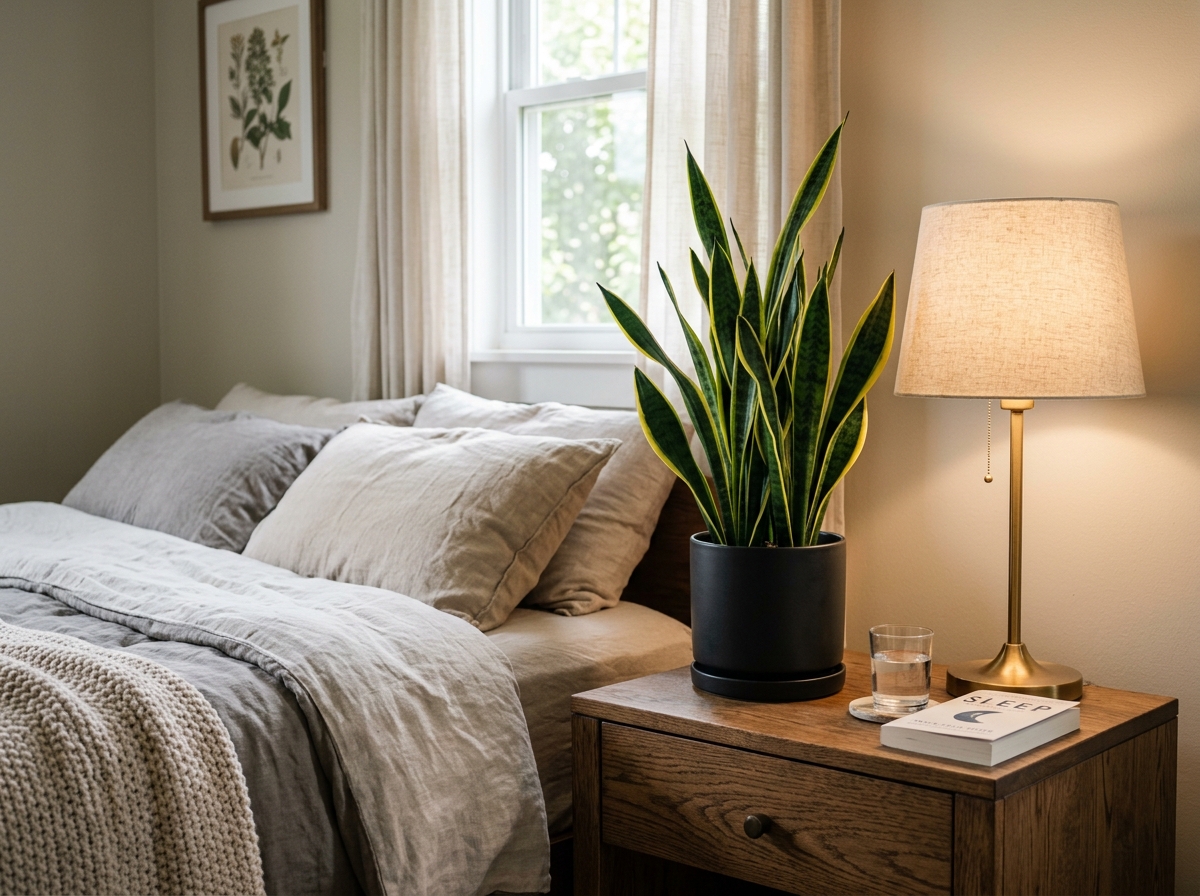
If you are the type of person who forgets to water plants for three weeks, the Snake Plant is your new best friend. Known as “Mother-in-Law’s Tongue,” this plant is one of the few that uses CAM photosynthesis.
While most plants release CO2 at night, the Snake Plant flips the script. It opens its pores (stomata) at night to take in CO2 and release fresh oxygen while you sleep. Research shows it can remove formaldehyde with up to 94% efficiency. It is the undisputed champion of bedroom oxygen production.
2. Peace Lily (Spathiphyllum)
The Peace Lily is like a high-end air scrubber with a beautiful white bloom. Beyond removing benzene and trichloroethylene, it is famous for mold spore reduction. If you struggle with allergies or dampness in your room, the Peace Lily can reduce airborne mold levels by up to 58% in just six hours. Just keep in mind that they “tell” you when they are thirsty by drooping dramatically—they are the “drama queens” of the plant world, but we love them for it.
3. Spider Plant (Chlorophytum Comosum)
According to NASA findings, a single Spider Plant in a 200-square-foot room is enough to act as an effective air filter. They are particularly skilled at removing carbon monoxide and xylene. They also produce “spiderettes”—tiny baby plants that hang down—making them perfect for hanging baskets if you are short on floor space.
4. Aloe Vera
Most of us know Aloe Vera for its ability to soothe a nasty sunburn, but it’s also a powerhouse for bedroom oxygen. Like the Snake Plant, it releases oxygen at night. It’s also a great “air quality monitor.” If the air in your room becomes heavily polluted with chemicals, the leaves may develop brown spots, letting you know it’s time to ventilate.
5. Areca Palm (Dypsis lutescens)
If your bedroom air feels dry—especially during winter when the heater is blasting—the Areca Palm is a natural humidifier. It can release up to a liter of water into the air every 24 hours through transpiration. This added moisture can soothe dry sinuses and even help reduce snoring caused by dry throat tissues.
6. English Ivy (Hedera helix)
Research from the University of Georgia found that English Ivy is incredibly effective at removing airborne fecal matter and mold. While that sounds a bit gross, it’s great news for anyone with asthma or respiratory sensitivities. It looks beautiful trailing down from a high shelf or dresser.
7. Golden Pothos (Epipremnum aureum)
Often called “Devil’s Ivy” because it’s nearly impossible to kill, the Golden Pothos is excellent at absorbing VOCs from furniture and flooring. It thrives in almost any light condition, making it a reliable science-backed choice for bedroom oxygen and purification.
Best Low-Light Air Purifying Plants for Bedroom
Not everyone has a sun-drenched master suite. If your room is north-facing or has small windows, you need plants that can survive on low lux levels.
- ZZ Plant (Zamioculcas zamiifolia): The ultimate “set it and forget it” plant. It has waxy, deep green leaves that can tolerate very dim corners.
- Chinese Evergreen (Aglaonema): These plants are considered lucky in many cultures and are highly effective at filtering out toxins even in low-light conditions. The darker the leaves, the less light they need.
Pet-Safe Air Purifying Plants for Bedroom
We love our furry friends, but many popular air purifiers (like the Snake Plant and Peace Lily) can be toxic if chewed. If your cat or dog likes to sample the greenery, stick to these ASPCA-approved non-toxic options:
- Spider Plant: Completely safe for both cats and dogs.
- Boston Fern: Great for humidity and safe for pets.
- Areca Palm: A non-toxic way to add a tropical feel to your room.
How Botanical Guardians Improve Your Sleep Quality
Can a plant really help you sleep better? The science says yes. It’s not just about the oxygen; it’s about the total environment.
According to a study highlighted by VWC News, a single houseplant in the bedroom can increase deep sleep phases by up to 37%. This happens because cleaner air reduces “micro-awakenings”—those tiny moments you wake up during the night without realizing it because your body is reacting to poor air quality or allergens.
The 10-14 Day Timeline
Adding air purifying plants bedroom decor isn’t an overnight fix. Most people begin to notice subtle changes in their sleep quality within 10-14 days. By the 3-4 week mark, the plant has had time to significantly reduce the VOC load in the room, and your body has adjusted to the improved oxygen levels and humidity.
Beyond the air quality, plants have a psychological “cortisol-lowering” effect. Seeing greenery reduces anxiety and provides a sense of tranquility that prepares the brain for rest.
Strategic Placement and Care for Maximum Benefits
To get the most out of your botanical filters, you can’t just stick them in a corner and forget them. Here is how we recommend managing your bedroom jungle:
The “Rule of One”
NASA recommends at least one medium-sized plant (in a 6-8 inch pot) for every 100 square feet of living space. For a standard 12×12 bedroom, two to three plants are ideal for measurable air filtration density.
Placement Matters
- Proximity to the Bed: Place CAM plants like the Snake Plant or Aloe Vera within 3 to 5 feet of your head. This ensures you are the primary beneficiary of the nighttime oxygen boost.
- Air Circulation: Place plants in areas where air naturally moves, such as near a door or a window (but away from direct cold drafts). This helps the plant “catch” more pollutants.
- Grouping for Humidity: Grouping 3-5 plants together creates a “mini-ecosystem.” Through collective transpiration, they can increase local humidity by up to 15%, which is great for your skin and respiratory system.
Maintenance for Stomata Health
Plants breathe through tiny holes called stomata. If your plant’s leaves are covered in dust, it can’t filter the air effectively. We recommend wiping the leaves with a damp cloth once a month.
Pro-Tip: Always use pots with drainage holes. Overwatering is the number one plant killer. If the roots sit in water, they develop root rot, which can actually introduce mold into your bedroom—the exact opposite of what we want!
Frequently Asked Questions about Bedroom Air Quality
Do plants release harmful CO2 at night?
This is one of the most common myths we hear! While it is true that most plants switch from photosynthesis to respiration at night (consuming a tiny bit of oxygen and releasing CO2), the levels are negligible. A single person or a small dog releases far more CO2 in one breath than a houseplant does all night. Furthermore, CAM plants like the Snake Plant actually do the opposite, releasing oxygen while you sleep.
How many plants do I need for a standard bedroom?
For effective air purification, NASA suggests one plant per 100 square feet. However, if you have new furniture or fresh paint (which off-gas more heavily), you might want to increase that to 2 or 3 plants per 100 square feet. A standard UK or US double bedroom usually benefits most from a cluster of 3-5 plants.
How do plants compare to mechanical air purification?
Mechanical HEPA filters are better at removing large dust particles and pollen quickly. However, plants are often better at absorbing gaseous VOCs that mechanical filters might miss. We view them as a synergistic approach. While a machine uses electricity and makes noise, a plant is silent, energy-efficient, and provides psychological benefits that a plastic box simply can’t match.
Conclusion
Creating a healthy sleeping environment is about more than just a good mattress. By choosing the right air purifying plants bedroom companions, you are essentially installing a silent, beautiful, and natural air filtration system. Whether you choose the indestructible Snake Plant for its nighttime oxygen or the elegant Peace Lily for its mold-fighting abilities, your lungs—and your sleep tracker—will thank you.
At Refugio do Jardim, we believe in turning every home into an indoor sanctuary. Embracing holistic wellness starts with the air you breathe while you dream. Ready to start your own botanical bedroom? Explore our eco-friendly home collection to find the perfect green guardians for your space.
Sweet dreams and breathe easy!
