
Easy Ways to Teach Kids About Sustainability
Small Steps, Big Impact: The Best Eco Friendly Habits for Kids
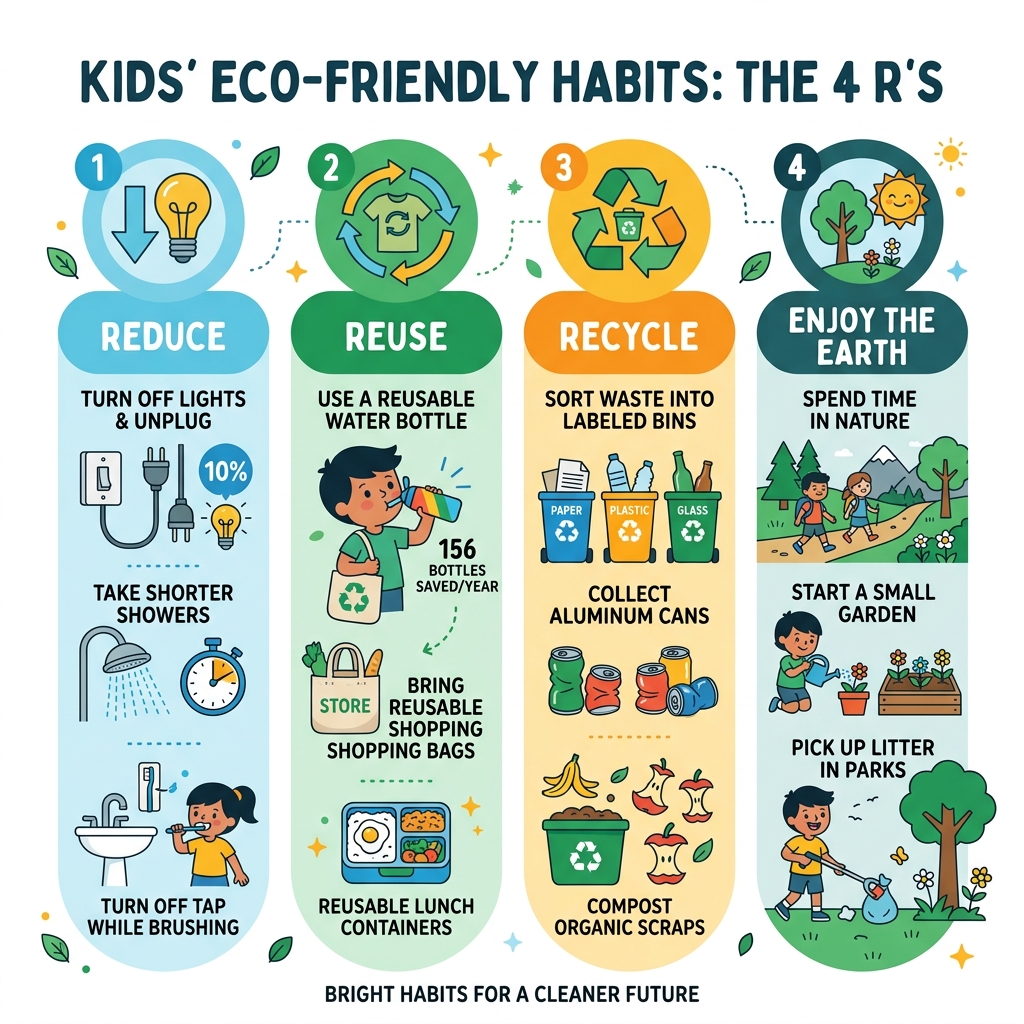
Eco friendly habits for kids don’t have to be complicated. Here are the most effective ones to start today:
- Turn off lights and unplug electronics when not in use
- Use a reusable water bottle instead of single-use plastic
- Take shorter showers (even one minute less saves ~75 gallons per month)
- Sort recycling into labeled bins for paper, plastic, and glass
- Carry reusable bags to the store
- Turn off the tap while brushing teeth
- Start a small garden or compost bin at home
- Pick up litter on walks and in parks
- Choose reusable containers for school lunches
- Spend time in nature to build a love for the environment
Kids today are growing up in a world where the environment is changing fast. The good news? Small, consistent actions at home can add up to something real.
Consider this: turning off unused electronics can cut your home energy bill by 10%. One reusable bottle can prevent 156 plastic bottles from entering landfills in a single year. These aren’t big lifestyle overhauls — they’re simple swaps that kids can own themselves.
And that ownership matters. Children who learn eco-conscious habits early tend to carry them into adulthood. They also influence the people around them — siblings, friends, even parents.
The challenge most families face isn’t wanting to do better. It’s knowing where to start without feeling overwhelmed. This guide breaks it all down into easy, age-appropriate habits your kids can actually stick to.
Why Early Environmental Education Matters

Teaching children about the environment isn’t just a “nice to have” lesson; it is a foundational part of raising responsible, empathetic human beings. Research from the WHO-UNICEF-Lancet Commission highlights that children are not just the future—they are influential change-makers today. When we teach eco friendly habits for kids, we are giving them the tools to navigate and protect the world they will inherit.
One of the most pressing reasons to start early is that children are often the most vulnerable to environmental risks. According to research on how children are more vulnerable to environmental risks, issues like air pollution and contaminated water sources impact developing bodies much more severely than adults. By educating them, we empower them to understand these risks and advocate for a cleaner, safer world.
Beyond protection, environmental education is a massive boost for a child’s development. Studies have shown that even a single visit to a natural setting can improve a child’s attention span by 20% and significantly enhance memory functions. When kids engage with nature, they develop better critical thinking and problem-solving skills. They begin to see the “why” behind their actions, turning a simple task like recycling into a mission to save a sea turtle or protect a forest.
Furthermore, these habits build character. Learning to conserve resources teaches patience, gratitude, and a sense of stewardship. It moves children away from a “throwaway culture” and toward a mindset of appreciation. For more inspiration on how to weave these values into your home, you can find more info about daily habits for sustainability that work for the whole family.
Core Principles: The 3 R’s and Beyond
To make sustainability easy for a child to grasp, we often start with the “3 R’s.” However, we like to add a fourth “R” that is just as important: Enjoy. Before a child wants to save the planet, they need to fall in love with it.
Here is a breakdown of how we can explain these core principles to our little ones:
| Principle | What it Means for Kids | Real-World Example |
|---|---|---|
| Reduce | Use less stuff so there is less trash. | Turning off the tap while brushing teeth or choosing toys with less plastic packaging. |
| Reuse | Find a new “job” for an old item instead of tossing it. | Turning an empty cereal box into a desk organizer or using an old T-shirt as a rag. |
| Recycle | Send items to a special factory where they are made into something new. | Sorting plastic bottles, aluminum cans, and paper into the correct bins. |
| Enjoy | Spending time outside to see why the Earth is worth protecting. | Going on a hike, watching birds, or planting a sunflower. |
Understanding where trash goes is a big part of this education. We can explain that a landfill is like a giant mountain of trash that never really goes away. By practicing the 3 R’s, we are making that mountain smaller. This creates a “circular mindset”—the idea that products should have a long life rather than a one-way trip to the bin.
For a deeper dive into these concepts, you can check out this scientific guide on being a green kid. It’s also helpful to look at tips for habits for a zero-waste lifestyle to see how these principles apply to everything from grocery shopping to birthday parties.
10 Essential Eco Friendly Habits for Kids to Practice at Home
The best way to make eco friendly habits for kids stick is to integrate them into the daily rhythm of the home. Here are ten habits that are easy to start and have a measurable impact.
- The “Power-Off” Rule: Teach kids to turn off lights, TVs, and gaming consoles the moment they leave a room. Unplugging chargers for tablets and phones when they aren’t in use is also key. Families can save around 8,000 rupees (or equivalent local currency) a year just by ending “vampire energy” waste!
- Water Saving Heroes: Did you know that leaving a faucet running for just five minutes uses as much energy as running a 60-watt light bulb for 14 hours? Encourage kids to turn off the tap while lathering their hands or brushing their teeth.
- The Four-Minute Shower Challenge: Scientists estimate we use about 2.1 gallons of water every minute in the shower. By cutting shower time down to four minutes (try using a fun song as a timer!), a family of four can save nearly 300 gallons of water every month.
- Reusable Bottle Duty: One reusable bottle can block the production of 156 plastic bottles a year. Let your child pick out a bottle they love and make them responsible for washing and filling it every morning.
- The Toothpaste Squeeze: Use a binder clip to roll up toothpaste tubes. This ensures every last bit is used, reducing waste and teaching kids to value the products they have.
- Toilet Tank Displacement: This is a fun “science experiment” habit. Place a water-filled plastic jug in the toilet tank (away from the moving parts). This displaces water so that every flush uses less, saving a portion of the 3.5 gallons usually sent down the drain.
- Scrap Sorting: Set up a small bin for food scraps. Even toddlers can learn that apple cores and banana peels don’t go in the trash—they go to the compost to “feed the dirt.”
- Paper Preservation: Teach kids to use both sides of every piece of paper. If they have a “mistake” drawing, it becomes the perfect canvas for a collage or a paper airplane.
- The “Do I Need It?” Test: Before asking for a new toy, encourage kids to ask: “Do I really need this, or can I play with something I already have?” This builds mindful consumption habits.
- Sustainable Lunch Packing: Move away from plastic baggies. Use beeswax wraps, silicone pouches, and stainless steel containers. Let your child help pack their lunch so they see the lack of trash they are creating.
For more detailed strategies, see our guide to energy-saving habits for families and these sustainable living tips for beginners.
Making Eco Friendly Habits for Kids Fun Through Play
If it feels like a chore, kids won’t want to do it. If it feels like a game, they’ll never want to stop.
- Power-Off Scavenger Hunt: Create a game where kids earn stickers for finding “vampire” electronics that are plugged in but not being used.
- Upcycling Crafts: Don’t throw away old T-shirts! You can cut the bottom into strips and tie them together to create a reusable shopping bag. No sewing required!
- Cardboard Box Towns: Instead of buying new plastic playsets, use shipping boxes to build a “Cardboard City.” It encourages creativity and teaches the value of repurposing.
- Worm Bin Composting: For kids who love “creepy crawlies,” a worm bin is a hit. Watching worms turn old lettuce into rich soil is fascinating and provides a hands-on lesson in decomposition.
- Seed-Planting Parties: Host a small gathering where kids can decorate egg cartons and plant herb seeds like basil or mint. It’s a party favor that grows!
Building Eco Friendly Habits for Kids Through Nature and School
The classroom and the great outdoors are perfect laboratories for sustainability. Many schools now participate in Eco-Schools global initiatives, which help students connect science lessons to real-world ecosystems.
In Japan, students participate in souji, a 15-minute daily routine where they clean their own classrooms. This instills a sense of shared responsibility for their environment. Similarly, Sweden’s “Forest Schools” prioritize outdoor learning, showing that when kids spend time in nature, they are more likely to protect it as adults.
At home, you can mirror these successes by organizing “Litter Cleanup Games” at the local park. Use a “trash grabber” to make it fun and safe. You can even join programs like the Junior Ranger system, which rewards kids with badges for learning about and protecting national parks.
Hands-On Projects to Inspire Young Conservationists
Projects that show immediate results are the best way to keep kids engaged. Here are a few our team loves:
- Bee Water Stations: Bees need to drink, too! Fill a shallow pan with pebbles and a little water. The pebbles give the bees a safe place to land so they don’t drown while they hydrate.
- Butterfly “Potion”: If you have overripe bananas, don’t toss them. Blend them with a little sugar and water to create a “potion.” Paint it onto a rock or a sponge in the garden and watch the butterflies flock to it.
- Regrowing Veggies: You can regrow celery or green onions just by putting the base in a small cup of water. Kids love watching the green shoots emerge from what looked like “trash.”
- DIY Bird Feeders: Use a pine cone, cover it in peanut butter (or a seed butter), and roll it in birdseed. Hang it near a window so kids can identify the birds that come to visit.
These projects aren’t just fun; they are educational. For more ideas on student-led green living, check out our green lifestyle tips for students and our guide on creating eco-friendly daily routines.
Frequently Asked Questions about Sustainable Parenting
At what age should I start teaching my child about sustainability?
You can start as soon as they can walk! Toddlers are like “living sponges.” While they might not understand the complexities of climate change, they can certainly understand the physical act of flipping a light switch or putting a plastic bottle in a blue bin. By age three or four, they can begin to help with gardening and simple sorting games. The most important thing is that they see you doing it. Modeling behavior is the most powerful teaching tool we have.
How do I explain climate change without scaring my children?
The key is to focus on “hopeful solutions” rather than “doom and gloom.” Instead of talking about melting ice caps in a way that causes anxiety, talk about how we are “helping the Earth stay cool” by using less energy. Use stories and books like The Lorax or Wall-E to introduce the concepts of pollution and restoration. Always pair a problem with a concrete action they can take. This moves them from a place of fear to a place of empowerment.
What should I do if my child isn’t interested in green habits?
Gamify everything! If they aren’t interested in recycling, make it a “basketball” game where they have to “hoop” the plastic into the bin. If they don’t care about water conservation, get a fun colorful timer for the shower. It also helps to match the habit to their existing hobbies. If they love animals, focus on how picking up litter saves birds. If they love science, focus on the “magic” of composting.
Conclusion
At Refugio do Jardim, we believe that raising the next generation to be eco-conscious is one of the greatest gifts we can give the planet. Teaching eco friendly habits for kids is not about achieving perfection; it’s about making small, consistent choices that lead to a lifetime of awareness.
When we lead by example—by carrying our own reusable bags, turning off the faucet, and spending time admiring the beauty of a local trail—our children notice. They don’t just learn what we say; they learn what we do. Every small action, from rolling a toothpaste tube to planting a single seed, contributes to a much larger impact.
Let’s turn sustainability into an adventure for our families. Start with one habit this week, celebrate the progress, and watch as your little ones grow into the planet heroes the world needs. To keep your family’s journey going, embrace the green with sustainable habits for everyday living and explore our other resources for a more conscious home.
