
The Natural Gas Debate and Your Carbon Footprint
Is Natural Gas Actually Better for the Climate Than Coal?
Natural gas reduce carbon emissions by roughly 50% compared to coal when burned for the same amount of energy. That’s the short answer. But the full picture is more complicated.
Here’s a quick breakdown to get you oriented:
| Factor | Natural Gas vs. Coal |
|---|---|
| CO2 from combustion | ~50% less than coal, ~30% less than oil |
| U.S. power sector emissions cut (2005-2019) | Natural gas switching contributed ~65% of the reduction |
| Methane leakage risk | Even 0.2% leakage can erase the climate advantage |
| Methane’s warming power | Over 80x more potent than CO2 over 20 years |
| Distribution system emissions since 1990 | Down 69% |
So yes, burning natural gas is cleaner than burning coal. But how much cleaner depends heavily on how well methane leaks are controlled throughout the entire supply chain.
Natural gas powers about 30% of U.S. energy demand and 43% of electricity generation. It’s not a niche fuel. It’s the backbone of the current energy system — and a genuine source of confusion for anyone trying to make sense of their carbon footprint.
Is it a stepping stone to a cleaner future, or a trap that delays the inevitable shift to renewables? That’s exactly the debate we’re unpacking here.

How Natural Gas Reduces Carbon Emissions Compared to Coal
When we talk about how natural gas reduce carbon emissions, we have to look at the chemistry of the flame. Coal is essentially a heavy, carbon-rich rock. When you burn it, you get a lot of energy, but you also get a massive “carbon hangover” in the form of CO2, sulfur, and mercury. Natural gas, which is primarily methane (CH4), has a much higher ratio of hydrogen to carbon.
According to the U.S. Energy Information Administration (EIA), burning natural gas produces fewer emissions of nearly every type of air pollutant. Specifically, for every million Btu of energy produced, coal spits out more than 200 pounds of CO2. Natural gas? It clocks in at around 117 pounds. That is a massive difference when you scale it up to the size of a national power grid.
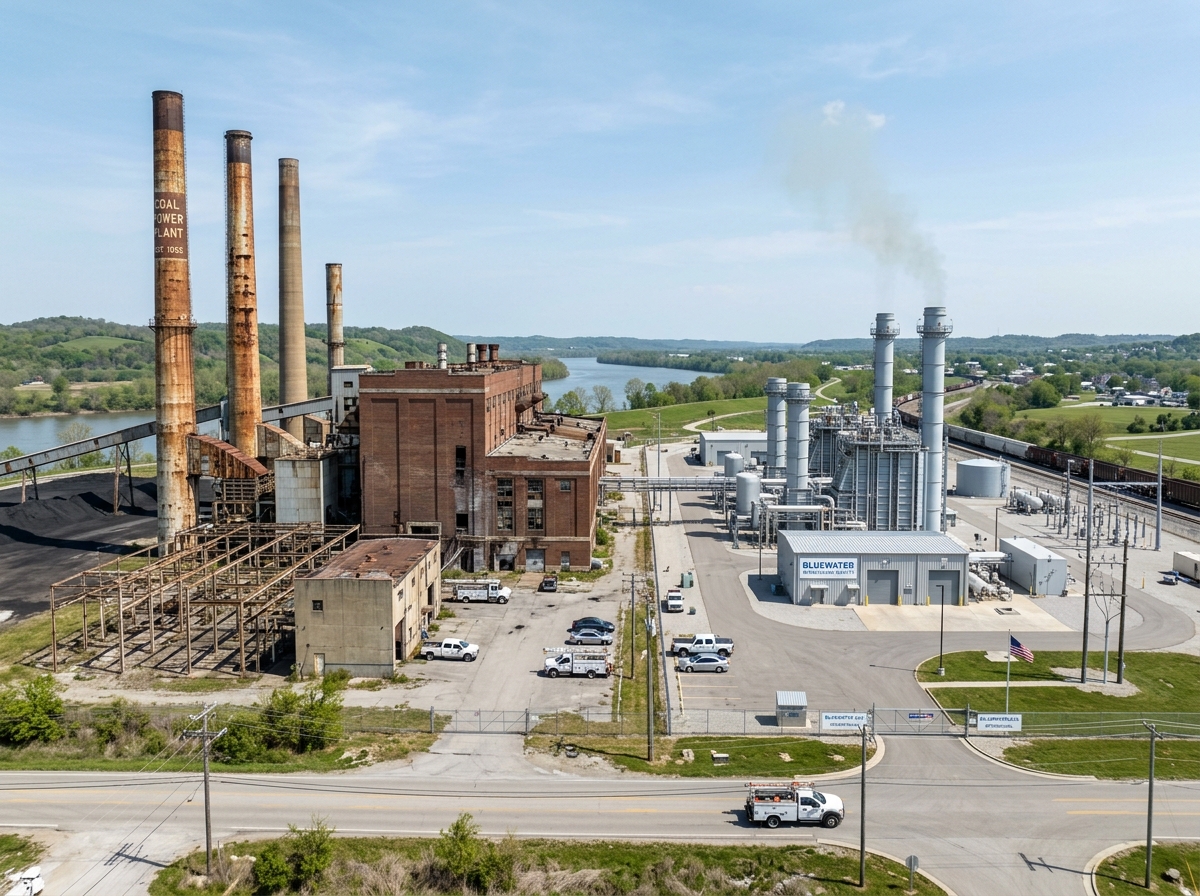
This 50% reduction is the primary reason why many environmentalists and policymakers have historically viewed gas as a “bridge fuel.” If we can’t switch to 100% solar and wind overnight, moving from coal to gas seems like a logical first step to stop the bleeding of our carbon budget.
The Impact of the Coal-to-Gas Shift in the U.S.
We’ve seen this theory play out in real-time. Between 2005 and 2019, the U.S. electricity sector saw a dramatic drop in emissions. While wind and solar get a lot of the (well-deserved) credit, the shift from coal to natural gas actually contributed to 65% of that fall.
In places like New York State, the results are even more striking. Between 2000 and 2021, power sector CO2 emission rates dropped by 46%, largely because natural gas replaced older, dirtier plants. It’s not just about CO2, either. Nitrogen oxides (NOx) fell by 92% and sulfur dioxide (SO2) by a staggering 99%. For those of us looking at Gassing Down The Essential Guide To Mitigating Your Carbon Footprint, these numbers represent a significant win for local air quality and global climate goals alike.
Efficiency Gains in Modern Power Generation
It’s not just what we burn, but how we burn it. Modern natural gas plants use “Combined Cycle” technology. This is basically a two-for-one deal: they use a gas turbine to generate electricity, then capture the leftover heat to create steam, which powers a second turbine.
This process makes the natural gas delivery system incredibly efficient—about 91% efficient from the point of production all the way to your stove or furnace. In contrast, grid-delivered electricity often loses a significant amount of energy during generation and transmission. When we focus on Harnessing Energy Efficiency Essential Tips For Eco Friendly Homes, using gas directly for heating or cooking can sometimes be more efficient than using electricity from a grid that still relies on older fossil fuel plants.
The Methane Factor: Does Leakage Negate the Benefits?
Now, here is where the “warm and fuzzy” feeling about natural gas starts to cool down. Natural gas is mostly methane, and methane is like CO2 on steroids. While it doesn’t stay in the atmosphere as long as CO2 (about 12 years versus centuries), it is much better at trapping heat while it’s there.
Over a 20-year period, methane is more than 80 times more potent than CO2. This means that if even a small amount of gas leaks out of a pipe or a well before it’s burned, it can completely cancel out the carbon savings we gained by not burning coal. This is the “Achilles’ heel” of the industry. As noted by the Center for Climate and Energy Solutions, managing these “fugitive emissions” is the single most important factor in determining if natural gas is actually helping the planet.
Understanding Methane Leakage Rates
How much leakage is too much? Scientists have found that if the leakage rate across the entire supply chain exceeds about 2.7% to 3%, natural gas loses its climate advantage over coal. Some studies suggest the threshold might be as low as 0.2% when you consider the full lifecycle of all greenhouse gases.
The EPA estimates the U.S. leakage rate is around 1.4%, but independent researchers using satellites and aerial surveys often find that it’s 50% to 100% higher. These “super-emitters”—massive leaks from malfunctioning equipment or intentional venting—are the biggest culprits. For homeowners trying to follow Easy Energy Reduction Eco Friendly Tips For Your Household, it can be frustrating to realize that the efficiency of your home furnace might be undermined by a leaky valve a thousand miles away.
Industry Progress in Methane Mitigation
The good news is that the industry is finally paying attention. Methane emissions from natural gas systems actually declined by 15.7% from 1990 to 2021, even as our gas consumption grew by 58%. This happened because companies are replacing old cast-iron pipes with modern plastic ones and using high-tech infrared cameras to spot leaks that are invisible to the naked eye.
Programs like the EPA’s Methane Challenge are pushing utilities to upgrade their infrastructure faster. We’re also seeing a rise in “Certified Natural Gas,” where third-party auditors verify that a specific batch of gas was produced with very low methane intensity. If you’re planning a Sustainable Home Renovation Tips And Tricks, supporting utilities that prioritize these upgrades is a great way to ensure the gas you use is as “clean” as possible.
Natural Gas as a Bridge Fuel to a Net-Zero Future
Can natural gas help us get to a net-zero world by 2050? Research published in Nature Communications suggests it can, but its role will have to change.
Right now, natural gas is a “baseload” fuel—it runs all the time. In a net-zero future, natural gas will likely act more like a “backup battery.” Because solar and wind are intermittent (the sun doesn’t always shine, and the wind doesn’t always blow), we need “firm capacity” that can turn on in minutes to keep the lights from flickering. Natural gas plants are perfect for this because they can ramp up and down much faster than nuclear or coal plants.
| Scenario | Natural Gas Role | Estimated Capacity Needed |
|---|---|---|
| Reference (Business as Usual) | Primary Energy Source | High |
| Net-Zero 2050 | Firm Backup / Peaking | Moderate (with Carbon Capture) |
| 100% Carbon-Free 2035 | Phased Out Completely | Zero (High Cost) |
The modeling shows that keeping some natural gas in the mix (especially with carbon capture) can actually lower the total cost of reaching net-zero. It prevents us from having to build an excessive amount of expensive battery storage for those rare weeks when renewable output is low.
Can Renewable Natural Gas Reduce Carbon Emissions Further?
One of the most exciting developments is Renewable Natural Gas (RNG). Unlike conventional gas, which we drill out of the ground, RNG is captured from organic waste. Think landfills, dairy farms, and wastewater treatment plants.
As these organic materials rot, they naturally release methane. If we let that methane escape, it’s a climate disaster. But if we capture it and clean it up, we can pump it into the same pipelines we already use. This turns a waste problem into an energy solution. For those interested in Creating An Eco Friendly Home A Comprehensive Guide, RNG represents a circular economy approach to energy that could drastically lower the carbon footprint of home heating.
Policy Frameworks to Help Natural Gas Reduce Carbon Emissions
To make sure natural gas stays on the right side of the climate ledger, we need strong policies. This includes things like the “Methane Fee” introduced in the Inflation Reduction Act, which penalizes companies for excessive leaks.
There are also tax credits like Section 45Q, which provides financial incentives for companies to capture their CO2 emissions and store them underground. By making it more expensive to pollute and cheaper to be clean, these policies help ensure that natural gas reduce carbon emissions effectively. If you’re Making Your Home Green A Comprehensive Guide, staying informed about these policies can help you understand the future of your energy bills and the stability of the climate.
Innovations and Infrastructure Improvements
The natural gas system of tomorrow won’t look like the one we have today. We’re seeing massive investments—about $95 million every single day—into upgrading infrastructure.
One of the most promising innovations is the “Allam Cycle.” This is a new type of power plant design that uses CO2 itself to drive the turbine. It produces almost zero atmospheric emissions because all the CO2 is captured as a high-pressure liquid, ready to be piped away and stored. As the Northeast Gas Association points out, these technological leaps are essential for keeping gas relevant in a carbon-constrained world.
Modernizing the Distribution Network
A lot of the progress is happening right under our feet. Since 1990, emissions from the natural gas distribution system (the pipes that run through your neighborhood) have decreased by 69%. This is largely due to the replacement of “leak-prone” pipes made of bare steel or cast iron with high-density plastic.
Not only does this reduce methane leaks, but it also makes the system safer and more reliable. This kind of infrastructure work is the industrial equivalent of Home Insulation Enhancing Energy Efficiency—it’s about sealing the “envelope” so that nothing goes to waste.
The Role of Hydrogen and Blending
What if we could use our existing gas pipelines to carry something even cleaner than methane? That’s the idea behind hydrogen blending. We can mix a certain percentage of hydrogen—ideally “green hydrogen” made from water and renewable electricity—into the natural gas stream.
This reduces the overall carbon intensity of the fuel without requiring everyone to buy new appliances immediately. Over time, some gas plants could be converted to run on 100% hydrogen. This is one of the Saving The Earth Innovative Ways To Reduce Energy Consumption At Home that could bridge the gap between our fossil fuel past and a zero-carbon future.
Frequently Asked Questions about Natural Gas
How much less CO2 does natural gas emit than coal?
Burning natural gas emits approximately 50% less CO2 than coal and about 30% less than oil for the same amount of energy produced. This is primarily due to the higher hydrogen-to-carbon ratio in methane compared to the complex carbon structures in coal.
Is natural gas considered a renewable energy source?
No, conventional natural gas is a fossil fuel because it is extracted from finite underground deposits formed over millions of years. However, Renewable Natural Gas (RNG), which is captured from organic waste sources like landfills and farms, is considered a renewable alternative because it uses carbon that is already part of the modern carbon cycle.
What is the biggest environmental risk of using natural gas?
The primary risk is methane leakage. Because methane is a much more potent greenhouse gas than CO2 in the short term (80x more potent over 20 years), even small leaks in the production, transmission, or distribution phases can significantly undermine the climate benefits of switching away from coal.
Conclusion
At Refugio do Jardim, we believe that understanding the tools we use to power our lives is the first step toward a more sustainable future. The debate over natural gas isn’t a simple “good vs. evil” story. It’s a story of transition.
Natural gas has already played a massive role in cleaning up our power grid by pushing coal out of the picture. However, for natural gas reduce carbon emissions to continue being a viable strategy, we must be relentless about fixing leaks, investing in carbon capture, and integrating renewable alternatives like RNG and hydrogen.
Whether you are looking into Reducing Carbon Footprint At Home or just trying to stay informed, every choice counts. From the efficiency of your furnace to the source of your electricity, you have the power to influence the energy transition.
Ready to take the next step in your green journey? Explore more guides and tips at Refugio do Jardim and let’s build a cleaner world together, one home at a time.
