
Clean Clothes and a Clean Planet
Why Your Laundry Routine Matters More Than You Think
Eco friendly laundry habits are small, practical changes to how you wash, dry, and care for clothes — and they add up to a surprisingly large environmental impact.
Here’s a quick overview of the most effective eco-friendly laundry habits:
- Wash less often — most clothes can be worn 3+ times before needing a wash
- Use cold water — it accounts for 90% of washing machine energy savings
- Wash full loads — saves water and reduces microfiber shedding
- Switch to plastic-free detergent — sheets, strips, or paste instead of plastic jugs
- Air dry when possible — dryers are one of the most energy-hungry home appliances
- Use a microfiber filter or bag — captures up to 90% of plastic particles from synthetic fabrics
- Swap dryer sheets for wool dryer balls — reusable, effective, and last up to 1,000 loads
- Pretreat stains — avoid rewashing entire loads for one spot
It’s easy to underestimate laundry. It feels like a minor household task — something you do on autopilot.
But the numbers tell a different story.
The average American family runs 300 to 400 loads of laundry per year. That adds up to tens of thousands of gallons of water, significant electricity use, and a steady stream of plastic detergent jugs — roughly one billion of which are thrown away in the U.S. every single year.
Altogether, residential laundry in the U.S. generates around 179 million metric tons of CO2 annually — equivalent to the total energy use of 21 million homes.
And it’s not just energy. Every time you wash a synthetic garment, it sheds hundreds of thousands of microscopic plastic fibers. These microfibers pass through wastewater treatment plants and end up in rivers, oceans, and eventually the food chain. Synthetic fabrics account for nearly 35% of all microplastic pollution in the world’s oceans.
The good news? You don’t need to overhaul your life. The most impactful eco-friendly laundry changes are simple tweaks to what you’re already doing — washing at a lower temperature, running fuller loads, choosing different products. Small shifts, real results.
This guide walks you through every step of a greener laundry routine, from machine settings to drying methods, so you can make changes that actually stick.
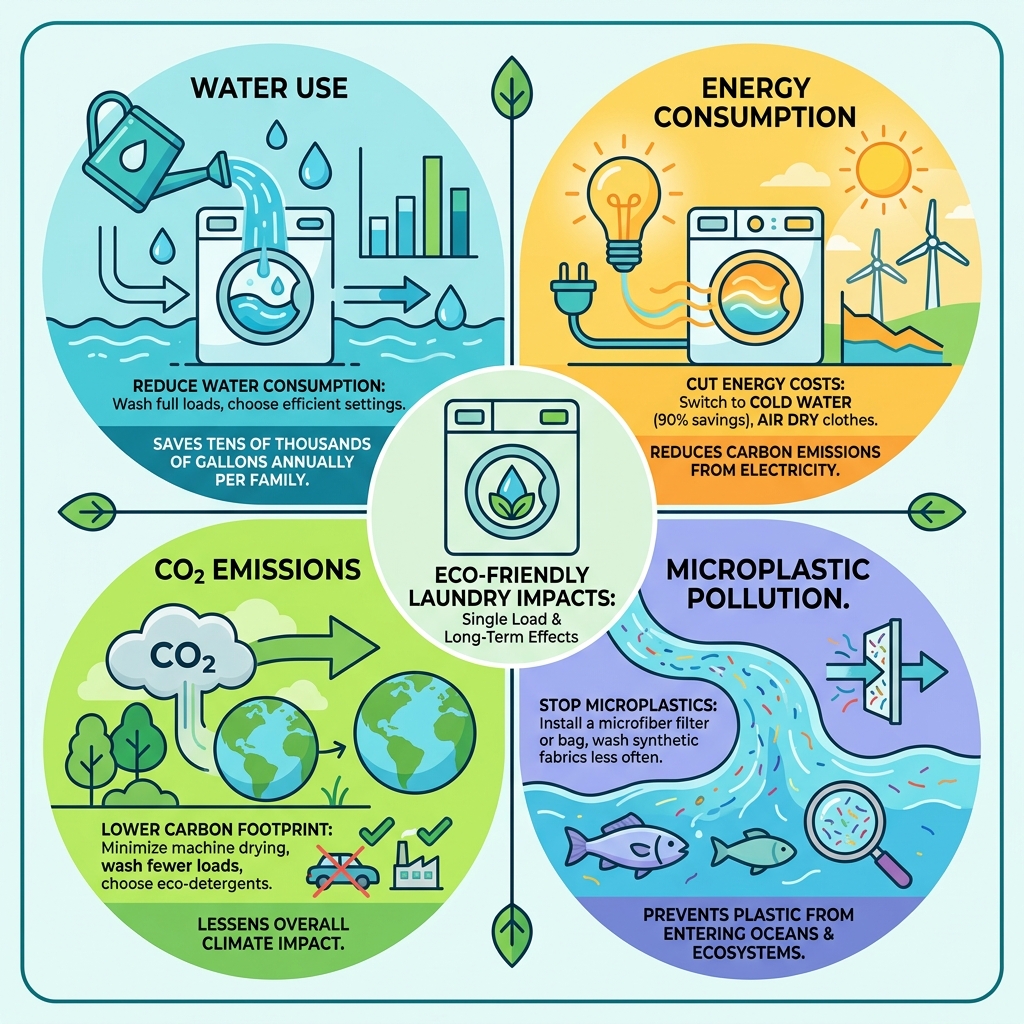
The Environmental Impact of Traditional Laundry vs. Eco Friendly Laundry Habits
When we think of pollution, we often picture factory chimneys or tailpipes. We rarely think of our laundry rooms. However, the traditional way we clean our clothes is resource-intensive and chemically heavy. Between the high-temperature washes, the energy-gulping dryers, and the chemical runoff from conventional detergents, our “clean” clothes often come with a dirty environmental price tag.
According to Fashion Revolution, the combination of washing, drying, and ironing clothes accounts for roughly one-quarter of a garment’s total carbon footprint over its entire lifecycle. When you multiply that by the 13 million tonnes of clothes trashed every year in the US alone, it’s clear that how we care for our items determines how long they stay out of the landfill. Adopting eco friendly laundry habits isn’t just about saving electricity; it’s about shifting toward a more sustainable home environment that respects our planet’s finite resources.
The Hidden Cost of Microplastics
One of the most pressing issues in modern laundry is the “invisible” pollution: microplastics. About 60% of clothing worldwide is made from synthetic materials like polyester, acrylic, and nylon. Every time these fabrics are agitated in a washing machine, they shed tiny plastic threads.
Research from Northumbria University highlights that an average laundry load can release up to 9 million microfibres into the wastewater system. Because these particles are so small, many bypass filtration systems at treatment plants, contributing to the 35% of ocean plastic pollution that originates solely from synthetic textiles. By changing how we wash, we can drastically reduce this shedding.
Psychological Barriers to Eco Friendly Laundry Habits
If sustainable laundry is so beneficial, why don’t we all do it perfectly? The answer often lies in our heads. A study on the psychology of laundering suggests that “disgust sensitivity” is a major barrier. We are biologically wired with a “behavioral immune system” that tells us anything worn once is “dirty.”
This primal fear of germs or social shame often overrides our environmental values. We wash clothes that aren’t actually soiled because we fear being perceived as unhygienic. Overcoming this requires us to normalize “rewearing” norms. If Anderson Cooper can wash his jeans only a few times a year, we can probably skip a cycle for that sweater we wore for two hours!
Optimizing Machine Settings for Efficiency
Your washing machine is a powerful tool, but like any tool, it needs to be used correctly to get the best results with the least waste. Modern machines come with a variety of settings, but many of us stick to the “Normal” cycle out of habit. By understanding how settings affect the water-to-fabric ratio and energy use, we can make our daily routines much more sustainable.
The Power of Cold Water
If you make only one change today, make it this: turn the dial to cold. Around 90% of the energy a washing machine uses goes solely toward heating the water. By switching to a cold wash, you instantly slash your laundry’s carbon footprint.
The science supports this shift. Experts at Harvard University have noted that cold water is just as effective as hot water for the vast majority of everyday loads. Most modern detergents contain enzymes that start working at temperatures as low as 60°F. Plus, cold water is gentler on your clothes—it prevents color bleeding, reduces shrinkage, and maintains the integrity of the fibers, meaning your favorite shirt stays in your closet and out of the trash for longer.
Load Size and Machine Type
Size really does matter when it comes to efficiency. Running a half-empty machine is a waste of water and energy, but cramming it too full prevents clothes from getting clean. The “Goldilocks” zone is generally about 3/4 full. This allows for enough agitation to remove dirt without wasting resources.
The type of machine you use also makes a massive difference. Front-loading washing machines use around 7,500 liters less water annually than top-loaders—that’s roughly 50 bathtubs! They are also gentler on clothes because they tumble rather than pull at fabrics. Furthermore, a University of Leeds study found that shorter, cooler cycles (like a 30-minute wash at 20°C) are significantly better for reducing microfiber shedding and fabric wear compared to longer, hotter cycles.
Sustainable Detergents and Natural Additives
What we put into the machine is just as important as the machine itself. Traditional liquid detergents often come in heavy plastic jugs and contain phosphates, synthetic fragrances, and optical brighteners that can harm aquatic life.
| Feature | Traditional Liquid | Detergent Sheets | Laundry Paste |
|---|---|---|---|
| Packaging | Plastic Jugs (900m thrown away/yr) | Compostable Paper | Recyclable/Zero Waste |
| Water Content | Up to 90% water | Zero water | Concentrated |
| Carbon Footprint | High (shipping heavy liquid) | Very Low (lightweight) | Low |
| Chemicals | Often high in synthetics | Usually plant-based | Minimalist/Natural |
Ditching Plastic Jugs for Eco Friendly Laundry Habits
The era of the giant orange plastic jug is ending. With roughly one billion laundry jugs discarded in the U.S. annually—and only 30% being recycled—switching to plastic-free alternatives is a major win. Detergent sheets and laundry pastes are highly concentrated, meaning you aren’t paying for (or shipping) water. This reduces transport emissions significantly. Many of these eco-friendly cleaning products are biodegradable and use plant-based surfactants that are much kinder to our waterways.
Natural Softeners and Stain Removers
You don’t need “Spring Breeze” scented chemicals to have soft, clean clothes. In fact, many commercial fabric softeners work by coating fibers in a thin layer of waxy chemicals, which can actually make towels less absorbent and irritate sensitive skin.
Instead, look to your pantry:
- Distilled White Vinegar: Adding half a cup to the rinse cycle acts as a natural softener, neutralizes odors, and helps remove soap residue. (And no, your clothes won’t smell like a salad—the scent disappears as they dry!)
- Baking Soda: A half-cup of baking soda helps regulate pH levels in the wash, making your detergent work more effectively and brightening whites.
- Hydrogen Peroxide: A natural alternative to bleach for brightening clothes without the harsh fumes or environmental damage.
Reducing Microplastic Shedding and Waste
Since we know synthetic fabrics are a major source of pollution, we need proactive ways to stop microplastics before they leave our homes.

Tools to Capture Microfibers
You can act as a gatekeeper for the ocean by using specialized filtration tools. There are three main options:
- Washing Bags: Bags like the Guppyfriend allow you to put synthetic items inside. The bag captures the fibers shed during the wash, which you can then dispose of in the trash.
- Laundry Balls: Products like the Cora Ball are tossed into the drum and designed to catch microfibers as they float in the water.
- Retro-fitted Filters: For the most effective solution, you can install a filter (like the PlanetCare filter) on the outside of your machine. These can capture up to 90% of microplastics, preventing them from ever reaching the drain.
Daily Eco Friendly Laundry Habits for Garment Longevity
Extending the life of your clothes is the ultimate form of sustainability. As PBS NewsHour reports, 85% of clothes end up in the trash, often long before they should.
To make your wardrobe last:
- Wash Inside-Out: This protects the outer surface of the fabric from friction and prevents colors from fading.
- Use Mesh Bags: For delicates, mesh bags prevent snagging and stretching.
- Spot Clean: Did you drop a bit of sauce on your shirt? Don’t wash the whole thing. A quick spot treatment with water and a bit of natural soap can save the garment from an unnecessary machine cycle.
- Air Out: Sometimes a shirt just needs some fresh air to lose a faint scent. Hang it by an open window instead of tossing it in the hamper.
Sustainable Drying Methods and Maintenance
The dryer is often the most energy-hungry appliance in the house. In fact, in some countries, like Germany, less than half of households even own one! In the U.S., we’ve become addicted to the convenience, but air drying is far superior for garment health.
Alternatives to Dryer Sheets
Dryer sheets are single-use items often coated in synthetic fragrances and tallow (animal fat). A much better alternative is wool dryer balls. These reusable spheres bounce around in the dryer, creating space between clothes so air can circulate better. This can reduce drying time by 25% to 40%, saving you money on your energy bill. They also naturally reduce static and can last for over 1,000 loads. If you miss the scent, just add a few drops of your favorite essential oil to the balls.
Machine Maintenance for Efficiency
A machine that isn’t maintained has to work harder, using more energy and water.
- Clean the Lint Trap: This is a safety must, but it also improves airflow, making your dryer much more efficient.
- Monthly Descaling: If you live in a hard water area, mineral buildup can damage your machine. A monthly hot cycle with vinegar or a specialized eco-cleaner keeps things running smoothly.
- Gasket Care: For front-loaders, wipe down the rubber seal (gasket) after your final load and leave the door ajar. This prevents mildew and odors, meaning you won’t have to re-wash “clean” clothes that smell funky.
Frequently Asked Questions about Sustainable Laundry
How often should I wash my clothes to be eco-friendly?
It depends on the item! Underwear and socks should be washed after every wear. However, jeans can easily go 10 wears (or more!) before needing a wash. Sweaters and fleece items usually last 6-7 wears. Follow the “sniff test”—if it doesn’t smell and isn’t visibly dirty, it’s probably fine for another day. This also aligns with the “hygiene hypothesis,” which suggests that being too sterile isn’t always best for our immune systems.
Do eco-friendly detergents actually work in cold water?
Yes! Modern eco-detergents are specifically formulated with enzymes that thrive in cooler temperatures. If you have a particularly tough stain, we recommend pre-treating it with a natural stain stick or a bit of concentrated detergent before putting it in a cold wash.
Is vinegar safe for my washing machine?
In moderation, yes. While vinegar is acidic, the half-cup used in a full rinse cycle is highly diluted. It is excellent for breaking down detergent buildup. However, always check your manufacturer’s guide, as some brands advise against frequent vinegar use if they use specific types of rubber seals that might be sensitive to acidity over many years.
Conclusion
At Refugio do Jardim, we believe that a sustainable lifestyle isn’t about being perfect—it’s about making better choices where we can. Transitioning to eco friendly laundry habits is one of the most rewarding changes you can make. Not only will you see a reduction in your utility bills and a longer lifespan for your favorite clothes, but you’ll also be part of the solution to the microplastic crisis.
Start small: switch to cold water this week. Next month, try a plastic-free detergent. Every load is an opportunity to protect our planet. Ready to dive deeper into a greener home? Start your journey with green lifestyle habits and see how small shifts lead to a big impact.
