
How to Keep Your Two-Wheeled Friend Rolling
Why Every Cyclist Needs a Bike Repair Maintenance Guide
A good bike repair maintenance guide can be the difference between a smooth commute and a frustrating walk home pushing a broken bike.
Here’s the quick version of what you need to know:
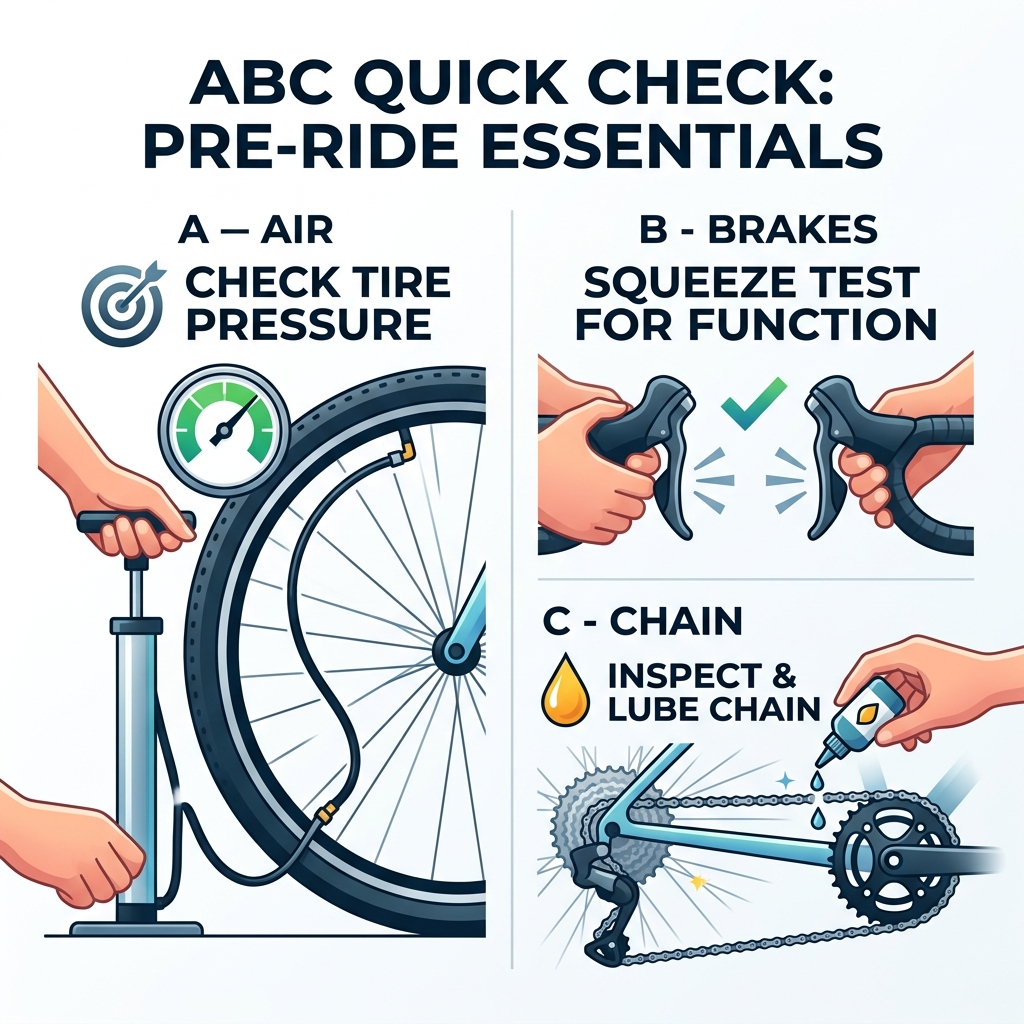
- Before every ride: Check Air (tires), Brakes (squeeze test), and Chain (lube and smoothness) — the ABC Quick Check
- Weekly: Wipe and lube the chain, visually inspect tires and brakes
- Monthly: Check chain wear, brake pad thickness, and wheel trueness
- Annually: Full drivetrain, bearing, and brake overhaul — professional or DIY if experienced
Skipping basic maintenance isn’t just inconvenient. It’s expensive. A worn chain that costs ~$53 to replace can quietly destroy your cassette and chainrings, turning a small fix into a $300–400+ drivetrain overhaul.
The good news? Most of what keeps a bike healthy takes less than 5 minutes a week. You don’t need a full workshop or mechanical experience to start. You just need a simple routine.
Whether you ride to work twice a week or hit the trails on weekends, this guide breaks everything down into clear, actionable steps — no jargon, no overwhelm.
The Ultimate Bike Repair Maintenance Guide: From ABCs to Overhauls
We believe that every cyclist should feel empowered to handle the basics. Think of your bike like a living thing—it needs “food” (lubrication), “breath” (air), and a regular “check-up” to stay happy. If you ignore the whispers of a squeaky chain or a soft tire, your bike will eventually start shouting at you through broken parts and failed rides.
The cornerstone of any bike repair maintenance guide is the ABC Quick Check. This 30-second routine should be your ritual before every single ride.
- A is for Air: Tires lose air over time, even if they aren’t punctured. Squeeze your tires with your palms; they should feel firm. If you’re unsure, use a gauge.
- B is for Brakes: Squeeze your front and rear brake levers. They should engage firmly before the lever touches the handlebar. If the lever pulls all the way to the grip, your brakes need immediate attention.
- C is for Chain: Give your pedals a quick backward spin. The chain should move smoothly without any kinks, squeaks, or “crunchy” noises.
By following a Complete Bike Maintenance Checklist, you catch small issues before they become “walk-of-shame” catastrophes.
Tire Pressure in Your Bike Repair Maintenance Guide
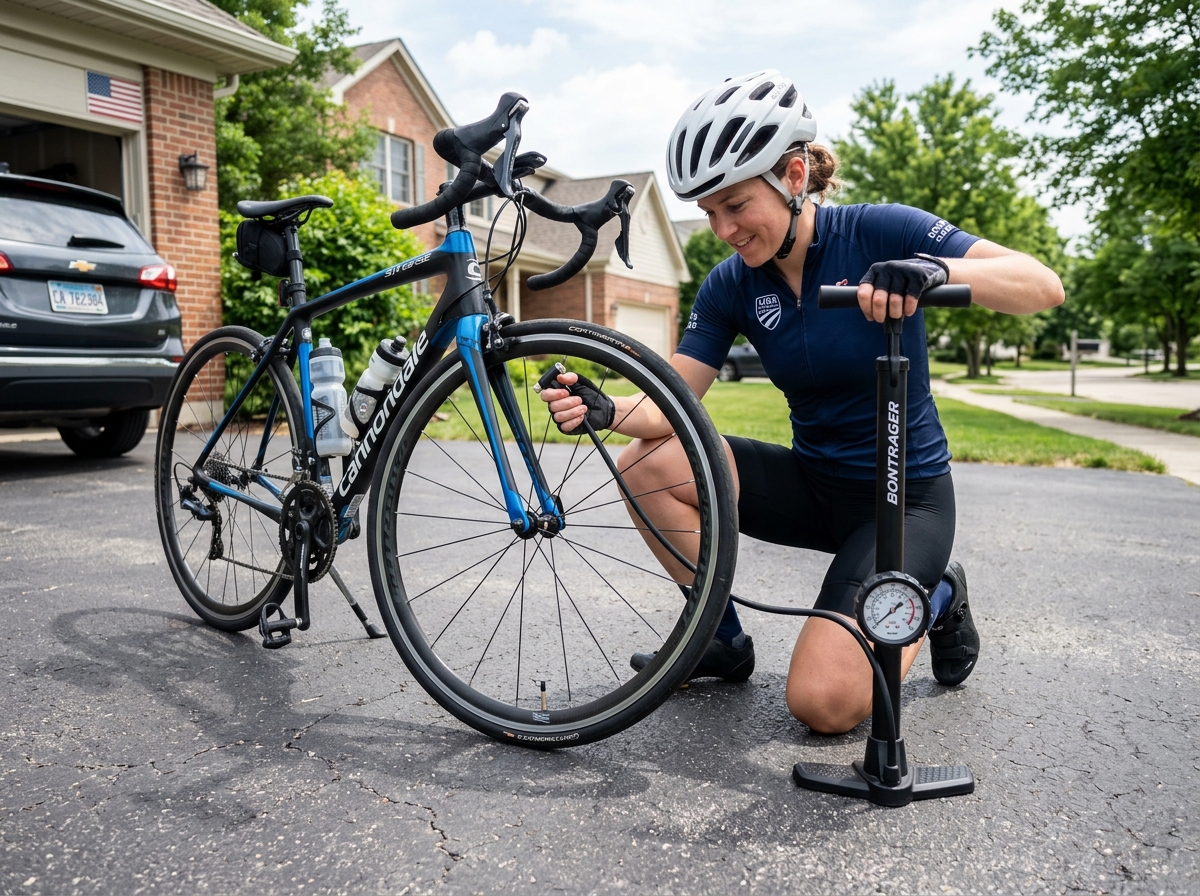
Tire pressure isn’t just about preventing flats; it’s about how your bike feels. Too low, and you risk “pinch flats” (where the tube gets pinched against the rim) and sluggish handling. Too high, and you’ll feel every pebble in your spine.
Always check the sidewall of your tire for the manufacturer’s recommended PSI (pounds per square inch). Here is a general guide for different riding styles:
- Road Bikes: 80–100 PSI. These high pressures minimize rolling resistance on smooth pavement.
- Mountain Bikes (MTB): 17–26 PSI (if running tubeless). Lower pressure allows the tire to deform over rocks and roots for better grip.
- Gravel Bikes: 40–60 PSI. A “sweet spot” that balances speed on asphalt with comfort on dirt.
We recommend using a floor pump with a built-in pressure gauge for accuracy. Hand pumps are great for emergencies, but they rarely get you to the precise PSI needed for optimal performance.
Advanced Repairs for Your Bike Repair Maintenance Guide
Once you’ve mastered the basics, you might feel the itch to dive deeper. One common advanced task is wheel truing. A wheel is “true” when it spins straight without wobbling side-to-side. If your wheel wobbles more than 1/16 of an inch, it’s time to adjust the spoke tension using a spoke wrench.
For those riding mountain bikes, suspension maintenance is non-negotiable. Most manufacturers recommend a “lower leg service” every 50 hours of riding to keep the seals lubricated and the fork moving smoothly. A full overhaul, including internal seals and oil changes, should happen every 100 to 200 hours. Neglecting this $200 service can lead to stanchion wear that costs over $800 to fix.
Maintenance Schedules: Daily Checks to Annual Service
Consistency is the secret sauce of bike longevity. We find it helpful to think of maintenance in layers. You don’t need to rebuild your hubs every week, but you shouldn’t wait a year to lube your chain.
| Frequency | Task | Why It Matters |
|---|---|---|
| Every Ride | ABC Quick Check | Safety and immediate performance. |
| Weekly | Wipe & Lube Chain | Prevents rust and reduces drivetrain friction. |
| Monthly | Deep Clean & Bolt Check | Catches loose parts and measures component wear. |
| Seasonally | Cable & Brake Service | Ensures crisp shifting and reliable stopping power. |
| Annually | Professional Overhaul | Services hidden bearings (hubs, headset, bottom bracket). |
For a more detailed breakdown, refer to this Bicycle Maintenance Guide.
Seasonal and Winter Storage Prep
If you live in a climate where you hang up the bike for the winter, don’t just lean it against a cold garage wall and forget it. Salt, moisture, and grime are the enemies of metal.
Before storage, give your bike a “spa day.” Wash the frame with mild dish soap, degrease the drivetrain, and apply a fresh coat of lubricant. If you have an e-bike, pay special attention to the battery—store it indoors in a cool, dry place at about 50-70% charge. Never store a battery completely empty, as it may never wake up again. For all bikes, we suggest shifting into the smallest gears to take the tension off the derailleur springs.
Mastering the Drivetrain and Braking Systems
The drivetrain is the “engine” of your bike. It consists of the chain, the cassette (the gears on the back wheel), and the chainrings (the gears by your pedals).
The most important thing to monitor is chain stretch. Despite the name, chains don’t actually stretch; the pins and rollers wear down, making the chain physically longer. This “elongated” chain no longer fits perfectly between the gear teeth, causing them to wear into a “shark fin” shape.
- Road bikes: Replace the chain at 0.5% elongation.
- Mountain bikes: Replace at 0.75% elongation.
Using a $15 chain wear indicator tool can save you hundreds of dollars. If you catch the wear early, you only need a new chain. If you wait until it’s 1.0% worn, you’ll likely need to replace the cassette and chainrings too.
For a step-by-step look at keeping these parts moving, check out this DIY Guide to Tuning Your Bike.
Brake Service and Pad Replacement
Stopping is even more important than going. Most modern bikes use disc brakes or rim brakes. For disc brakes, check your pads monthly. If there is less than 1.5mm of braking material left (about the thickness of a penny), replace them immediately.
If your brakes are squealing, it’s often due to contamination. Clean your rotors with isopropyl alcohol and a clean rag. Never use soapy water or degreaser on rotors, as the residue can ruin your brake pads. For hydraulic systems, if the levers feel “mushy,” you likely have air bubbles in the lines and need a professional “bleed” service.
Identifying Component Wear and Noises
Your bike is a storyteller. If it’s making noise, it’s trying to tell you something:
- Squeaking: Usually a dry chain. Add lube!
- Clicking while pedaling: Could be a loose pedal, a dry seatpost, or a worn bottom bracket bearing.
- Chain skipping: This happens when you try to shift and the chain jumps between gears. It’s often a sign of a stretched chain or a slightly bent derailleur hanger.
- Grinding: This is the sound of metal-on-metal. It usually means dirt has gotten into your bearings or your brake pads are completely gone.
Essential Tools and Common Roadside Repairs
You don’t need a professional mechanic’s “Blue Book” to get started, but a few specific tools are essential for any home bike repair maintenance guide.
- Hex Keys (Allen Wrenches): Most bolts on a bike use 4mm, 5mm, or 6mm hex heads.
- Torque Wrench: Crucial for modern bikes, especially those with carbon fiber parts. It ensures you tighten bolts to the exact Newton-meter (Nm) spec so you don’t snap a bolt like a breadstick.
- Chain Checker: The best $15 you’ll ever spend.
- Bike-Specific Degreaser: Avoid harsh hardware store solvents that can damage delicate seals.
Fixing Flats and Chain Breaks
The most common roadside “disaster” is a flat tire. We recommend practicing a tube change in your living room so you aren’t learning it for the first time in the rain.
- Flat Forensics: When you pull the tube out, find the hole. If there are two small holes side-by-side (“snake eyes”), you had a pinch flat—pump your tires firmer next time! If it’s a single hole, check the inside of the tire for a thorn or glass shard before putting the new tube in.
- Chain Breaks: If your chain snaps, a portable chain tool and a “master link” (or Quick-Link) can get you home. You simply remove the broken link and snap the master link into place.
Differences Between Road, MTB, and E-Bikes
While the basics are the same, different bikes have unique needs:
- Mountain and Gravel: If you run tubeless tires, the sealant inside dries out every 3–6 months. You’ll need to “refresh” it by injecting more liquid through the valve stem.
- E-Bikes: These are heavier and more powerful, which means they eat through chains and brake pads much faster than traditional bikes. Check your mid-drive motor bolts frequently, as the high torque can vibrate them loose.
- Road: High-pressure tires need to be checked before every ride, as they lose PSI faster than high-volume MTB tires.
Frequently Asked Questions about Bike Maintenance
How often should I replace my bike chain?
For most riders, a chain lasts between 1,200 and 2,500 miles (2,000–4,000 km). However, if you ride in the mud or rain frequently, it might wear out in half that time. The only way to know for sure is to use a chain wear gauge.
Can I use WD-40 to lubricate my bicycle chain?
No! Standard WD-40 is a solvent, not a lubricant. It will actually strip the existing oil out of your chain, leading to rapid wear and a very noisy ride. Always use a bike-specific “dry lube” (for dusty conditions) or “wet lube” (for wet conditions).
When should I take my bike to a professional mechanic?
If it involves “bleeding” hydraulic brakes, truing a severely wobbly wheel, or pressing in new bearings, it’s usually best to see a pro. We also recommend a professional “annual tune-up” once a year to ensure the things you can’t see (like the grease inside your headset) are still in good shape.
Conclusion
At Refugio do Jardim, we believe that a well-maintained bike is a key part of a sustainable, joyful lifestyle. Taking the time to understand your “two-wheeled friend” through this bike repair maintenance guide not only saves you money but ensures that every ride is safe and efficient.
Bicycles are the ultimate form of sustainable transportation, and with just a little bit of preventative care, your bike can last for decades. So, grab a rag, check your air, and keep those wheels rolling!
For more tips on maintaining a healthy, eco-friendly lifestyle, explore More info about sustainable living services. Happy riding!
