
Beautifully Bare: Your Guide to Zero Waste Beauty
Why Your Beauty Routine Needs a Zero Waste Makeover
Zero waste beauty tips can make a real difference — and you don’t need to overhaul your entire routine to get started. Here’s a quick overview of the most impactful changes you can make:
- Finish what you have before buying anything new
- Swap single-use items for reusables (cotton rounds, safety razors)
- Choose solid bars over bottled products to cut plastic packaging
- Pick sustainable packaging — glass, aluminum, bamboo, or compostable materials
- Try simple DIY recipes using kitchen staples like coconut oil and sugar
- Avoid microplastics by checking ingredient labels
- Support transparent brands with genuine refill or take-back programs
Here’s an uncomfortable truth: the beauty industry produces 120 billion units of packaging every year — most of it unrecyclable. The average person throws away 12 empty makeup containers annually, and nearly all of them end up in landfills where they sit for centuries.
It doesn’t stop there. Many conventional beauty products contain microplastics that slip through wastewater treatment plants and enter the food chain. Scientists estimate we each consume the equivalent of a plastic bank card’s worth of microplastics every single week.
The good news? Small, smart swaps in your daily beauty routine can reduce your environmental impact by up to 80% — without sacrificing quality or adding an hour to your morning.
This guide breaks it all down into simple, actionable steps.
Essential Zero Waste Beauty Tips for Beginners
Stepping into sustainable self-care can feel like standing at the base of a very tall, very plastic mountain. But we have a secret for you: the most sustainable product in the world is the one you already own.
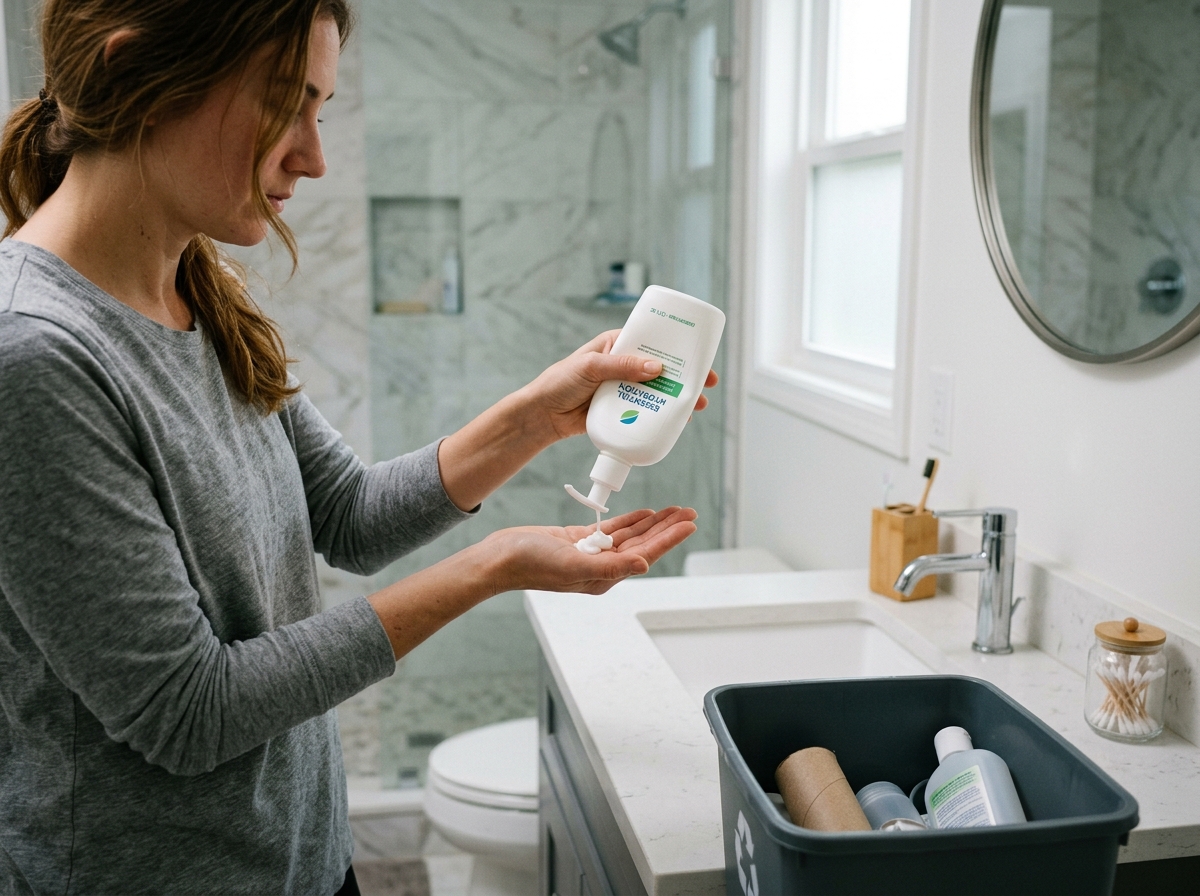
The Golden Rule: Use What You Have
Before you rush out to buy a set of glass jars and bamboo toothbrushes, take a deep breath and open your bathroom cabinet. The “audit” is your first step. Check expiration dates and group your products. We recommend categorizing them into three piles: items you love and will finish, items you don’t use (which could be donated to a friend or a local shelter if they are still sealed), and items that are nearly empty.
A common mistake is tossing perfectly good, half-full plastic bottles to “start fresh” with eco-friendly alternatives. This actually creates more waste! Transitioning gradually is the key to success. By finishing your current supply, you honor the resources used to make those products and give yourself time to research your next sustainable swap. For more ideas on how to overhaul your habits, check out our Clean Living: The Ultimate Guide to Sustainable Personal Care Products.
The Financial Side of Sustainability
One of the best zero waste beauty tips we can offer is to look at the “cost per use.” While a high-quality glass-bottled serum or a safety razor might have a higher price tag upfront, they often save you significant money in the long run. For example, replacing a $45 refillable lipstick case once and then buying $15 refills is much cheaper over two years than buying $20 disposable tubes every few months.
Prioritize Sustainable Packaging and Materials
When it’s finally time to replace a product, the packaging is your primary focus. The beauty industry struggles with recycling because many containers are too small for sorting machines or are made of “mixed materials” (like a plastic tube with a metal spring inside).
Look for these “Big Four” materials:
- Glass: Infinitely recyclable and easy to clean/reuse at home.
- Aluminum: One of the most recycled materials on earth; it’s lightweight and durable.
- Compostable Paper: Ideal for lip balms and deodorants. Once empty, it can literally go back to the earth.
- Bamboo: A fast-growing, renewable resource that is perfect for brush handles and lids.
By choosing these over virgin plastic, you are voting with your wallet for a circular economy. Learn more about these materials in our guide to Eco-Friendly Alternatives to Plastic.
Simple Swaps and Zero Waste Beauty Tips
Ready to make your first physical changes? Start with the “disposables”—those items you use once and throw away.
- Safety Razors: Ditch the plastic cartridges. A stainless steel safety razor lasts a lifetime; you only replace the metal blade, which can be recycled in a “blade bank.”
- Reusable Cotton Rounds: Instead of tossing a cotton ball every time you remove mascara, use fabric rounds. You can simply toss them in a mesh bag and wash them with your regular laundry.
- Bamboo Toothbrushes: Since plastic toothbrushes take 400 years to decompose, switching to a compostable bamboo handle is a huge win. Pair this with our The Ultimate Guide to Plastic-Free Oral Hygiene for a total bathroom transformation.
- Toothpaste Tablets: These eliminate the unrecyclable plastic tube entirely. They come in glass jars or compostable pouches—just chew, brush, and rinse.
- Menstrual Cups or Period Underwear: These can replace thousands of single-use pads and tampons over a decade, saving you a fortune and keeping plastic out of landfills.
Maximizing Impact with Multi-Purpose and Solid Products
If you want to truly simplify your life, look for products that do double (or triple) duty. Not only does this reduce the number of containers on your shelf, but it also streamlines your morning routine.
The Power of the Bar
Liquid beauty products are often up to 90% water. When you buy a bottle of shampoo, you are paying for water and the plastic bottle required to hold it. Solid bars are concentrated versions of the same ingredients. One high-quality shampoo bar can replace up to three plastic bottles of liquid shampoo!
Solid products aren’t just for hair. You can now find:
- Solid Moisturizers: Lotion bars that melt with your body heat.
- Solid Mascara: A “cake” mascara that you apply with a reusable wand.
- Solid Perfume: Concentrated scents in small metal tins.
| Feature | Liquid Beauty Products | Solid Beauty Bars |
|---|---|---|
| Packaging | Plastic bottles (often non-recyclable) | Paper or package-free |
| Water Content | 70% – 90% water | Minimal to none |
| Travel | Subject to TSA liquid limits | Travel-friendly and spill-proof |
| Longevity | Finished quickly | Highly concentrated; lasts longer |
| Preservatives | Often required due to water | Usually fewer preservatives needed |
Multi-Use Magic
We love a product that wears many hats. A tinted lip and cheek balm reduces your makeup bag’s weight and waste. An oil cleanser can work as a makeup remover, a facial moisturizer, and even a cuticle oil. By choosing versatile items, you naturally adopt a more minimalist, zero-waste lifestyle.
DIY Zero Waste Beauty Tips for Home Care
Your kitchen is actually a secret laboratory for sustainable beauty. Making your own products is one of the most effective zero waste beauty tips because it gives you total control over ingredients and packaging.
- Sugar Scrub: Mix equal parts granulated sugar and coconut oil. Add a drop of peppermint or lavender essential oil for a spa-like experience.
- Honey Masks: Raw honey is a natural humectant and antibacterial. Apply it directly to clean skin for 15 minutes for a hydrating glow.
- Baking Soda Deodorant: A simple mix of baking soda, cornstarch, and coconut oil can be more effective than many store-bought “natural” deodorants.
- Hair Rinse: Diluted apple cider vinegar is incredible for removing product buildup and adding shine—no plastic bottle required!
For more ways to cut down on household waste while making these recipes, check out our tips on Minimizing Plastic Use at Home.
Conscious Consumption: Ingredients and Brand Ethics
Being “zero waste” isn’t just about the jar; it’s about what’s inside. Some ingredients are “invisible” waste—they don’t sit in a landfill, but they pollute our water and bodies.
Avoiding the Invisible Waste: Microplastics
Many exfoliants and glitters are actually tiny pieces of plastic. On ingredient labels, look out for:
- Polyethylene (PE)
- Polypropylene (PP)
- Nylon
- Polymethyl methacrylate (PMMA)
These particles are so small they bypass filtration systems and end up in the ocean, where they are consumed by marine life. Switching to natural exfoliants like sugar, salt, or ground coffee beans is an easy way to protect the environment.
Reef-Safe Sun Protection
If you’re heading to the beach, your sunscreen matters. Chemical filters like oxybenzone and octinoxate have been linked to coral bleaching. Opt for “mineral” sunscreens using non-nano zinc oxide or titanium dioxide. These sit on top of the skin and are much safer for delicate aquatic ecosystems.
Spotting Greenwashing
As sustainability becomes “trendy,” many brands use “greenwashing”—making misleading claims about how eco-friendly they are. A brand might use a green leaf on its packaging but still use 100% virgin plastic and harmful synthetics.
To find genuine brands, look for:
- Transparency: Do they list all ingredients and where they come from?
- Certifications: Look for Leaping Bunny (cruelty-free), B-Corp, or USDA Organic.
- Refill Systems: Brands that allow you to send back empty containers or buy “refill pouches” are often more committed to the cause.
- Plastic-Free Shipping: A “sustainable” product wrapped in three layers of plastic bubble wrap is a red flag.
For a deeper dive into making these household decisions, see our list of the Go Green: Top 20 Eco-Friendly Alternatives to Plastic for a Sustainable Household. You can also find more inspiration in our Zero Waste Lifestyle Tips.
Frequently Asked Questions about Sustainable Beauty
How do I recycle empty beauty containers properly?
Recycling beauty products is tricky! First, always rinse out any residue; “dirty” plastic can contaminate an entire batch of recycling. Remove labels and lids if they are made of different materials.
For items that your local curbside program won’t take (like mascara wands or pumps), look into specialty programs like TerraCycle. Many beauty retailers also offer “take-back” programs where you can drop off empties from any brand in exchange for rewards points. Finally, consider upcycling! An empty glass candle jar makes a perfect makeup brush holder, and a small tin can store bobby pins or jewelry for travel.
Is a zero-waste beauty routine more expensive?
It can be more expensive initially, but it is almost always cheaper over time. You are moving away from “disposable culture.” Instead of buying a $5 plastic razor every month, you buy one $30 safety razor that lasts decades. Additionally, by using multi-purpose products and DIY recipes, you’ll find you simply need to buy fewer things. Concentrated formulas like shampoo bars also last significantly longer than their liquid counterparts, giving you more “washes per dollar.”
How can I identify brands committed to zero waste?
Look for brands that prioritize the “Refuse” and “Reduce” parts of the zero-waste hierarchy. A company that encourages you to buy less, or offers a circular refill system where the packaging is cleaned and reused, is truly committed. Check their website for a sustainability report or a clear statement on their packaging goals. Genuine brands will often use recycled content in their packaging and avoid “free gift with purchase” promotions that encourage unnecessary consumption.
Conclusion
At Refugio do Jardim, we believe that beauty shouldn’t come at the cost of the planet. Transitioning to a zero-waste routine isn’t about being perfect—it’s about being intentional. Whether you start by swapping your toothbrush or by finally finishing that last bottle of lotion before buying a bar, every small step reduces the 120 billion units of packaging the industry produces.
By embracing zero waste beauty tips, you aren’t just cleaning up your bathroom; you’re supporting a future where luxury and sustainability go hand in hand. Take it one swap at a time, and enjoy the simplicity of a routine that is as kind to your skin as it is to the earth.
For more advice on reducing your environmental footprint, explore our Zero Waste Shopping Tips.
