
Stop Inhaling Fumes and Start Using These Non-Toxic Cleaning Sprays
Your Home Smells Clean — But Is the Air Actually Safe?
Non-toxic cleaning sprays are plant-based, chemical-free alternatives to conventional cleaners that protect your lungs, your family, and the environment without sacrificing cleaning power.
Top safe options to look for:
- EWG Verified or EPA Safer Choice certified sprays
- Formulas with plant-derived surfactants like decyl glucoside
- Products free from QACs, phthalates, formaldehyde, and chlorine
- Brands offering refillable or plastic-free formats
- Fragrance-free options for sensitive individuals, kids, and pets
Here’s something most people don’t think about: the spray you use to wipe down your kitchen counter could be quietly harming your lungs.
Research has found that using standard household cleaning sprays just once a week can have a similar impact on your lungs as smoking a pack of cigarettes a day. Meanwhile, the EPA estimates that indoor air quality is already 2 to 3 times worse than outdoor air — and conventional cleaners make that worse every time you use them.
The good news? Switching to safer options doesn’t require a lifestyle overhaul. Small swaps — like choosing a certified non-toxic spray — can make a real difference fast.
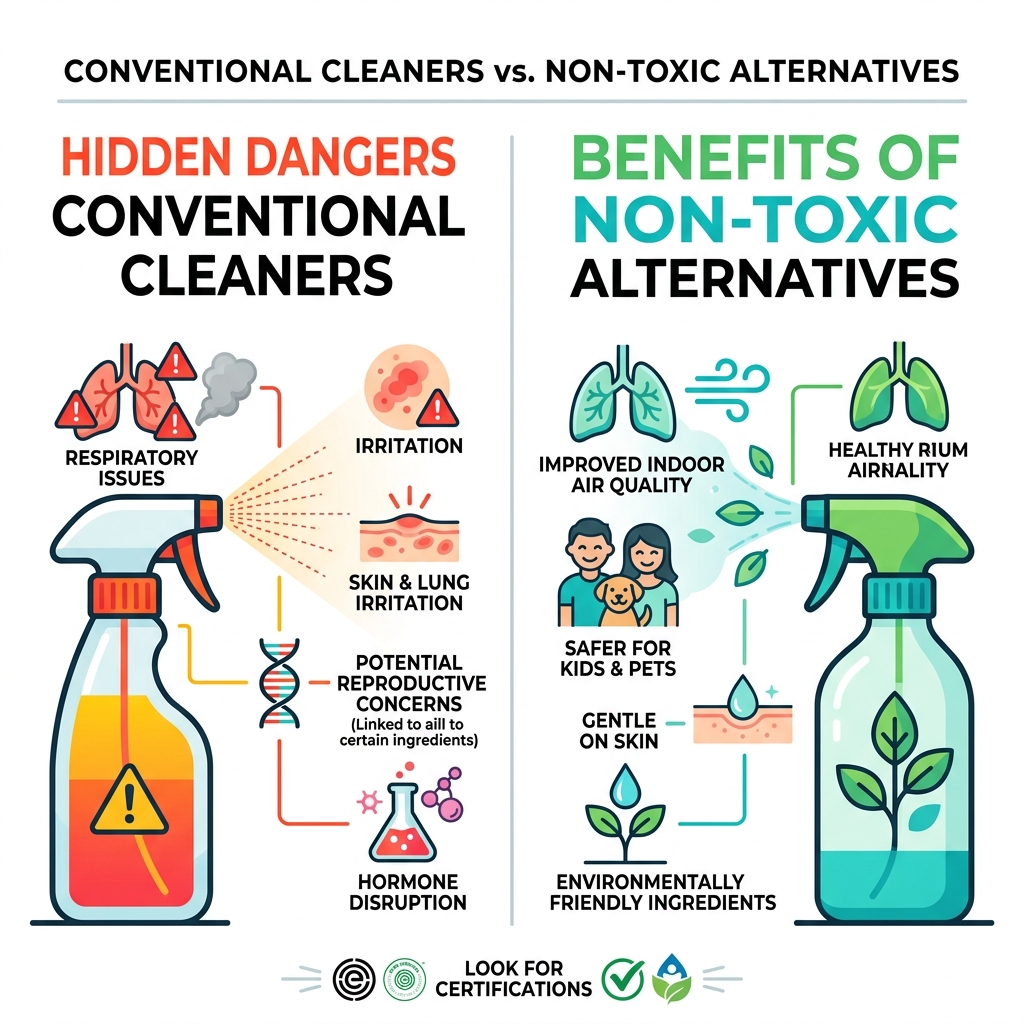
The Hidden Dangers of Conventional Cleaning Chemicals
Most of us grew up believing that a “clean” home should smell like bleach or “mountain spring” synthetic perfume. However, those familiar scents often mask a cocktail of hazardous substances. When we use traditional sprays, we aren’t just cleaning surfaces; we are releasing Volatile Organic Compounds (VOCs) into our breathing zone.
One of the most concerning groups of chemicals found in standard disinfectants are Quaternary Ammonium Compounds (QACs). These are potent skin and lung irritants often linked to respiratory issues and even reproductive concerns. Then there are phthalates, frequently hidden under the generic term “fragrance” on labels. These are known hormone disruptors that can interfere with the body’s endocrine system.
Furthermore, many conventional cleaners contain formaldehyde (a known carcinogen) or chlorine, which can create toxic gases if accidentally mixed with other household products. For those with asthma or sensitive skin, these ingredients are frequent triggers for flare-ups. To dive deeper into why these swaps matter for your long-term wellness, check out our eco-friendly cleaning products guide.
What Makes a Cleaning Spray Truly Non-Toxic?

With “greenwashing” on the rise, many brands put a leaf on their label and call it “natural.” To find non toxic cleaning sprays that actually live up to the name, we need to look past the marketing and straight at the ingredient list.
A truly safe cleaner relies on plant-derived surfactants. These are the “soap” elements that lift dirt and grease. Look for names like decyl glucoside or lauryl glucoside, which are derived from sugar or coconut. Other powerhouse ingredients include citric acid (found in citrus fruits) for cutting through hard water stains and sodium gluconate for preventing spots.
Transparency is the ultimate litmus test. Truly non-toxic brands will list every single ingredient, including the specific components of their scents. If a bottle just says “fragrance” or “parfum,” it’s a red flag. For a comprehensive look at building a safer home environment, see the natural home an essential guide to eco-friendly cleaning products.
Key Certifications for Non-Toxic Cleaning Sprays
If you don’t have a chemistry degree, third-party certifications are your best friend. They do the heavy lifting of vetting formulas so you don’t have to.
- EWG Verified: This is the gold standard. It means the product meets the Environmental Working Group’s strictest standards for health and transparency.
- EPA Safer Choice: A program by the U.S. Environmental Protection Agency that identifies products with safer chemical ingredients without sacrificing quality.
- USDA Biobased: This tells you what percentage of the product comes from renewable biological sources (like plants) rather than petroleum. For example, some top cleaners are 95% Biobased.
- Leaping Bunny: This ensures the product is cruelty-free and that no animal testing was involved at any stage of development.
Top-Rated Non-Toxic Cleaning Sprays for Every Room
Choosing the right format can be just as important as the ingredients. Whether you prefer a traditional bottle or a space-saving tablet, there is a non-toxic option for you.
| Feature | Liquid Sprays | Dissolvable Tablets | Cleaning Sheets |
|---|---|---|---|
| Eco-Impact | Moderate (if recycled) | High (Zero Waste) | Highest (Carbon Neutral) |
| Grease-Cutting | Excellent | Very Good | Excellent |
| Best For | Heavy-duty kitchen grime | General all-purpose | Glass and light surfaces |
| Space Saving | Bulky | Compact | Fits in a drawer |
For more detailed reviews on how these stack up in a real home environment, visit our guide on the best eco-friendly cleaning products for your home.
Best All-Purpose Non-Toxic Cleaning Sprays
When you want one bottle that can handle the kitchen, the living room, and the mudroom, versatility is key. Many leading eco-conscious brands offer plant-powered formulas that are widely available and highly effective.
For example, a high-quality fragrance-free all-purpose cleaner is a fantastic choice for those who want zero scent and a formula that is EPA Safer Choice Certified. It’s tough enough for stovetop grease but gentle enough for a laminate floor. If you prefer a light, natural scent, look for plant-powered multi-surface cleaners that use green tea and lime to leave a streak-free finish on glass and stainless steel without any harsh fumes.
Innovative Formats: Tablets, Sheets, and Concentrates
If you’re looking to reduce your plastic footprint, the industry has moved toward “just add water” models.
- Dissolvable Tablets: Several innovative companies have revolutionized the market with tablets that you drop into a reusable glass bottle. It eliminates the need for shipping heavy water across the country, significantly reducing carbon emissions.
- Cleaning Sheets: The newest innovation involves dissolvable sheets. These are incredibly lightweight, plastic-free, and often home-compostable. They are perfect for those who want a mess-free refill process.
- Concentrates: Multi-use concentrates are a favorite for a reason. You buy one bottle of concentrate and dilute it in different ratios to create everything from a streak-free window cleaner to a heavy-duty bathroom scrub. It declutters your cabinets and saves money over time.
DIY Solutions and Effective Cleaning Routines
Sometimes the best non toxic cleaning sprays are the ones you make yourself with pantry staples. Not only is this budget-friendly, but you also have 100% control over the ingredients.
- The Daily All-Purpose: Mix 1 part distilled white vinegar with 1 part water. Add 10 drops of lemon or tea tree essential oil for a fresh scent and extra cleaning power. (Note: Avoid vinegar on natural stone like marble or granite, as it can etch the surface!)
- The Heavy-Duty Scrub: For sinks and tubs, sprinkle baking soda over the surface, then spray with a mix of water and a squirt of liquid castile soap. It creates a paste that lifts soap scum without scratching.
- The Glass Specialist: Use a mix of water and a small amount of rubbing alcohol for a streak-free shine on mirrors.
When establishing a routine, we recommend using a steam mop for floors—it uses nothing but water to sanitize, making it the ultimate non-toxic choice. For more hands-on testing results, read our eco-friendly home cleaning product review.
How to Use Non-Toxic Cleaning Sprays Safely Around Pets and Kids
One of the biggest perks of switching to non toxic cleaning sprays is the peace of mind when your toddler decides the floor is a dinner plate. However, “natural” doesn’t always mean “edible.”
Always choose fragrance-free options for areas where pets spend a lot of time. Cats and dogs have much more sensitive respiratory systems than humans, and certain essential oils (like tea tree or peppermint) can be toxic to them if ingested or inhaled in high concentrations.
For food-contact surfaces like high-chair trays or cutting boards, even plant-based cleaners should generally be wiped down with a damp cloth afterward to ensure no residue remains. Most high-quality non-toxic sprays from reputable brands are formulated to be “no-rinse,” but a quick water wipe never hurts for extra safety.
Frequently Asked Questions about Safe Cleaning
Do non-toxic sprays work on tough grease and soap scum?
Yes! Modern plant-based chemistry has come a long way. Ingredients like limonene (from orange oil) are incredibly effective at dissolving grease. For soap scum, plant-derived acids (like citric acid) break down mineral deposits just as well as traditional bathroom cleaners. In many independent tests, top-tier non-toxic brands performed as well as, or better than, their chemical counterparts.
Are these products safe for greywater and septic systems?
Most truly non-toxic cleaners are biodegradable and safe for greywater and septic systems. Because they lack harsh antibacterial chemicals like triclosan or high levels of chlorine, they won’t kill the “good” bacteria that your septic system needs to function properly.
Do I need to rinse surfaces after using plant-based cleaners?
For general surfaces like countertops and windows, most non-toxic sprays are designed to be “spray and wipe” with no rinsing required. However, if you are cleaning a surface that will come into direct contact with food (like a cutting board), we recommend a quick rinse with plain water just to be safe.
Conclusion
Switching to non toxic cleaning sprays is one of the easiest and most impactful changes you can make for your household health. By moving away from QACs, phthalates, and synthetic fragrances, you are choosing to protect your indoor air quality and the long-term health of your family.
Beyond the health benefits, these products offer a massive win for the planet. With options for biodegradability, plastic-free packaging, and carbon-neutral shipping, your cleaning routine can finally align with your values. At Refugio do Jardim, we believe a clean home should be a healthy home.
Ready to transform your living space into a chemical-free sanctuary? Explore more eco-friendly home solutions on our blog and join the movement toward a more sustainable, breathable future.
