
The Smartest Switch You Can Make at Your Sink
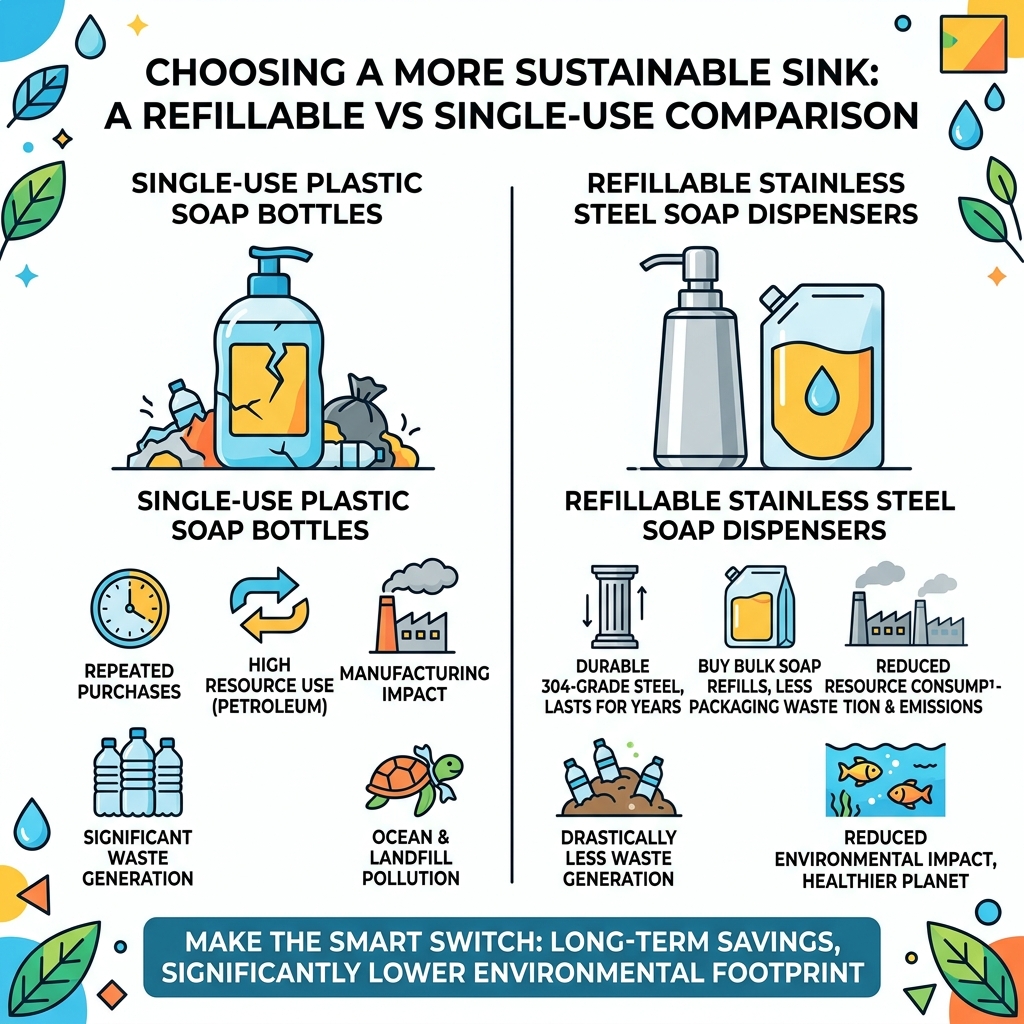
Stainless steel soap dispensers are one of the easiest upgrades you can make for a cleaner, more sustainable home. They last for years, look great, and help you ditch single-use plastic bottles for good.
Quick answer: Here are the top reasons people choose stainless steel soap dispensers:
- Durability – Made from corrosion-resistant 304-grade steel that holds up for years
- Eco-friendly – Refillable design eliminates plastic bottle waste
- Hygienic – Non-porous surface resists bacteria buildup
- Versatile – Works with liquid soap, foaming soap, lotion, and hand sanitizer
- Stylish – Available in brushed, polished, and matte finishes to suit any space
- Capacity options – Ranges from 12 oz for countertops to 1,200 ml for heavy-use settings
Most people go through dozens of plastic soap bottles every year. A single refillable stainless steel dispenser can replace all of them — without any major lifestyle overhaul.
Whether you want something sleek for your kitchen counter or a wall-mounted unit for your bathroom, there’s a stainless steel option that fits your space and your values.
Below, we’ve rounded up the best picks to help you find the right one fast.
Why Choose Stainless Steel Soap Dispensers for Your Home?
When we look at the hardware in our kitchens and bathrooms, we often overlook the humble soap dispenser. However, switching to stainless steel soap dispensers is a game-changer for several reasons. First and foremost is the material science. Most high-quality dispensers are crafted from 304-grade stainless steel (also known as 18/8 steel). This material contains roughly 18% chromium and 8% nickel, which creates a “passive” layer on the surface that naturally resists corrosion and rust.

Beyond just staying shiny, stainless steel is a champion of hygiene. Unlike plastic, which can develop microscopic scratches where bacteria hide, stainless steel has a non-porous surface. This makes it incredibly easy to sanitize—a must-have feature for an item we touch specifically when our hands are dirty!
In terms of longevity, a well-made metal dispenser can last a decade or more, whereas plastic pumps often crack or clog within months. From a design perspective, you aren’t limited to one look. Whether you prefer the fingerprint-resistant nature of a brushed finish, the mirror-like glow of polished steel, or the modern edge of matte black, there is a style to match your faucets and cabinet pulls.
Comparison: Stainless Steel vs. Other Materials
| Feature | Stainless Steel | Plastic | Ceramic |
|---|---|---|---|
| Durability | High (Drop-resistant) | Low (Cracks easily) | Medium (Brittle) |
| Hygiene | Excellent (Non-porous) | Poor (Porous/Scratches) | Good |
| Eco-Impact | Low (Recyclable/Refillable) | High (Single-use waste) | Medium |
| Rust Resistance | High (304/316 Grade) | N/A | N/A |
| Style | Modern/Industrial | Cheap/Basic | Classic/Artisanal |
Versatile Types of Stainless Steel Soap Dispensers
Not all stainless steel soap dispensers are created equal. Depending on your sink setup and how much traffic your bathroom gets, you’ll want to choose between a few main categories.
Countertop Models
These are the most popular for residential kitchens. They require zero installation—just fill them up and set them down. High-quality models often feature 12-ounce capacities and non-slip bases so they don’t slide around when you’re pressing down with wet hands. Many countertop versions also include a clear window or a “MAX” fill line so you can see exactly when it’s time for a top-up.
Wall-Mounted Units
If you are looking to save counter space or want that “boutique hotel” vibe, wall-mounted units are the way to go. These are often used in commercial settings like offices or restaurants because they are vandal-resistant and can hold larger volumes—sometimes up to 1,200ml (about 40 ounces). However, they are becoming increasingly popular in home showers to eliminate the “clutter” of plastic shampoo bottles. Various manufacturers provide sturdy vertical and horizontal options that are ADA-compliant, meaning they are easy to operate with one hand or even a wrist.
Liquid vs. Foaming
This is a big decision! Liquid dispensers work with standard dish soap or hand soap. Foaming dispensers, however, use a special pump mechanism that mixes air with diluted soap to create a rich lather. We’ve found that foaming pumps are excellent for families with kids because the foam is fun to use and easier to rinse off.
Foaming Stainless Steel Soap Dispensers
Foaming dispensers are the secret weapon of the eco-conscious home. Why? Because they save you a significant amount of money on soap.
To use a foaming stainless steel soap dispenser, you don’t actually need to buy expensive “foaming soap” refills. You can create your own DIY foaming soap by following a simple 1:5 ratio: combine one part liquid soap with five parts water.
- Step 1: Fill the container with water first (leaving room for soap).
- Step 2: Add your favorite liquid soap.
- Step 3: Gently swirl to mix (don’t shake, or you’ll get bubbles inside the tank!).
This aerated dispensing method uses much less “raw” soap per wash while providing a luxury foam texture. Some models, like square glass and stainless steel hybrids, offer a beautiful aesthetic while housing approximately 12 fluid ounces of your custom mix.
Key Features to Look for When Buying
When shopping for stainless steel soap dispensers, don’t just buy the first shiny object you see. Look for these specific features to ensure you’re getting a quality product:
- Capacity: Think about where the dispenser will live. A small 10-12 oz (300-350ml) dispenser is perfect for a kitchen sink. However, for a high-traffic guest bathroom, you might want something larger, like 1000ml or 1200ml models available from specialized suppliers. A 1200ml dispenser can provide over 1,000 hand washes per fill!
- Pump Quality: The pump is the only moving part, so it needs to be robust. Look for “one-shot” dispensing systems that are non-drip. Some high-end models use a “wrist-push” design, which allows you to operate the pump with your forearm if your hands are covered in chicken juice or garden dirt.
- Fingerprint-Proof Coating: Stainless steel is beautiful, but it can show smudges. A “brushed” finish or a specific fingerprint-proof coating will keep the unit looking clean even with frequent use.
- Stability: For countertop models, a non-slip base is essential. You don’t want the dispenser flying into the sink every time you try to get some soap.
- Refill Ease: Look for wide-mouth openings. There is nothing more frustrating than trying to pour soap through a tiny hole and having it spill down the sides of your new dispenser.
Maintenance and Care for Long-Lasting Brilliance
We often hear the question: “Does stainless steel rust?” Technically, stainless steel is “stain-less,” not “stain-never.” To keep your stainless steel soap dispensers in peak condition, a little maintenance goes a long way.
Cleaning Tips
- Avoid Harsh Chemicals: Never use bleach or cleaners with high chlorine content. These can strip the protective chromium layer and lead to pitting.
- No Abrasives: Skip the steel wool or scratchy green sponges. These create micro-scratches that actually make the steel more prone to staining.
- The Natural Fix: If you notice “browning” (which is often just oxidized soap residue, not actual rust), use a mixture of vinegar or lemon juice. These mild acids eat away at the oxidation without harming the metal.
- Hand Dry: After wiping your dispenser down with a damp cloth, dry it with a soft microfiber towel to prevent water spots.
Installation Insights
If you’re installing a wall-mounted unit, ergonomics matter. Industry standards suggest mounting the dispenser about 1115mm (44 inches) from the floor or roughly 170-300mm (7-12 inches) above the countertop. This ensures that everyone, including children and those using wheelchairs (ADA compliance), can reach the soap comfortably.
Frequently Asked Questions about Stainless Steel Soap Dispensers
Do stainless steel soap dispensers rust?
In short: No, if they are high grade and well-maintained. Quality dispensers use 304-grade steel, which forms a passive corrosion layer. However, if soap is left to sit on the surface for months without being used, it can oxidize and create brown deposits that look like rust. This is usually just surface-level grime that can be wiped away with vinegar. For extremely harsh environments (like a beach house or a boat), look for 316-grade “marine grade” stainless steel, which contains molybdenum for extra protection against salt air.
Can I use any liquid soap in these dispensers?
Most stainless steel soap dispensers are incredibly versatile. They can handle everything from thin, water-like soaps to high-viscosity lotions (up to 50,000 centipoise). You can use:
- Standard liquid hand soap
- Dish soap
- Hand sanitizer (gel or liquid)
- Antiseptic solutions
- Lotion
Just be careful with “exfoliating” soaps that contain beads, as these can sometimes clog the internal valves of the pump.
How do I install a wall-mounted stainless steel dispenser?
Most commercial-grade dispensers come with a mounting bracket and concealed fixings.
- Mark your holes: Use the backplate as a template.
- Drill: Use a masonry bit for tile or a standard bit for drywall (ensure you use the correct anchors).
- Secure: Screw the bracket into the wall.
- Attach: Most dispensers “click” onto the bracket and are secured with a small “grub screw” or a key-lock system to prevent them from being knocked off.
For vanity-top installations, you may need to drill a hole (usually 21-25mm in diameter) through the countertop itself. Always check the manufacturer’s specs before drilling!
Conclusion
At Refugio do Jardim, we believe that the path to a more sustainable, plastic-free lifestyle starts with small, intentional changes. Replacing flimsy plastic bottles with durable stainless steel soap dispensers is a perfect example of a “set it and forget it” eco-win. Not only do you reduce your household waste, but you also elevate the look of your home with a timeless, hygienic material.
Whether you’re looking for a sleek countertop model for your kitchen or a heavy-duty polished unit for a busy office, the benefits of stainless steel are clear: longevity, style, and superior cleanliness.
Ready to find more ways to green your space? Explore more eco-friendly home solutions on our blog and start your journey toward a more beautiful, sustainable sanctuary today.
