
Don’t Get Burned by Toxic Wax
The Hidden Danger in Your Favorite Candle
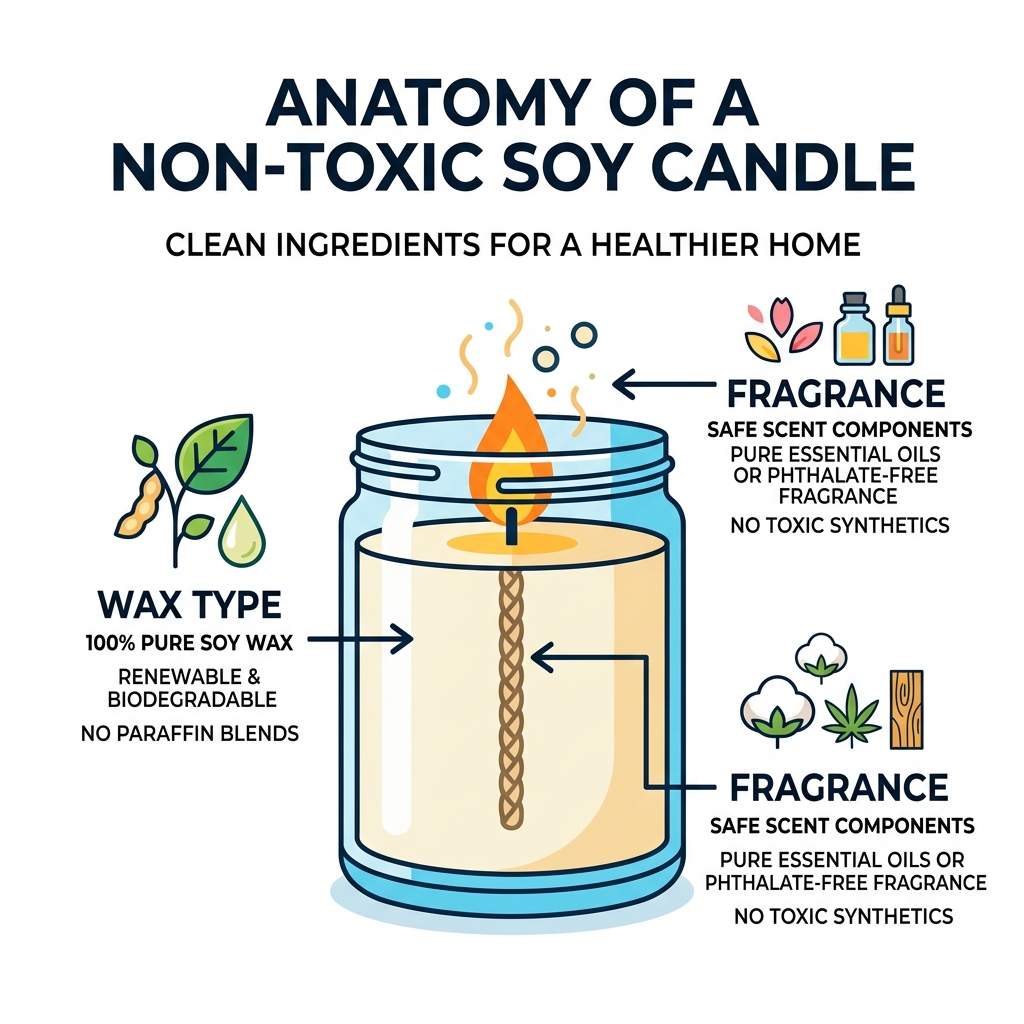
Non toxic soy candles are the safest, cleanest option for scenting your home — here are the best types to look for:
- 100% soy wax candles with no paraffin blends
- Cotton, hemp, or wood wicks — never metal-core or lead
- Phthalate-free fragrance or pure essential oils only
- Certified options — look for MADE SAFE or USDA BioBased labels
- No hidden chemicals — avoid vague terms like “fragrance” or “wax blend”
Most candles on store shelves are made from paraffin wax — a byproduct of petroleum refining. When burned, paraffin can release chemicals like benzene and toluene, both of which are known carcinogens. It also releases volatile organic compounds (VOCs) that can irritate the lungs and trigger headaches.
Think of it this way: burning a conventional paraffin candle indoors is a bit like cracking a window to a busy street. You might not notice it immediately, but something in the air isn’t right.
And it’s not just the wax. Synthetic fragrances — found in the vast majority of scented candles — can hide a cocktail of up to 3,000 different chemicals, many derived from petroleum. There’s currently no legal requirement for candle brands to disclose what’s actually in their fragrance formulas.
For busy people who just want a cozy home without the health trade-offs, switching to a cleaner candle is one of the easiest low-effort changes you can make.
Why Switch to Non Toxic Soy Candles?
When we talk about making our homes healthier, we often focus on the food in our fridge or the cleaners under our sink. But what about the air we breathe for hours while relaxing on the sofa? Choosing non toxic soy candles is a major step toward a Sustainable Products lifestyle.
Soy wax is derived from soybeans, making it a completely renewable resource. Unlike paraffin, which is a non-renewable byproduct of oil refining, soy is biodegradable and cleans up easily with just soap and water. From a performance standpoint, soy wax has a lower melting point than paraffin. This means your candle burns cooler and often lasts much longer—typically yielding 7 to 9 hours of burn time per ounce of wax.
For those with extreme sensitivities, pure (fragrance free) soy candles are a game-changer. They provide the cozy ambiance of a flickering flame without any olfactory triggers. Even if you love a scented home, starting with a 100% soy base ensures you aren’t inviting petroleum soot into your sanctuary.
Comparing Candle Waxes: At a Glance
| Feature | Soy Wax | Paraffin Wax | Beeswax |
|---|---|---|---|
| Source | Soybean Oil (Renewable) | Petroleum (Non-renewable) | Honeybees (Natural) |
| Toxins | Extremely Low/None | High (Benzene, Toluene) | None |
| Burn Time | Long (Slow burn) | Short (Fast burn) | Longest |
| Scent Throw | Good | Excellent | Subtle/Natural |
| Eco-Friendly | Yes (Biodegradable) | No | Yes |
While some argue that the National Candle Association found no significant difference in soot between waxes, many independent users and experts note that “petro-soot” from paraffin is physically heavier and more staining than the faint, white residue occasionally seen from natural waxes.
Key Ingredients and Spotting Greenwashing
In home fragrance, “natural” is a word that gets thrown around loosely. This is known as greenwashing-making a product seem eco-friendly when it is actually anything but. To ensure you are getting truly non toxic soy candles, you need to look past the pretty labels and check the fine print.
One of the biggest red flags is the term “wax blend.” Because there are no strict labeling laws, a candle labeled as a “soy blend” could legally contain as much as 99% paraffin and only 1% soy. If a brand isn’t proud enough to state “100% Soy Wax,” they are likely hiding something.
To navigate this, look for reputable third-party certifications. Labels like MADE SAFE or USDA BioBased offer peace of mind. You can learn more about the USDA BioPreferred Program and how biobased products are identified. For instance, some leading non-toxic brands were the first to achieve the MADE SAFE certification, proving that complete transparency is possible in this industry. If you are building an Eco-Friendly Home, these certifications are your best defense against hidden toxins.
Choosing the Right Wick for Non Toxic Soy Candles
The wick is the engine of the candle. In the past, many wicks had lead cores to keep them standing straight. While lead wicks were banned in the US in 2003, some imported candles still slip through the cracks. For a truly non-toxic experience, we recommend these three materials:
- Cotton Wicks: Look for 100% organic cotton wicks that are unbleached. Quality makers use lead-free cotton to ensure a clean, steady flame.
- Hemp Wicks: These are a fantastic sustainable alternative. They are often dipped in beeswax rather than paraffin to help them burn consistently.
- Wood Wicks: These provide a delightful crackling sound similar to a fireplace. Ensure the wood is untreated and sourced sustainably.
Natural Fragrances vs. Synthetic Scents in Non Toxic Soy Candles
This is where things get tricky. “Fragrance” is considered a trade secret, allowing companies to hide endocrine disruptors like phthalates. These chemicals are used to make scents last longer, but they are linked to hormonal imbalances and respiratory issues.
When shopping for non toxic soy candles, you have two safe paths:
- Essential Oils: These are derived directly from plants. Artisan producers use pure essential oils for an aromatherapy experience that actually benefits your well-being.
- Phthalate-Free Fragrance Oils: Some high-quality synthetic oils are formulated specifically to exclude the harmful chemicals. These often provide a stronger “scent throw” (the ability of the scent to fill a room) than pure essential oils.
If a candle gives you a headache, the fragrance is almost always the culprit. Switching to pure soy wax options can help you enjoy a scented home without the sinus pressure.
Candle Care Tips for Longevity
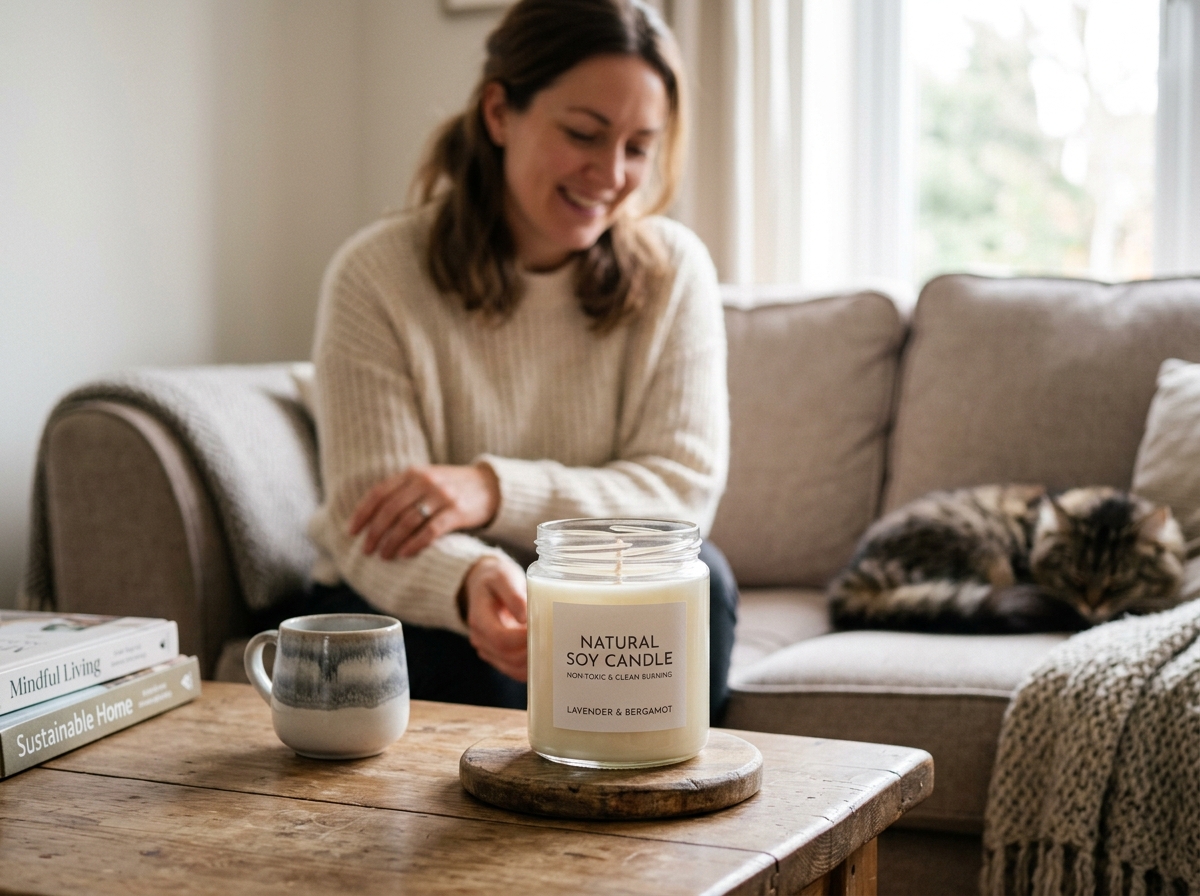
Even the best non toxic soy candles can perform poorly if they aren’t treated right. Proper care doesn’t just make your candle last longer; it also ensures it burns as cleanly as possible.
- The First Burn is Everything: When you light your candle for the first time, let it burn until the melted wax reaches all the way to the edge of the jar. This is called a “full melt pool.” If you blow it out too early, the candle will “tunnel,” leaving a ring of wasted wax around the edges that will never melt.
- Trim Your Wick: Before every single light, trim the wick to about 1/4 inch. This prevents the flame from getting too large and producing excess soot. It also helps the candle burn slower.
- The 4-Hour Rule: Never burn a candle for more than 4 hours at a time. After 4 hours, the wick can become unstable (mushrooming), and the glass can become dangerously hot.
- Avoid Drafts: Keep your candle away from open windows or fans. A flickering flame is an inefficient flame, which can lead to uneven burning and smoke.
For a great example of candles designed for a clean, long-lasting experience, look for well-made soy candles which offer a crisp scent profile while maintaining a steady, soot-free burn when properly maintained.
Frequently Asked Questions
Do soy candles produce soot?
While non toxic soy candles are significantly cleaner than paraffin, any organic matter that burns can produce a small amount of soot if the wick is too long or if there is a draft. However, soy soot is non-toxic and won’t leave the heavy black stains on your walls and furniture that petroleum-based paraffin does.
How long do non-toxic candles typically burn?
Burn times vary by size and wax type. On average, soy wax burns for 7-9 hours per ounce. A standard 8 oz candle should last between 35 and 40 hours, while a larger 16 oz candle can last up to 100 hours. Premium brands focus on concentrated fragrances and high-quality soy to ensure their candles fill the room for the duration of their long burn life.
Can I use melted soy wax on my skin?
Yes, but only if the candle is 100% soy and uses skin-safe essential oils! Pure soy wax has a low melting point and is packed with Vitamin E. Some brands actually encourage using the warm (not hot!) melted wax as a massage oil or moisturizer. However, always do a patch test first and ensure the candle doesn’t contain any synthetic dyes or irritants.
Conclusion
Making the switch to non toxic soy candles is more than just a decor choice; it’s a commitment to your health and the environment. By avoiding paraffin and synthetic “mystery” fragrances, you can enjoy the ritual of candle lighting without the worry of indoor air pollution.
Whether you choose a forest-inspired scent or a soothing aromatherapy blend, your home will feel—and breathe—much better.
Ready to transform your space? Start by adopting new Green Lifestyle Habits and explore our curated selection of home essentials.
