
Durable and Cute: Metal Lunch Boxes for School
Why Every School Lunch Bag Deserves a Metal Upgrade
Metal lunch boxes kids can rely on day after day are no longer just a nostalgic throwback – they’re one of the simplest swaps you can make for your child’s health and the planet.
Quick answer: Best metal lunch boxes for kids in 2026
| Model Type | Best For | Compartments | Capacity | Durability |
|---|---|---|---|---|
| Multi-Compartment Bento | Variety lovers, K-12 | 5 | Large | High |
| Toddler-Friendly Steel | Ages 3-7, everyday school | 3-4 | 40 oz | High |
| Heavy-Duty Explorer | Durability, leakproof | Bento-style | Medium | Extreme |
| Compact Snack Box | Smaller appetites, snacks | 2 | 3.5 cups | High |
| Lightweight 3-Section | Ages 3-7, picky eaters | 3 | 800 mL | High |
If you pack around 190 school lunches a year for your child, the container you use really matters. Most plastic lunch boxes wear out within a year or two – and worse, they may shed microplastics over time as they scratch, heat, and age.
Stainless steel is different. The best metal lunch boxes are built from food-grade 18/8 steel, are free from BPA, PVC, and phthalates, and can last years with minimal care. Some families report using the same box for 5+ years without rust, broken seals, or loss of function.
The switch is also good for the planet. Using a quality metal lunch box daily can eliminate at least 180 single-use containers per child per year.
It’s a small change. But it’s one that adds up fast.
For families wanting to understand the material itself, stainless steel remains one of the most trusted options for durable, reusable food containers.

Why Parents are Switching to metal lunch boxes kids
The shift away from plastic isn’t just a trend; it’s a response to growing concerns about food safety and environmental impact. As we look at minimizing plastic use at home, the lunch box is a natural starting point.
Research into the effects of microplastics on human health is mounting, and many parents are rightfully alarmed by the potential for toxins to leach into their children’s sandwiches and snacks. Unlike plastic, which can trap oils, moisture, and odors, high-quality 18/8 food-grade stainless steel provides a non-porous surface that keeps food fresher for longer. It is naturally BPA-free, lead-free, and phthalate-free, offering peace of mind that no “hidden extras” are making their way into the mid-day meal.
Durability is another massive factor. While a plastic container might crack if dropped on a playground or warp in the dishwasher, metal is built to survive the “backpack tumble.” Statistics show that some high-end metal lunch boxes have a return rate of less than 1%, with many users reporting their boxes look “like new” even after five years of daily use. Some specialized industrial-grade models have even been documented as lasting over 40 years!
From an environmental perspective, the impact is staggering. By choosing reusable-products-for-daily-life, a single child can reduce waste by at least 180 single-use containers every year. Over a school career, that’s thousands of pieces of trash prevented from entering landfills.
Top-Rated Stainless Steel Models: A Comparison
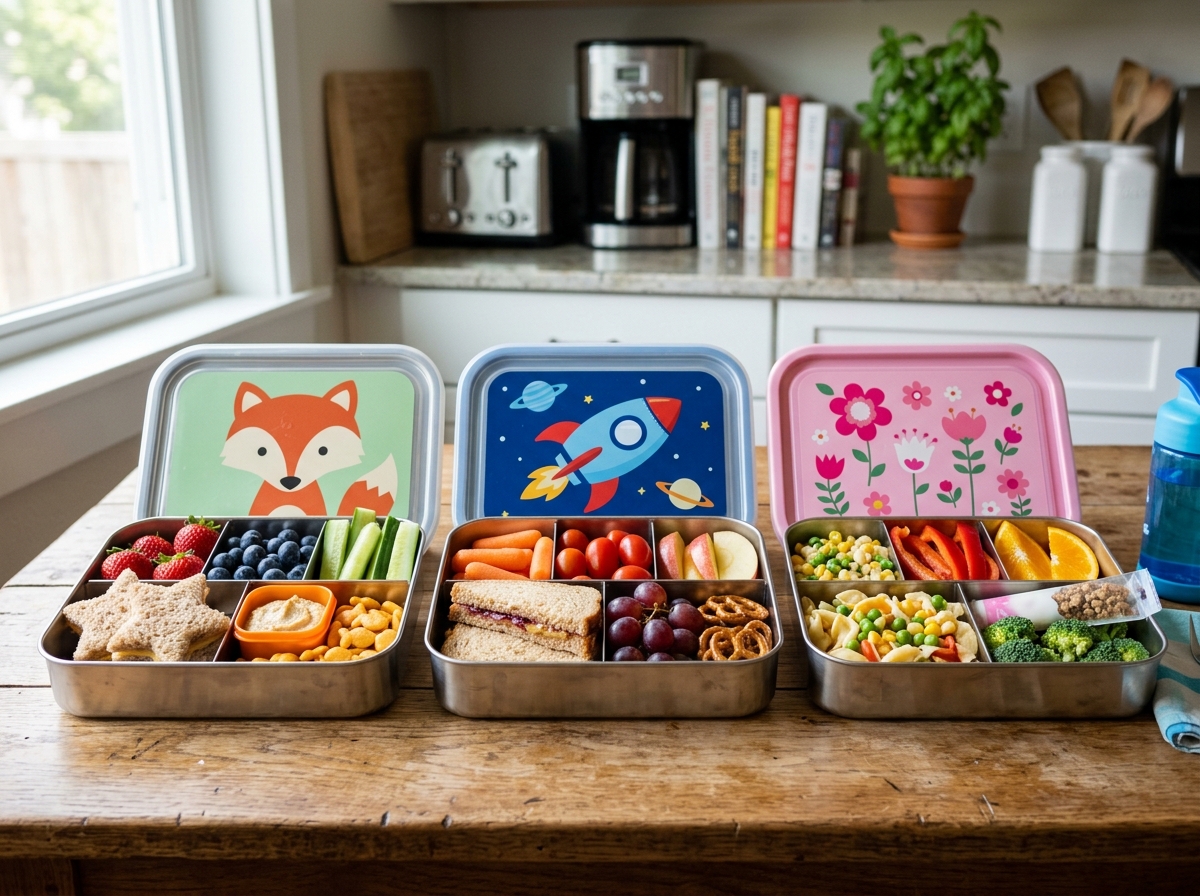
Choosing the right metal lunch boxes kids will actually use requires balancing weight, layout, and “open-ability.” Here is how the top contenders stack up:
| Feature | Multi-Compartment Bento | Toddler-Friendly Steel | Lightweight 3-Section |
|---|---|---|---|
| Primary Material | 304 Stainless Steel | 18/8 Stainless Steel | 18/8 Stainless Steel |
| Weight | 1.6 lbs | 1.6 lbs | 1.38 lbs |
| Best Age | K-12 | 3-7 Years | 3-7 Years |
| Dishwasher Safe | Yes | Yes (Top Rack) | Yes (Top Rack) |
| Key Perk | 5 Compartments | Removable Silicone Cup | Lightweight & Odor-Locking |
Best metal lunch boxes kids for Large Appetites
For older children or those with high energy needs, capacity is king. High-capacity models offer generous volumes, sometimes boasting a total capacity of 5 cups (40 oz), which is ample for a full sandwich, large portions of fruit, and sides.
When shopping for large appetites, look for “deep” compartments. These allow for thicker sandwiches or even whole pieces of fruit. Multi-compartment designs are fan favorites because they encourage variety without sacrificing the total amount of food. It’s the “buffet style” of lunch boxes, making it easier to pack a balanced meal of proteins, grains, and greens.
Leakproof metal lunch boxes kids for School
The biggest fear with metal boxes is often the “soggy backpack” syndrome. Early metal boxes were rarely leakproof, but modern engineering has changed the game. Brands now use pure platinum silicone seals to create airtight, leak-resistant compartments.
Quality stainless steel lunch boxes feature specialized lids that press down into the dividers to keep wet foods like yogurt, hummus, or applesauce in their place.
Expert Tip: While many are “leak-resistant” for thick liquids like ranch or yogurt, they are generally not designed for thin liquids like soup or watery vinaigrettes. For those, we recommend using dedicated “dipper” containers—small stainless steel jars with screw-top silicone lids that fit perfectly inside the larger bento box.
Key Factors When Choosing a Metal Bento Box
Before you hit “add to cart,” consider your child’s specific routine and physical abilities.
- Age and Latches: A lunch box is only good if your child can actually open it. For toddlers and preschoolers, look for “ergonomic latches” designed for small hands. You want a box that stays shut in the bag but flips open easily at the lunch table without a teacher’s help.
- Weight: Stainless steel is heavier than plastic. A standard box weighs about 1.6 lbs empty. If your child already carries a heavy backpack, look for lighter models designed for portability, which can weigh under a pound.
- Personalization: Kids love things that feel “theirs.” Some brands offer themed designs or nostalgic characters. Others use magnets so your child can change the look of their box as they grow.
- Insulation: Most flat metal bento boxes are not vacuum-insulated. This is a deliberate design choice to keep them lightweight and easy to clean. To keep food cold, pair the box with an insulated carry bag and a slim ice pack.
Adopting earth-friendly-habits-for-your-kitchen means looking at the long-term lifecycle of the product. Choosing eco-friendly-alternatives-to-plastic like these boxes ensures you aren’t buying a new kit every September.
Care and Maintenance for Long-Lasting Use
To ensure your investment lasts for the promised 5 to 10 years, proper maintenance is key. Following a waste-free-kitchen-guide isn’t just about what you buy, but how you care for it.
The Dishwasher Debate: Most high-quality metal lunch boxes kids use are top-rack dishwasher safe. However, many manufacturers recommend hand-washing the lids to preserve the integrity of the silicone seals over time. If you do use the dishwasher, stick to unscented, non-fragrant tabs. Silicone is a porous material that can absorb “lemon fresh” scents, which can then transfer a soapy taste to your child’s food.
Banishing Odors: If the silicone seal starts to smell, don’t toss it! You can easily refresh it with a few household staples:
- Vinegar Soak: Mix a 1:1 ratio of hot water and white vinegar. Soak the silicone components for a few hours.
- Baking Soda Paste: For stubborn smells, a paste of baking soda and water applied to the seal can neutralize odors.
- The Boil Method: Boil the silicone in a mixture of 3/4 water and 1/4 vinegar for 10-15 minutes.
Seal and Latch Care: Silicone can naturally shrink or shift over time. If your seal falls out, simply stretch it gently around the edges of the lid with both hands and press it back into the groove. For latches that feel loose, check if the brand offers replacement parts—many top-tier companies sell individual latches to prevent the whole box from becoming obsolete.
Frequently Asked Questions
Are metal lunch boxes truly leakproof?
Most premium models are “leak-resistant,” meaning they can handle thick liquids like Greek yogurt, hummus, or ketchup without them migrating to other compartments. However, they are rarely “waterproof” in the sense that they could hold soup. For messy items, use specialized “dipper” containers with silicone lids that often come with high-quality stainless steel sets.
How do I remove smells from the silicone seals?
As mentioned in our care section, a vinegar and baking soda soak is the most effective method. It is also important to let the box dry completely with the lid open after washing to prevent any moisture from being trapped, which can lead to mildew or stale smells.
Are they too heavy for younger children?
At roughly 1.6 lbs, they are heavier than a plastic bag but comparable to a hard plastic bento box. For toddlers (ages 2-4), we recommend more compact, lightweight models. Most school-aged children (5+) have no trouble carrying them in a standard backpack.
Conclusion
At Refugio do Jardim, we believe that a sustainable lifestyle starts with the small, daily choices we make for our families. Investing in high-quality metal lunch boxes kids love is a powerful step toward a plastic-free future. Not only do these boxes protect your children from microplastics, but they also teach them the value of durability and environmental stewardship.
While the initial price tag may be higher than a plastic alternative, the long-term value is undeniable. When you consider that one stainless steel box can last an entire elementary school career, it truly becomes the last lunch box you’ll ever need to buy.
Explore more eco-friendly home solutions and join us in making the switch to a cleaner, greener kitchen today.
