
The Ultimate Guide to Sustainable Living Tips for Beginners
Why Tips for Eco-Friendly Living Matter More Than Ever
Tips for eco friendly living don’t have to mean a dramatic lifestyle overhaul. Here are the highest-impact changes you can start today:
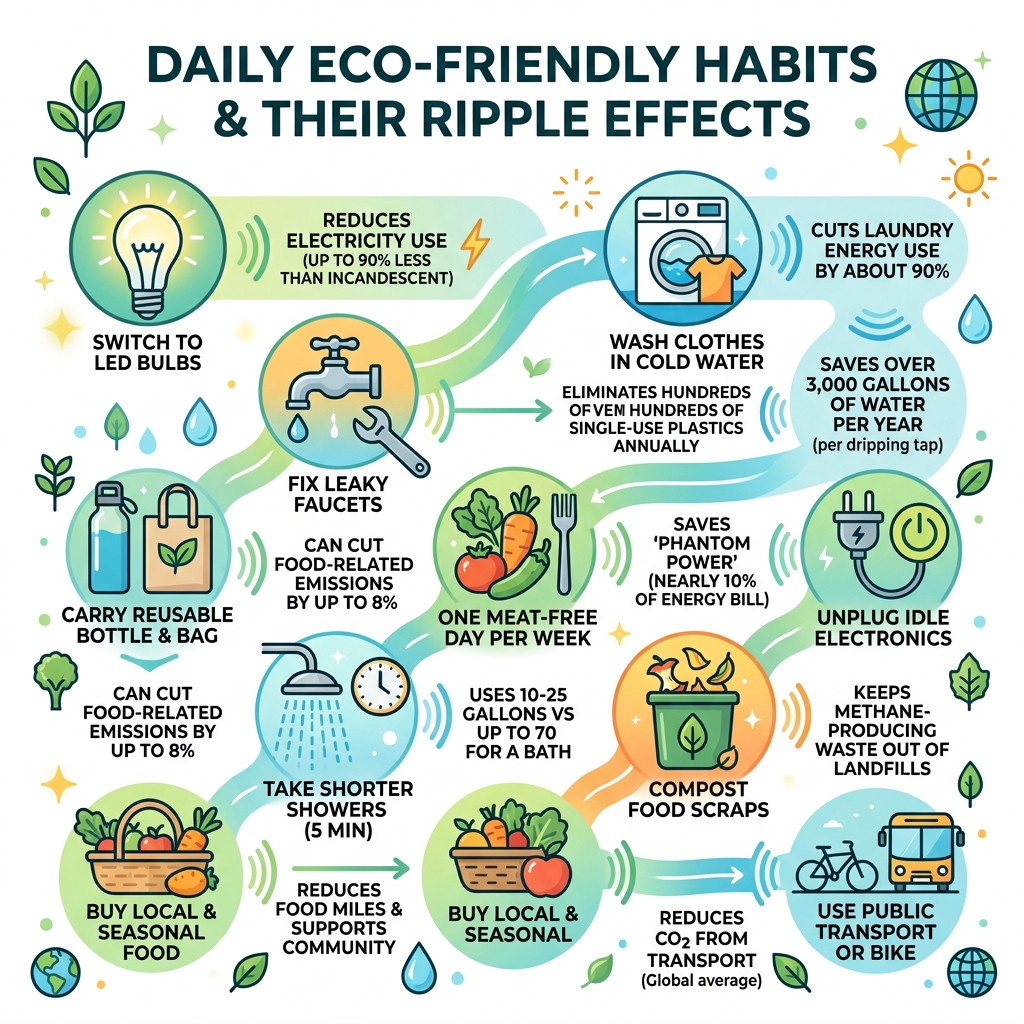
Quick-start eco-friendly habits:
- Switch to LED bulbs – uses up to 90% less energy than incandescent lights
- Wash clothes in cold water – cuts laundry energy use by about 90%
- Fix leaky faucets – one dripping tap wastes over 3,000 gallons per year
- Carry a reusable bottle and bag – eliminates hundreds of single-use plastics annually
- Add one meat-free day per week – can cut your food-related emissions by up to 8%
- Unplug idle electronics – phantom power accounts for nearly 10% of your energy bill
- Take shorter showers – a 5-minute shower uses 10-25 gallons vs. up to 70 for a bath
- Compost food scraps – keeps methane-producing waste out of landfills
- Buy local and seasonal food – reduces food miles and supports your community
- Use public transport or bike – transport accounts for 23% of global energy-related CO2
Still here? Good. Let’s go deeper.
The planet is under real pressure. Buildings account for 21% of total greenhouse gas emissions. Food waste alone contributes up to 10% of global greenhouse gases. And the average household is responsible for far more emissions than most people realize.
But here’s the thing: you don’t need to be perfect. You just need to start.
As one widely-shared sustainability perspective puts it, we don’t need a handful of people doing sustainability perfectly — we need millions doing it imperfectly. Small, consistent choices compound over time into meaningful environmental change.
This guide is built for busy people who want real impact without a complete lifestyle reset. Whether you live in a studio apartment or a family home, there are simple, affordable steps that fit your life.
High-Impact tips for eco friendly living at Home
When we look at our environmental footprint, our homes are often the biggest contributors. However, they also offer the greatest opportunity for improvement. We don’t have to live in the dark or freeze in the winter to make a difference. In fact, many of the best tips for eco friendly living actually make our homes more comfortable while lowering our utility bills.
Energy conservation is the low-hanging fruit of sustainability. Did you know that heating and cooling account for about 29% of a typical home’s utility bill? By making small adjustments, we can see massive returns. For instance, adjusting your thermostat by just 7 to 10 degrees for eight hours a day can yield up to a 10% saving on your annual energy bill. In the winter, we suggest setting it to 68°F while you’re home and lower when you’re away.
One of the most effective switches we can make is in our lighting. Eco Lighting: Brightening Your Home Sustainably is a great place to start. Traditional incandescent bulbs are incredibly inefficient; 90% of the energy they use is wasted as heat. Switching to LEDs is a no-brainer because they use up to 90% less energy and last 25 times longer.
We also need to talk about “phantom power” or “vampire energy.” This is the power consumed by electronics when they are turned off but still plugged in. It sounds spooky, and for our wallets, it is—accounting for nearly 10% of an average energy bill. To combat this, we recommend using Energy Saving Habits for Families like unplugging chargers and small appliances when they aren’t in use.
Laundry is another area where we can save big. Washing clothes in cold water uses about one-tenth of the energy compared to a hot cycle. Since about 90% of the energy used by a washing machine goes solely toward heating the water, this one simple switch can save you roughly $40 a year and significantly reduce your carbon footprint. When the weather is nice, we love to hang-dry our clothes. It smells better, makes clothes last longer, and uses zero electricity. For more inspiration, check out these Five tips for living more sustainably.
Simple Upgrades for Energy-Efficient tips for eco friendly living
If you are ready to go beyond habit changes, there are several simple upgrades that can transform your home’s efficiency. When it’s time to replace an old appliance, always look for the ENERGY STAR label. These devices are designed to use significantly less energy and water. For example, an ENERGY STAR-rated dishwasher can be more water-efficient than hand-washing your dishes!
Making Your Home Green: A Comprehensive Guide suggests that sealing your home is just as important as the appliances inside it. We often lose a huge amount of treated air through tiny gaps around windows and doors. Applying weatherstripping or caulk is an inexpensive Saturday afternoon project that can stop up to 40% of heat loss.

Smart power strips are another brilliant invention for the modern home. They automatically cut power to devices that are in standby mode, effectively slaying the “energy vampires” we mentioned earlier. If you’re looking for even more advanced ideas, you might consider Sustainable Home Renovation Tips and Tricks like installing a programmable thermostat or even adding solar phone chargers to your windowsill. These small gadgets are a fun way to start harnessing renewable energy without a massive investment.
Conserving Water and Eliminating Single-Use Plastics
Water is one of our most precious resources, yet it’s often the one we take for granted. Only 3% of the Earth’s water is freshwater, and less than 1% is safe for drinking. We can do better! A great place to start is by checking for leaks. A leaky faucet that drips at just one drop per second wastes more than 3,000 gallons of water per year. That’s enough for 180 showers!
| Activity | Water Consumption (Gallons) |
|---|---|
| 5-Minute Shower | 10 – 25 Gallons |
| Standard Bath | Up to 70 Gallons |
| Leaky Faucet (1 drop/sec) | 3,000+ Gallons per year |
Replacing an old showerhead with a WaterSense-labeled model is one of the best tips for eco friendly living for the bathroom. It saves the average family 2,700 gallons of water per year. While you’re at it, try to keep your showers to five minutes. We like to use a waterproof timer or a specific “shower song” to keep us on track.
Creating an Eco-Friendly Home: A Comprehensive Guide also highlights the benefits of rainwater harvesting. Even a simple rain barrel connected to your downspout can provide hundreds of gallons of free, chlorine-free water for your garden. For more advanced conservation, some households are exploring greywater reuse—collecting water from sinks or showers to water non-edible plants. You can find more details on these practices through Sustainable Living Tips | Conservation International.
Practical Waste Reduction tips for eco friendly living
Plastic pollution is a global crisis, with at least 14 million tons of plastic ending up in the ocean every year. The good news is that we can drastically reduce our contribution to this problem. Producing one plastic bottle of water requires 2,000 times as much energy as producing the same amount of tap water. By simply carrying a reusable stainless steel or glass bottle, we can save money and the planet simultaneously.
Minimizing Plastic Use at Home starts with a simple audit of your trash. What do you see most? If it’s food packaging, consider bulk shopping. Bringing your own jars and bags to refill stations is a cornerstone of Zero Waste Lifestyle Tips. We also recommend swapping plastic cling film for beeswax wraps or silicone lids.
Then there is the issue of organic waste. Food loss and waste account for up to 10% of global greenhouse gas emissions because when food rots in a landfill, it produces methane—a gas 25 times more potent than CO2. Composting is the solution. It turns “trash” into “black gold” for your garden. Even if you live in an apartment, you can use a small bokashi bin or find a community compost drop-off. Our Composting Guide for Beginners can help you get started with ease.
Sustainable Food Choices and Mindful Purchasing
What we put on our plates has a massive impact on the environment. Animal agriculture is a major driver of deforestation and water consumption. In fact, switching to a vegetarian or vegan diet can reduce your carbon footprint by up to 73%. But remember, we are aiming for progress, not perfection! Even adding one or two meat-free days per week can make a significant difference.
When we shop for food, we try to prioritize local and seasonal produce. This supports local farmers and reduces “food miles”—the distance food travels from the farm to your table. Visiting a vibrant local farmers market is one of our favorite weekend activities. Not only is the food fresher, but it also usually comes with much less plastic packaging.
Earth-Friendly Habits for Your Kitchen include mindful meal planning. In the US, about 40% of edible food goes to waste. That’s like walking out of a grocery store with five bags and dropping two in the parking lot! By planning our meals and using a “Waste-Free Kitchen Guide”, we can ensure everything we buy gets eaten. For example, we love turning “ugly” vegetables into delicious soups or freezing overripe bananas for smoothies. You can find more 5 simple things you can do to live more sustainably | National Geographic.
Ethical Shopping and the Power of Repair
Our “throwaway culture” is hard on the planet. The fast fashion industry alone is responsible for as much as 10% of global carbon emissions. One of the most powerful tips for eco friendly living is to simply buy less. Before making a purchase, we like to ask: “Do I really need this? Can I find it secondhand? Is it built to last?”
Eco-Friendly Shopping Habits often involve exploring thrift stores, consignment shops, and online marketplaces. Buying secondhand gives items a second life and prevents the need for new resources to be extracted. When we do buy new, we look for quality over quantity. A well-made pair of boots that lasts ten years is much more sustainable (and cheaper in the long run) than five pairs of cheap ones that fall apart in a season.
We should also rediscover the “lost art” of repair. Instead of tossing a shirt with a missing button or a leaky toaster, try to fix it! There are thousands of online tutorials that can teach you how to mend clothes or perform basic repairs. How to Reuse Everyday Items is another great way to keep things out of the landfill—old T-shirts make excellent cleaning rags, and glass jars are perfect for pantry storage.
Speaking of cleaning, many conventional products contain harsh chemicals that are bad for our health and the environment. We recommend switching to non-toxic, biodegradable options. You can even make your own using pantry staples like vinegar, baking soda, and lemon! For more details, see Environmentally Safe and Sound: The Best Eco-Friendly Cleaning Products for Your Home.
Frequently Asked Questions About Sustainable Habits
As we transition to a greener lifestyle, it’s natural to have questions. Many people worry that being eco-friendly is too expensive or too difficult if they don’t have a big house with solar panels. We are here to clear up those myths!
One often overlooked area is our digital carbon footprint. Did you know that an average year of emails can have the same carbon impact as driving 200 miles? Data centers use massive amounts of energy to keep the internet running. We can help by cleaning out our inboxes, unsubscribing from newsletters we don’t read, and choosing devices that are energy-efficient. Reducing Electronic Waste Tips is essential as we upgrade our tech.
Transportation is another big one. The transport sector accounts for 23% of global energy-related CO2 emissions. Whenever possible, we encourage walking, biking, or using public transit. If you must drive, keep your tires properly inflated—a tire that is 20% underinflated can increase fuel consumption by 10%. For those planning a trip, our Eco-Conscious Travel Tips can help you see the world without harming it.
Is eco-friendly living more expensive for beginners?
This is perhaps the most common myth. While some big-ticket items like solar panels or electric cars have high upfront costs, most tips for eco-friendly living actually save you money immediately.
- Saving on Utilities: Lowering your thermostat and switching to LEDs reduces your monthly bills.
- Buying Less: Choosing quality over quantity and shopping secondhand keeps more money in your pocket.
- Reducing Waste: Planning meals prevents you from throwing away money in the form of spoiled food. In 2026, the “green premium” is shrinking. Eco-friendly products are becoming more affordable, often costing only 8-15% more than conventional ones, and they usually last much longer.
What are the easiest high-impact changes for a small apartment?
You don’t need a backyard to be green! Apartment dwellers can make a huge impact with these steps:
- LED Lighting: Swap out your bulbs (and keep the old ones to put back when you move out).
- Windowsill Garden: Grow your own herbs like basil or mint. It reduces packaging waste and tastes amazing.
- Smart Power Strips: Perfect for entertainment centers or home offices.
- Community Compost: Many cities now have drop-off points for food scraps.
- Conscious Decor: Choose Furniture with a Conscience: Eco-Friendly Design Ideas or vintage pieces.
How do small daily habits lead to significant environmental benefits?
It’s all about the “ripple effect.” When you carry a reusable bag, you might inspire a friend to do the same. When millions of us make small changes—like washing in cold water or skipping meat once a week—the aggregate impact is staggering. For instance, if every household in the US fixed their leaks, we would save trillions of gallons of water. Your Daily Habits for Sustainability are the building blocks of a better future.
Conclusion: Starting Your Green Journey Today
At Refugio do Jardim, we believe that sustainable living is a journey of steady improvement, not a race toward perfection. It’s about showing up with curiosity and making the best choices we can with the resources we have. Whether you start by switching one lightbulb or by planting your first tomato seedling, you are making a difference.
The goal isn’t to do everything at once. Pick three tips for eco-friendly living from this guide and master them this month. Once they become second nature, pick three more. By building these habits over time, you’ll find that living sustainably doesn’t feel like “homework”—it feels like a rewarding way to connect with the world around you.
We are all in this together. By sharing our progress and supporting one another, we can create a collective impact that truly protects our beautiful planet. For more detailed guides, check out our Embrace the Green: Sustainable Habits for Everyday Living or our comprehensive Environmentally Friendly Lifestyle Guide.
Ready to take the next step? Visit Refugio do Jardim for more inspiration and tools to help you grow your greener lifestyle. Let’s make every day an Earth day!
