
Real World Examples of Eco Friendly Habits
Why Every Eco Friendly Habits Essay Starts With You
An eco friendly habits essay is more than a school assignment — it’s a roadmap for real change. Here are the core eco-friendly habits most commonly covered:
- Reduce single-use plastics – swap bags, bottles, and packaging for reusable alternatives
- Conserve energy – switch to LEDs, unplug devices, use energy-efficient appliances
- Choose sustainable transport – walk, bike, carpool, or use public transit
- Eat sustainably – reduce meat, buy local, cut food waste
- Recycle and compost – sort waste, compost food scraps, follow the 3Rs
- Save water – take shorter showers, fix leaks, run full loads only
- Support ethical brands – choose products made with sustainable materials and fair practices
The numbers behind our daily choices are hard to ignore. The average American generates roughly 22 tons of carbon emissions per year. A single plastic bag takes up to 1,000 years to break down in a landfill. And since 1970, global energy consumption has more than doubled.
These aren’t abstract statistics. They’re the direct result of everyday habits — and that means everyday habits can also fix them.
The good news? You don’t need to overhaul your entire life. Small, consistent changes add up fast. Whether you’re writing an essay on sustainability or just looking for a place to start, the real-world examples below show how practical and accessible green living actually is.
The Core Pillars of an Eco Friendly Habits Essay
When we sit down to draft an eco friendly habits essay, we aren’t just listing chores. We are defining a lifestyle centered on mindfulness and responsibility. An eco-friendly lifestyle means making decisions that minimize our carbon footprint and preserve the natural world for those who come after us. It is a response to the exponential growth of human-created problems, from the depletion of finite resources to the mounting piles of waste in our oceans.
The importance of this shift cannot be overstated. We are currently facing a reality where plastic waste is found in the deepest parts of the ocean and the highest mountain peaks. According to plastic bag decomposition facts, a single bag can spend a millennium breaking down, often ending up as microplastics that enter our food chain. This environmental degradation is fueled by traditional habits that prioritize convenience over consequence.
By adopting Daily habits for sustainability, we directly address climate change mitigation. Every time we choose a reusable item over a disposable one, or turn off a light, we are reducing the demand for fossil fuels and lowering greenhouse gas emissions. It is about moving from a “take-make-dispose” mindset to a circular one.
To help visualize the shift, let’s look at how traditional habits compare to their eco-friendly counterparts:
| Traditional Habit | Eco-Friendly Alternative | Environmental Impact |
|---|---|---|
| Single-use plastic water bottles | Stainless steel or glass reusable bottles | Reduces plastic pollution and energy used in manufacturing. |
| Driving alone to work/school | Biking, walking, or public transit | Lowers carbon emissions and reduces traffic congestion. |
| Leaving electronics on standby | Unplugging “energy vampires” | Saves electricity and reduces power plant emissions. |
| Throwing food scraps in the trash | Composting | Reduces methane production in landfills and creates fertilizer. |
| Buying “fast fashion” | Choosing ethical, durable brands | Reduces water waste and prevents chemical runoff from textile dyes. |
Practical Daily Habits for Students and Individuals
Students are often at the forefront of environmental movements, and for good reason. Campuses are essentially mini-cities where sustainable habits can be tested and scaled. One of the most impactful areas we can address is how we get around.
According to U.S. greenhouse gas statistics, the transportation sector is responsible for nearly 29% of greenhouse gas emissions in the United States. For a student, this is a prime opportunity for change. Instead of driving a personal vehicle, we can utilize Green commuting ideas such as bike-sharing programs, which many universities now offer. Walking or carpooling with roommates not only saves the planet but also saves a significant amount of money on fuel and parking fees.
Another vital area is our academic life. The transition to paperless studying is a game-changer. By taking digital notes and using e-books, we save countless trees and reduce the energy required for paper production and transport. Beyond individual actions, students can lead academic sustainability advocacy by joining campus green clubs. These groups often push for university-wide recycling initiatives or food recovery programs in cafeterias, proving that collective student leadership can shift institutional policy.
Reducing Waste: A Key Theme for Your Eco Friendly Habits Essay
Waste management is a cornerstone of any eco friendly habits essay. Most of us are familiar with the 3Rs—Reduce, Reuse, and Recycle—but we often forget they are in a specific order for a reason. Reducing our consumption is always more effective than recycling what we’ve already bought.
To start, we can look for Eco-friendly alternatives to plastic. This includes carrying a “zero-waste kit” containing a reusable mug, a set of bamboo utensils, and a cloth shopping bag. These small items prevent hundreds of single-use plastics from entering landfills each year.
When we do have waste, following recycling best practices is essential. Mixing non-recyclables with recyclables can contaminate an entire batch, leading to it being sent to a landfill anyway. We should also look into organic waste. Food scraps make up a large portion of household trash, where they rot and produce methane. By following a Composting guide for beginners, we can turn those scraps into nutrient-rich soil for our gardens, completing a natural cycle.
Energy and Water Conservation in an Eco Friendly Habits Essay
Energy and water are resources we often take for granted until the bill arrives. However, conservation is about more than just saving money; it’s about reducing the strain on our planet’s infrastructure.
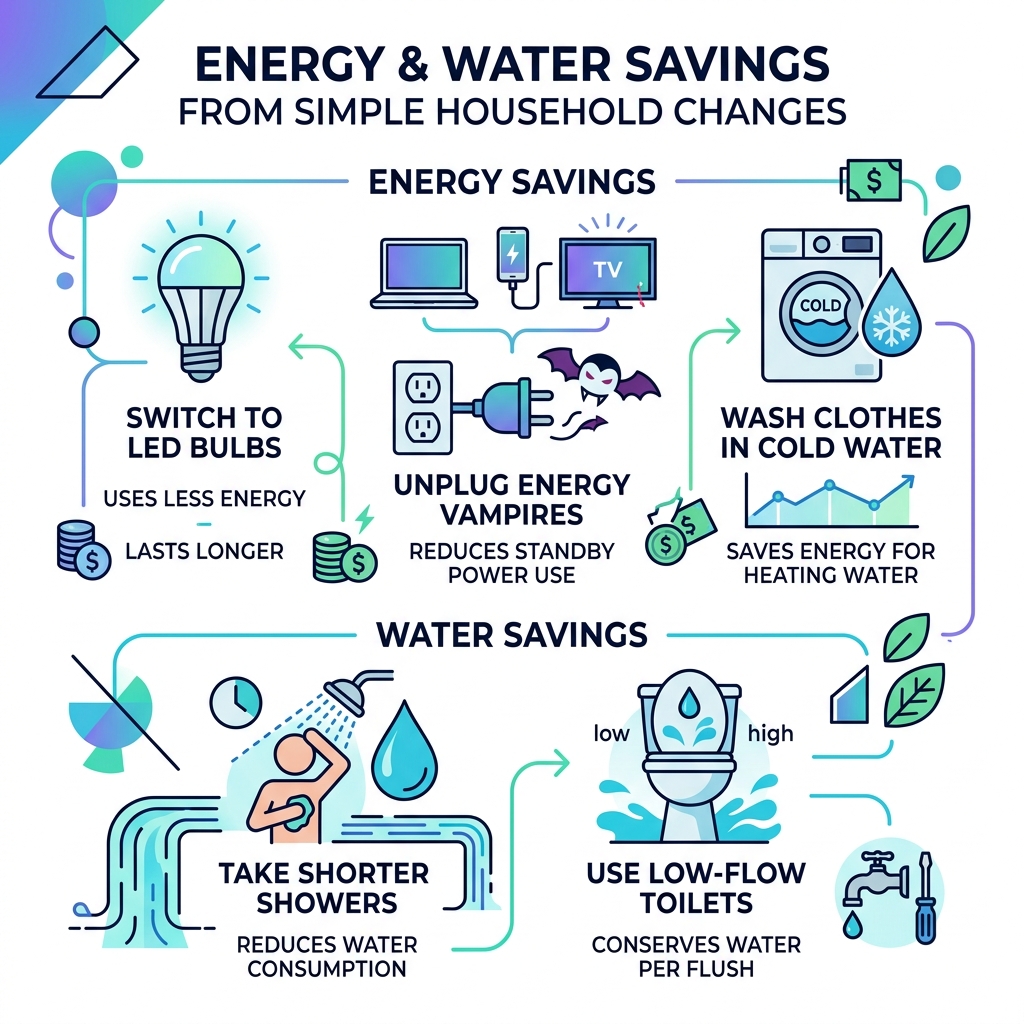
One of the easiest switches we can make is moving to LED lighting. The cost savings of LED bulbs are impressive—the average household could save $1,000 over ten years. LEDs use significantly less energy and last much longer than traditional incandescent bulbs. We also need to be wary of “phantom energy loads.” Did you know a laptop in standby mode still uses about a third of the power it does when it’s fully active? Unplugging chargers and electronics when not in use “slays the energy vampires” and keeps our electricity demand low.
Water conservation is equally critical. Research shows that more than half of a home’s water usage in bathrooms occurs during bathing and toilet use. A ten-minute shower uses about a third of the water required for a full bath. We can also adopt Energy-saving habits for families like washing clothes in cold water. This not only saves the energy used to heat the water but also helps our clothes last longer by preserving the fabric fibers.
Sustainable Consumption: Products and Food Choices
What we buy and what we eat are perhaps our most powerful “votes” for the kind of world we want to live in. Sustainable consumption involves looking beyond the price tag to the environmental and ethical cost of a product.
In the home, we can start with our cleaning routine. Traditional cleaning supplies often contain phosphates, chlorine, and ammonia, which can pollute waterways and affect indoor air quality. Using an Eco-friendly cleaning products guide, we can switch to non-toxic alternatives or even make our own using vinegar, baking soda, and lemon. These are just as effective and far safer for our health.
Our diets also play a massive role. Food production results in nearly one-third of global greenhouse gas emissions. Specifically, the environmental impact of meat production is high due to the land, water, and pesticides required to grow animal feed. By following Tips for sustainable eating, such as incorporating more plant-based meals and buying locally-sourced produce, we can drastically reduce our individual impact. Buying local doesn’t just support our neighbors; it reduces “food miles”—the distance food travels from farm to plate—which cuts down on transportation emissions.
Overcoming Barriers to a Sustainable Lifestyle
It is easy to say we should live green, but we recognize there are real barriers like convenience and cost. Many people feel that eco-friendly products are too expensive or that sustainable habits take too much time.
The key is to realize that Green living: small steps to big impact is about progress, not perfection. You don’t have to be a “zero-waste warrior” overnight. Start with one habit—like carrying a reusable bottle—and build from there. Often, green living actually saves us money in the long run through reduced utility bills and fewer impulse purchases.
There are also psychological benefits. Many individuals report a sense of “inner peace” and improved mental well-being when they align their actions with their values. Reducing our digital footprint is another often-overlooked habit. Unsubscribing from junk mail and deleting old cloud files reduces the energy demand of massive data centers. Using eco-friendly search engines like Ecosia, which plants trees with its profits, allows us to contribute to the planet while doing something we already do every day.
Frequently Asked Questions about Eco-Friendly Living
What are the most effective eco-friendly habits for students?
For students, the most effective habits are often those that integrate into campus life. Switching to paperless studying (digital notes and e-books), using public transit or biking, and carrying a reusable water bottle are the “big three.” Additionally, joining campus sustainability groups allows students to advocate for larger systemic changes, like better recycling programs or renewable energy for dorms.
How can I live sustainably on a tight budget?
Living sustainably is often cheaper than the alternative! You save money by consuming less. Habits like washing clothes in cold water, air-drying laundry, turning off lights, and cooking plant-based meals at home are all budget-friendly. Buying second-hand clothing or furniture is another great way to be eco-friendly while saving cash. The most sustainable product is the one you already own or the one you buy used.
Why is an eco-friendly lifestyle important for future generations?
Our current rate of resource consumption is unsustainable for a growing global population. By adopting eco-friendly habits now, we ensure that future generations have access to clean water, breathable air, and a stable climate. It’s about being a good ancestor. When we reduce our waste and emissions today, we are literally building the foundation for a healthier world for our children and grandchildren.
Conclusion
At Refugio do Jardim, we believe that the journey toward sustainability is one we take together. Every eco friendly habits essay written and every small change made in a dorm room or kitchen contributes to a massive collective environmental impact. We don’t need a few people doing “zero waste” perfectly; we need millions of people doing it imperfectly.
The transition to a green lifestyle is a mindset shift. It’s about moving from being a passive consumer to an active steward of the Earth. As we have seen, the benefits extend beyond the environment—they include cost savings, improved health, and a greater sense of purpose.
We encourage you to Embrace the green: sustainable habits for everyday living and see how these small seeds of change can grow into a lasting legacy. Whether you are walking to class, composting your lunch scraps, or switching to LED bulbs, you are part of the solution. Let’s continue to make progress, one habit at a time.
