
Sustainable Coffee Filters: Stop Your Morning Routine From Going to Waste
Your Daily Coffee Habit Has a Hidden Waste Problem
Sustainable coffee filters are reusable or compostable alternatives to traditional bleached paper filters — and they’re one of the easiest swaps you can make for a greener kitchen.
Here’s a quick look at your main options:
| Filter Type | Material | Lifespan | Best For |
|---|---|---|---|
| Organic cotton | GOTS-certified cotton | ~1 year | Pour-over, drip, Chemex |
| Organic linen | Unbleached linen | ~1-2 years | Cone drip brewers |
| Stainless steel mesh | Metal | 1,000+ uses | Most drip methods |
| TCF paper | Chlorine-free paper | Single use (compostable) | Drip, Keurig |
| Manila hemp (Abaca) | Non-wood plant fiber | Single use (biodegradable) | Pour-over, hand-drip |
Think about how many paper filters you go through in a year. Now multiply that by the 400+ million cups of coffee brewed daily. That’s a staggering amount of single-use waste heading straight to landfill.
The good news? Switching to a sustainable filter doesn’t mean overhauling your morning routine. One reusable cotton filter can replace roughly a year’s worth of disposable paper filters. Some metal filters last through 1,000 or more uses.
It’s a small change. The impact, though, is anything but small.
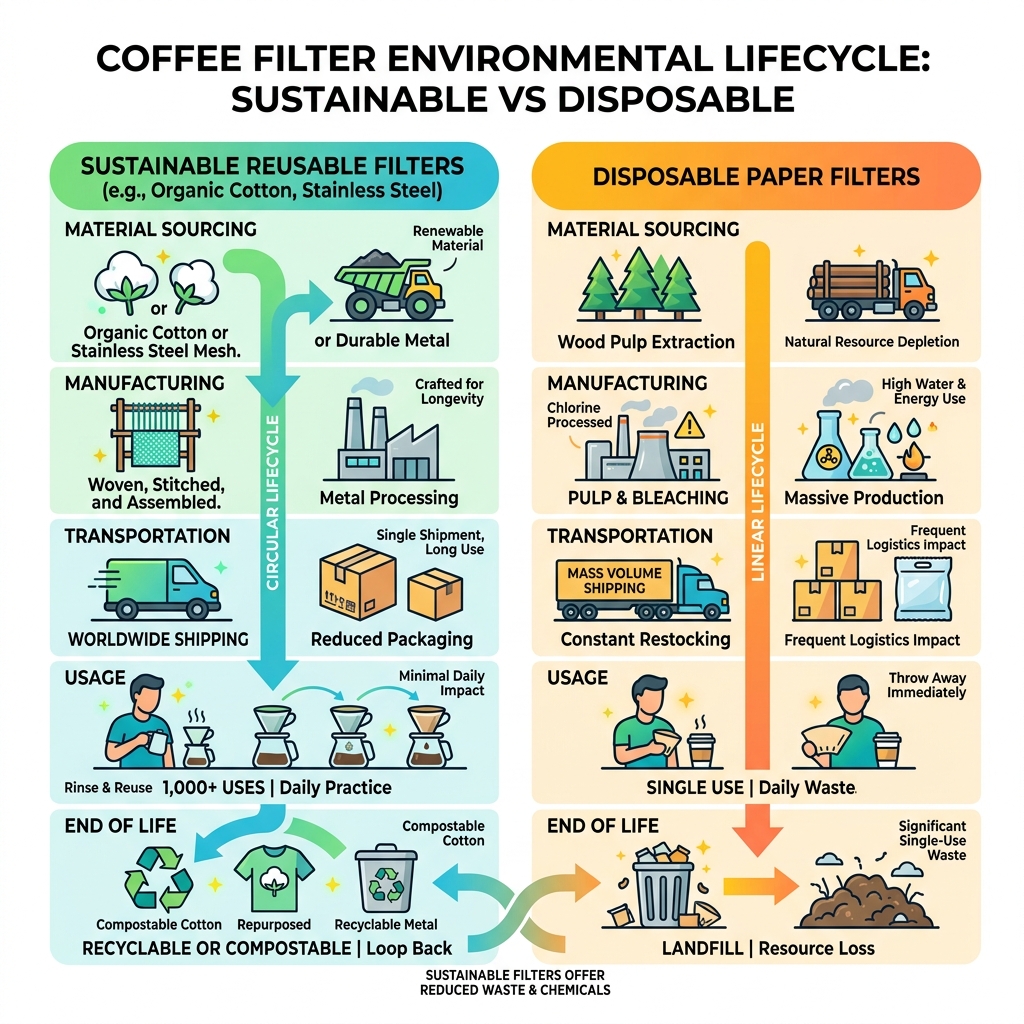
Why Switch to Sustainable Coffee Filters?
When we think about coffee waste, our minds usually jump to those pesky plastic pods or disposable takeaway cups. However, the humble paper filter has its own environmental footprint that often goes unnoticed. Most traditional filters are bleached with chlorine to achieve that pristine white color. This process can release harmful chlorine derivatives into our waterways, impacting aquatic life and ecosystems, a concern often highlighted in environmental impact reports.
By choosing Sustainable coffee filters, we are opting for a path that minimizes landfill waste and chemical pollution. Traditional filters are often bundled in plastic packaging and, if they aren’t composted, they sit in landfills where they struggle to break down efficiently. Switching to a reusable or TCF (Totally Chlorine-Free) option is a core pillar of building a collection of Sustainable Products for your home.

Health Benefits and Microplastics
Beyond the planet, there is the question of what ends up in your cup. High-quality sustainable filters, particularly those made from GOTS-certified organic cotton or linen, ensure that your coffee remains free from synthetic chemicals and microplastics. Some permanent plastic filters can degrade over time with high heat, potentially leaching unwanted materials into your brew. Natural fibers provide a clean, chemical-free extraction that lets the true notes of your beans shine.
Reducing Your Carbon Footprint
The logistics of single-use items are heavy. Every box of 100 filters requires wood pulp production, manufacturing energy, and shipping fuel. When you switch to a reusable filter that lasts for 1,000 uses, you are effectively eliminating the carbon cost of 1,000 individual paper units. Many eco-forward brands even offer carbon-neutral shipping to further offset the impact of your purchase.
Comparing Reusable vs. Compostable Filter Options
Choosing the right filter depends on your lifestyle and how much time you want to spend on cleanup. We generally categorize Sustainable coffee filters into two camps: those you wash and those you toss (into the compost bin!).
Reusable Filters: The Long-Term Champions
Reusable filters are the gold standard for zero-waste enthusiasts.
- Organic Cotton & Linen: These are fan favorites for flavor. They absorb excess coffee oils while allowing the bright acids to pass through. Brands like CoffeeSock or Marley’s Monsters offer these in various sizes, from #4 cones to Chemex styles. A pack of two can easily replace a year’s worth of disposables.
- Stainless Steel Mesh: These are incredibly durable. Unlike fabric, they don’t absorb any oils, resulting in a fuller-bodied, “heavier” cup of coffee similar to a French press.
- Innovative Synthetics: Some modern filters, like the Precise Brew, use advanced geometric designs and specialized fibers that can be reused up to 1,000 times. These are specifically engineered to optimize fluid mechanics for a clean extraction.
Compostable Filters: The Convenient Middle Ground
If you aren’t ready to commit to washing a fabric “sock” every morning, compostable paper is your best friend.
- TCF (Totally Chlorine-Free) Paper: Brands like If You Care produce unbleached filters that are safe for home composting. They ensure no chlorine derivatives enter the environment.
- Manila Hemp (Abaca): These are a specialty coffee lover’s dream. Made from non-wood Abaca fibers, they are thinner and stronger than traditional wood pulp filters. The Cafec ABACA+ filters, for example, are highly permeable, allowing for a faster flow rate and a very clean taste.
Explore more ways to green your routine in our Eco-Friendly Home section.
The Best Reusable Sustainable Coffee Filters
When looking for the best reusable options, certifications matter. Look for GOTS (Global Organic Textile Standard) certification for cotton and linen products. This ensures the fabric was grown without synthetic pesticides and processed under fair labor conditions.
Linen filters, such as those handmade by Marley’s Monsters, are naturally antimicrobial and very durable. They can even be stored in the freezer or fridge between uses to keep them fresh. For those who travel or camp, the ACE Brewer offers an organic cotton filter designed for a “steep-and-filter” method that requires no machine at all—just hot water and a mug.
Top Compostable Sustainable Coffee Filters
For the “toss and go” crowd, look for BPI® or TUV OK Home certifications. These guarantee the filter will break down in a standard backyard compost pile within about 180 days.
- Single-Serve Solutions: If you use a Keurig, you don’t have to use plastic pods. Biodegradable paper filters designed for reusable K-Cup baskets allow you to use your own grounds while keeping the convenience of a single-serve machine.
- Heavy Duty Performance: Some compostable filters feature “never break” wave seams, ensuring they don’t burst under the pressure of a full drip machine.
How Sustainable Filters Impact Your Coffee’s Flavor Profile
One of the biggest surprises for new users of Sustainable coffee filters is that the coffee often tastes better.
The Science of the “Socks”
Fabric filters (cotton and linen) occupy a “sweet spot” in the brewing world. Paper filters are very dense; they trap almost all coffee oils and some of the finer flavor notes. Metal filters allow everything through, including fine sediment (the “mud” at the bottom of the cup).
Organic cotton filters, however, absorb just enough oil to give you a crisp, clean cup without the papery aftertaste. They allow the natural acids of the coffee to shine through, resulting in a brew that is rich, clear, and sediment-free.
Technical Innovations
Newer technologies like the 2-side crepe found in Abaca filters manipulate the surface area of the paper. This design prevents the filter from sticking too closely to the brewer wall, maintaining a consistent flow of water and preventing “over-extraction,” which can make coffee taste bitter.
Whether you use a Chemex, a Hario V60, or a standard drip machine, there is a sustainable filter designed to enhance that specific brewing style. For example, the Precise Brew filter is designed to interact less with coffee oils than traditional paper, ensuring the aromatic compounds aren’t trapped in the fibers.
Maintenance Tips for a Zero-Waste Coffee Routine
To get the most out of your reusable Sustainable coffee filters, a little TLC goes a long way. If you treat them well, they can last far beyond their estimated lifespan.
Daily Care
- Discard Grounds: After brewing, dump your coffee grounds into the compost. (Pro tip: coffee grounds are great for your garden soil!)
- Rinse: Rinse the filter thoroughly under warm, running water. Do not use dish soap for daily cleaning, as the fabric can absorb the scent and make your next cup of coffee taste like “Mountain Spring” laundry detergent.
- Air Dry: Hang the filter to dry completely. Some users prefer to keep their damp filters in a jar of water in the fridge to keep the fibers hydrated and fresh, but air-drying is the most common method.
Deep Cleaning
Over time, coffee oils will inevitably build up in fabric filters, which can slow down the brew time or affect the flavor.
- The Boil Method: Every 6-8 weeks, place your filters in a pot of boiling water for about 10 minutes. This “shocks” the oils out of the fibers.
- Baking Soda Boost: For a deeper clean, add a tablespoon of baking soda to the boiling water. This helps break down stubborn residues.
- Precise Brew Care: For advanced synthetic filters, a drop of mild, fragrance-free detergent is sometimes recommended every 3-5 uses, followed by a very thorough rinse.
Frequently Asked Questions about Eco-Friendly Brewing
How do I clean a reusable cotton filter?
For daily use, just rinse it thoroughly with warm water and hang it to dry. For a deep clean, boil it for 10 minutes every month or two to remove built-up oils. Avoid using standard dish soaps, as they can leave a flowery residue that ruins your coffee’s flavor.
Are compostable paper filters better than reusable ones?
“Better” depends on your priorities. Reusable filters are the most eco-friendly and cost-effective in the long run. However, compostable paper filters (like TCF or Abaca) are excellent for those who prioritize convenience or want the specific “ultra-clean” flavor profile that only paper can provide. Both are vastly superior to traditional bleached filters.
Do sustainable filters save money over time?
Absolutely. While a reusable filter might cost $10-$18 upfront, it replaces hundreds of paper filters. A pack of 100 premium paper filters can cost $5-$10. If you brew every day, a reusable filter pays for itself within a few months and continues to save you money for the rest of the year.
Conclusion
Making the switch to Sustainable coffee filters is a small but powerful step toward a zero-waste kitchen. Whether you choose the longevity of a “coffee sock,” the durability of stainless steel, or the convenience of home-compostable paper, you’re voting for a cleaner planet with every morning cup.
At Refugio do Jardim, we believe that the best rituals are the ones that give back to the earth rather than take away from it. By refining your brewing process, you aren’t just improving the taste of your coffee—you’re ensuring that your morning routine is as fresh and sustainable as the beans in your grinder.
Ready to transform the rest of your home? Start your eco-friendly journey here and discover more ways to live a low-impact life.
