
The Best Daily Habits for Sustainable Living
Why Sustainable Living Tips Daily Actually Matter
Sustainable living tips daily can make a real difference — even if you only have five minutes and a busy schedule.
Here are the highest-impact daily habits to start with:
- Eat less meat — diet accounts for roughly one-third of your carbon footprint, with animal products making up about 80% of that
- Switch to LED bulbs — they use as little as 20% of the electricity of traditional incandescent bulbs
- Unplug devices on standby — phantom power eats up nearly 10% of your energy bill
- Carry a reusable bottle and bag — producing one plastic water bottle uses 2,000 times more energy than filling a glass from the tap
- Walk, bike, or take the bus — rail emits just 14g of CO2 per km vs. 285g for flying
- Plan your meals — nearly 40% of edible food in the US goes to waste
- Wash clothes in cold water — about 90% of a washing machine’s energy just heats the water
- Buy secondhand before buying new — fast fashion alone drives up to 10% of global carbon emissions
Most people feel overwhelmed by environmental news. The problems feel enormous, and any single action feels too small to matter.
But here’s the thing: you don’t need to overhaul your life.
The research is clear that a handful of consistent, small habits — especially around what you eat, how you move, and how you power your home — add up to a measurable reduction in your personal carbon footprint. And when millions of people make the same small shifts, the collective impact becomes very large indeed.
This guide breaks down the best daily sustainable habits by category, so you can pick the ones that fit your life and build from there. Progress over perfection is the only rule.
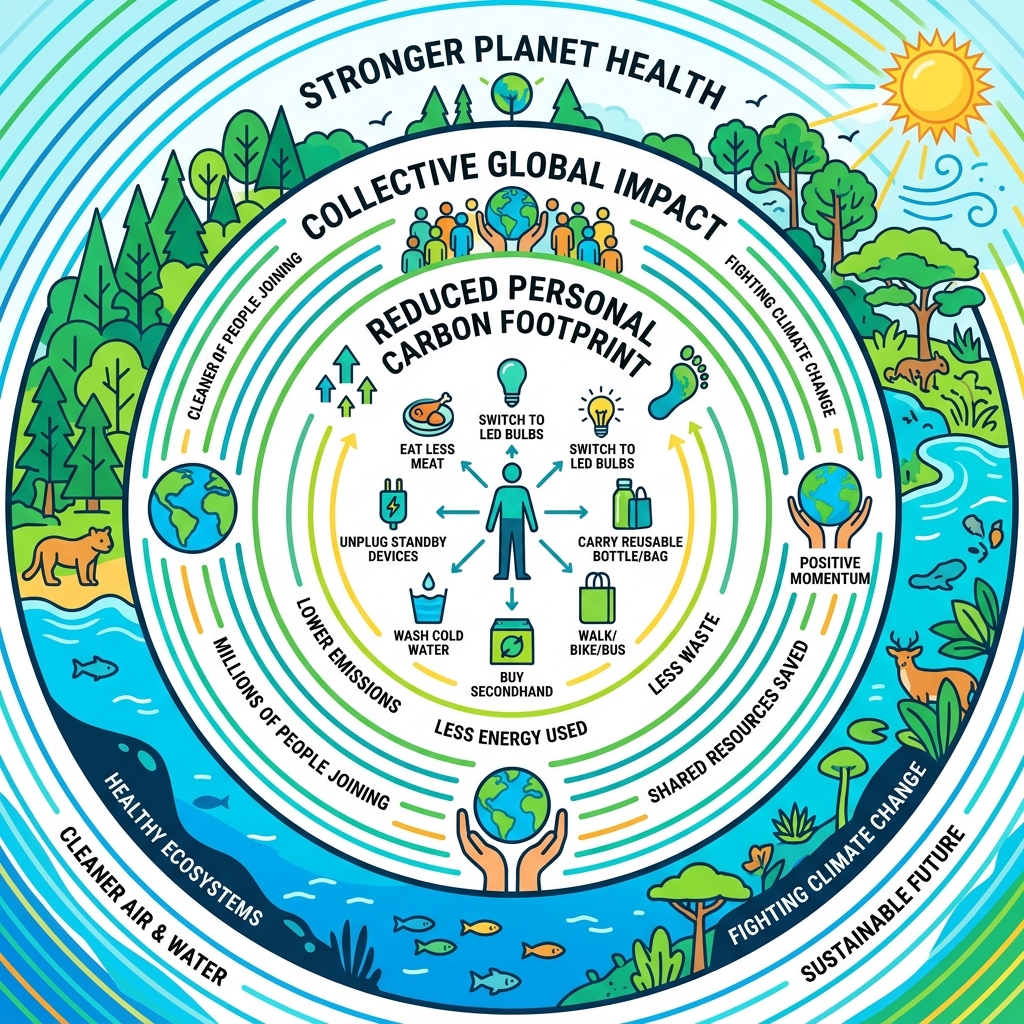
High-Impact Sustainable Living Tips Daily for Your Diet and Home
When we think about “going green,” we often picture complex solar installations or expensive electric cars. While those are great, the most significant changes often happen in our kitchens and living rooms. Our daily choices regarding food and energy are the “heavy hitters” of environmental impact.
Research shows that nearly 90 percent of consumers want companies to act more sustainably, but we have incredible power in our own hands. By focusing on high-impact areas, we can see real results without feeling like we’ve moved into a cave. For those just starting out, we recommend checking out our guide on Sustainable living tips for beginners.
High-Impact Sustainable Living Tips Daily for Your Diet
What we put on our plates is perhaps the single most important environmental choice we make every day. According to Brot für die Welt, one-third of our individual carbon footprint is determined by our diet. Within that third, animal-based foods account for a staggering 80 percent of the impact.

1. Embrace Meat-Free Days You don’t have to become a strict vegan overnight to save the planet. Participating in “Meatless Mondays” or simply swapping one beef burger for a plant-based alternative makes a massive difference. Did you know that producing just one quarter-pound beef burger requires 460 gallons of water and emits methane, which is 25 times more potent than CO2? By skipping meat just one day a week, you can reduce your annual carbon footprint by an amount equivalent to not driving your car for an entire month!
2. Shop Seasonally and Locally When we buy strawberries in January, they’ve likely traveled thousands of miles by plane or truck. This “food mileage” adds up. By using seasonal calendars, we can align our meals with what’s growing nearby. This not only reduces transport emissions but often means the food is fresher and cheaper.
3. Tackle Food Waste at the Source In the United States, nearly 40% of edible food goes to waste. When food rots in a landfill, it rots and emits methane, a powerful greenhouse gas. We can combat this by:
- Planning meals before shopping to avoid impulse buys.
- Understanding that “best by” dates are often about quality, not safety.
- Starting home composting for scraps that can’t be eaten.
4. Energy-Efficient Cooking The way we cook matters too. For example, using a pressure cooker can reduce the energy used by 70 percent compared to traditional boiling.
Implementing Sustainable Living Tips Daily in Your Home Office
As more of us work from home, our residential energy use has shifted. Creating an eco-friendly workspace is a vital part of sustainable living tips daily. If you’re looking for a structured way to start, our article on Creating eco-friendly daily routines is a great resource.
1. The Power of Teleworking If your job allows it, working from home even a few days a week is a climate win. Research suggests that if everyone with a compatible job worked from home half the time, we could cut national greenhouse gas emissions by 54 million metric tons. That’s like taking nearly 10 million cars off the road permanently!
2. Manage Your Digital Carbon Footprint Everything we do online requires energy-hungry data centers. An average year of sending and storing emails can have the impact of driving 200 miles.
- Clean your inbox: Periodically delete unnecessary attachments and old messages.
- Power down: Don’t just leave your computer on all night. Put it to sleep during lunch to save money and soften your impact on the grid.
- Unplug the “Phantoms”: About 10 percent of your energy bill comes from “phantom power”—devices that draw energy even when turned off. Use power strips to truly cut the power to your monitor, printer, and chargers at the end of the day.
3. Lighting and Temperature Switching to LEDs is a “set it and forget it” habit. Since 90% of the energy used by incandescent bulbs is wasted as heat, LEDs are an easy win. Also, adjusting your thermostat by just 7 to 10 degrees for eight hours a day can yield a 10 percent savings on your annual energy bill.
Greening Your Commute and Travel Habits
Transportation is a major contributor to global emissions, but it’s also an area where we have a lot of personal agency. Whether it’s your 15-minute commute or your once-a-year vacation, how you get there matters. Integrating Daily habits for sustainability into your transit routine can drastically lower your footprint.
1. Choose Active Transport Walking or biking isn’t just good for the planet; it’s great for your health. For short distances, it’s often faster than sitting in traffic. If you must use a motorized vehicle, consider public transit. A bus or train carries dozens of people for a fraction of the emissions of a solo car trip. Interestingly, while e-scooters are popular, their carbon footprint is actually more than double that of the city bus because of the trucks used to collect and charge them. Stick to the bus or your own two feet when possible!
2. Maintain Your Vehicle If you do drive, maintenance is key to efficiency. For example, a tire that is 20% underinflated can increase a vehicle’s fuel consumption by 10%. Simply checking your tire pressure once a month is a low-effort, high-reward habit.
3. Rail vs. Air: The Great Debate Air travel is incredibly carbon-intensive. Airline jets emit 285 grams of CO2 emitted per kilometer per passenger, while rail emits only 14 grams. Whenever possible, take the train for regional trips. If you absolutely must fly:
- Fly direct: Takeoffs and landings use the most fuel.
- Pack light: The heavier the plane, the more fuel it needs.
- Offset your impact: Use a flight carbon calculator to see your impact and consider contributing to verified carbon reduction projects.
4. Sustainable Lodging When you reach your destination, look for hotels with LEED certification. These buildings are recognized for reduced water and energy usage. You can also help by asking the staff not to wash your towels and sheets every single day—hotels account for 15 percent of all commercial water use in the U.S.
Sustainable Consumption: Beyond the Buy-and-Toss Culture
We live in a world designed for “fast” everything—fast fashion, fast tech, and fast food. But this convenience comes at a high environmental cost. To combat this, we need to shift toward a circular economy where we value what we already have. Our Environmentally friendly lifestyle guide dives deeper into these shifts.
1. The Secondhand First Rule Every new product has an “upstream” footprint—the energy used to mine materials, manufacture the item, and ship it to you. By choosing to buy secondhand, you bypass that entire process. Thrifting for clothes or buying refurbished electronics keeps items out of landfills and reduces the demand for new production.
2. Repair, Don’t Replace The manufacture of one new smartphone eats up as much energy as a decade’s worth of typical phone use. Before tossing a broken item, see if it can be fixed. Many cities now host “Repair Cafés” where volunteers help you fix electronics, bikes, or clothing. For fashion, ditching fast fashion in favor of high-quality, repairable pieces is a vital daily habit.
3. The Sharing Economy Do you really need a power drill, or do you just need a hole in the wall? Most power tools are used for less than 15 minutes in their entire lifetime. Borrowing from neighbors or using tool-sharing libraries reduces the number of items that need to be manufactured.
4. Ethical Banking and Finances Where you keep your money matters. Some banks use your deposits to fund fossil fuel projects. Switching to ethical banking or green investment funds ensures your money is working for the planet, even while you sleep. This is a high-leverage change that takes a bit of effort upfront but has a massive long-term impact.
Water Conservation and Plastic Reduction Strategies
Water is our most precious resource, yet we often treat it as infinite. Similarly, our “plastic addiction” has led to at least 14 million tons of plastic ending up in the ocean annually. Small sustainable living tips daily in the bathroom and kitchen can help turn the tide.
1. Banish the Bottle Producing one plastic bottle of water requires 2,000 times as much energy as producing the same amount of tap water. Carry a reusable bottle. If you’re worried about water quality, a simple charcoal filter is a much more sustainable solution than buying cases of plastic.
2. Be Water Wise in the Bathroom
- Shower vs. Bath: A five-minute shower uses 10 to 25 gallons of water, whereas a bath can use up to 70 gallons of water.
- Cold Water Laundry: About 90 percent of the energy used by your washing machine goes toward heating the water. Washing in cold water cleans just as well for most daily loads and saves significant energy.
- Switch to Bar Soap: Liquid soaps often come in plastic bottles with unrecyclable pumps. Bar soap is usually package-free and lasts longer.
3. Fight the Invisible Threat: Microplastics Synthetic fabrics like polyester and nylon release tiny plastic fibers every time they are washed. As many as 700,000 fibers could be released per wash! To stop them from reaching the ocean, use a Guppyfriend bag for your synthetic laundry. Also, be wary of “hidden” plastics:
- Teabags: Many are made with plastic mesh. Switch to loose-leaf tea.
- Microbeads: Some face washes and toothpastes contain 8 trillion microbeads that enter our oceans every day. Look for natural exfoliants instead.
4. Sustainable Landscaping If you have a yard, consider xeriscaping—landscaping with native plants that require little to no irrigation. US lawns soak up 3 trillion gallons of water and 70 million pounds of pesticides each year. Native plants are adapted to your local climate, meaning they need less “help” from you to thrive. For more ideas on greening your home, see our post on how to Embrace the green: sustainable habits for everyday living.
Frequently Asked Questions about Sustainable Living Tips Daily
What are the highest-impact areas for sustainable changes?
The “Big Three” are diet, mobility, and home energy. Reducing meat consumption (especially beef), flying less, and improving your home’s insulation/lighting are the most effective ways to shrink your carbon footprint. As we discuss in Green living: small steps to big impact, focusing on these areas provides the best “return on investment” for your efforts.
How can I reduce microplastics in my daily routine?
Start by choosing natural fibers like cotton, wool, or linen over synthetics. Use a specialized washing bag for your existing synthetic clothes. Avoid single-use plastics like straws and bags, and check your personal care products for “polyethylene” (microbeads). Even your tea might have plastic—switching to loose-leaf is a great daily habit.
How do the UN Sustainable Development Goals relate to personal habits?
The 17 sustainability goals (SDGs) are a global roadmap for a better world. Goal 12 (Responsible Consumption and Production) and Goal 13 (Climate Action) are directly linked to our daily habits. When you choose to repair an item instead of buying new, or opt for a plant-based meal, you are personally contributing to these international targets. It’s a way of aligning your local actions with a global mission for peace and prosperity.
Conclusion
At Refugio do Jardim, we believe that the path to a healthier planet isn’t paved with a few people doing sustainability perfectly, but by millions of people doing it imperfectly. Every time you choose the stairs over the elevator, a reusable bag over a plastic one, or a veggie burger over a beef one, you are casting a vote for the future you want to see.
Individual action is the spark that ignites community change. When your neighbors see you composting or biking to work, it normalizes those behaviors. This “ripple effect” is how we move from personal habits to systemic shifts.
Don’t let the scale of the crisis paralyze you. Pick three habits from this list and commit to them for a month. Once they become second nature, pick three more. Start your journey toward a greener lifestyle today and remember: every small choice counts.
