
The Best Non-Toxic Paint Removers for Your DIY Projects
Why Choosing Non-Toxic Paint Removers Matters for Your Health and Home
The best non toxic paint removers available today include:
- Citristrip – citrus-based gel, great for wood and indoor use
- Blue Bear SoyGel – soy-based, low odor, ideal for chemically sensitive users
- Dumond Smart Strip – alcohol-based, removes up to 15 coats, good for most surfaces
- Dumond Peel Away 1 – lye-based, removes up to 30 coats, best for lead and masonry
- EcoFast 100G – soy and benzyl alcohol gel, works on concrete, metal, and wood
- FranMar 600GL – soy-based, fast-acting (30-60 min), highly rated by users
Paint strippers have a bad reputation — and for good reason.
Traditional formulas contain methylene chloride, a chemical now banned in the US after being linked to cancer and multiple fatalities. Its replacement, NMP (N-Methyl-2-pyrrolidone), carries a California Prop 65 warning for reproductive harm. Many products marketed as “eco-friendly” still contain these chemicals.
The good news? You don’t have to choose between effective and safe.
A new generation of bio-based, low-VOC strippers can strip multiple layers of paint from wood, metal, and concrete — without the fumes that send you reaching for a respirator. Whether you’re refinishing a vintage chair on a Sunday afternoon or prepping a concrete floor, there’s a genuinely safer option for the job.
This guide cuts through the marketing claims and helps you find the right non-toxic stripper for your project — fast.
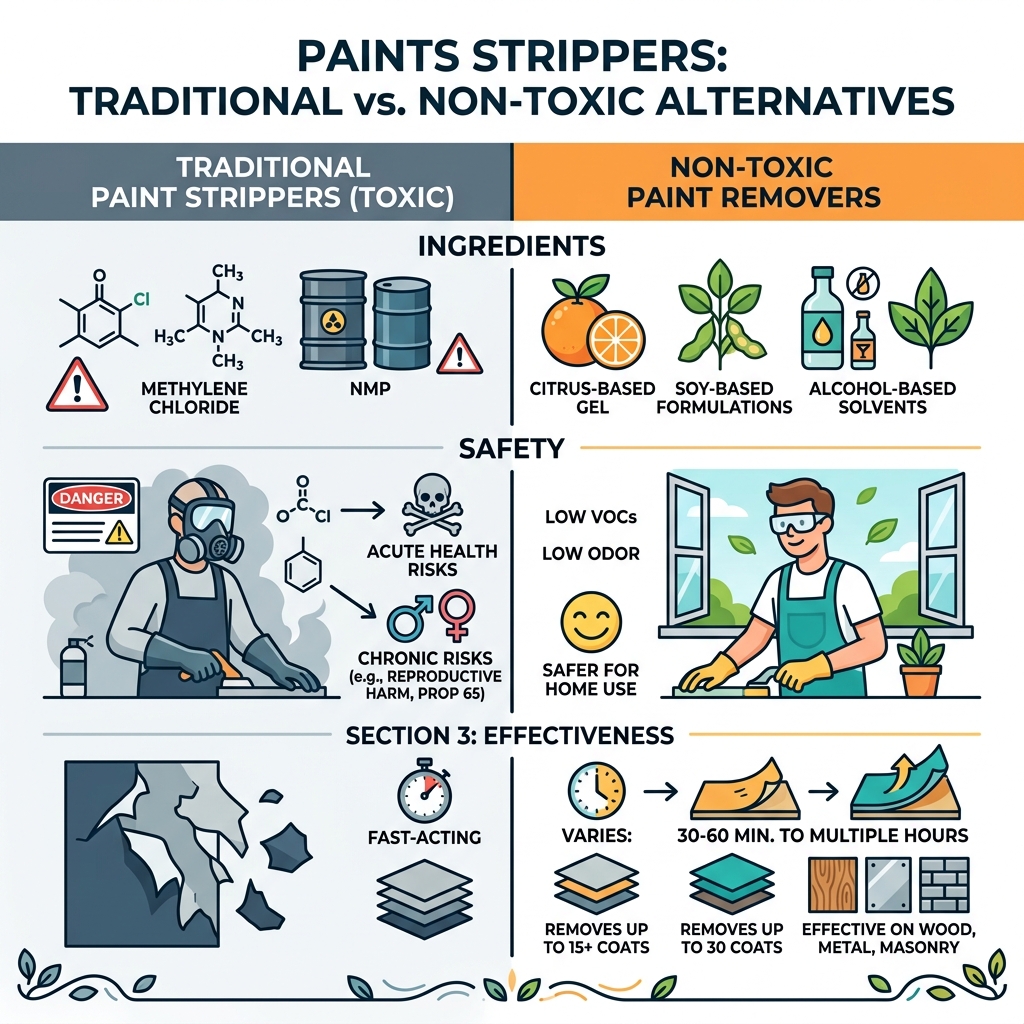
The Dangers of Traditional Paint Strippers
For decades, the “gold standard” for stripping paint was Methylene Chloride (DCM). It was incredibly fast, but the cost to human health was devastating. Classified as a probable carcinogen and a central nervous system toxin, DCM has been responsible for numerous fatalities due to its heavy fumes. While the US has moved toward banning it, many older cans still sit in garages, and its replacements aren’t always much better.
The most common replacement is N-Methyl-2-pyrrolidone, or NMP. While it doesn’t have the immediate “knock-out” effect of DCM, it is far from harmless. NMP carries a California Prop 65 warning because studies have shown it can cause birth defects and other reproductive harm. It is embryolethal and fetotoxic, meaning it is particularly dangerous for pregnant women or those planning to become pregnant.
Beyond these heavy hitters, traditional strippers are packed with Volatile Organic Compounds (VOCs) that cause respiratory irritation, dizziness, and long-term health issues. When we use these indoors, we aren’t just cleaning a surface; we are polluting our own air. For a deeper look at keeping your living space safe, check out our eco-friendly cleaning products guide.
According to scientific research on safer paint stripper alternatives, moving away from these “whack-a-mole” toxic solvents is essential for a healthy home. Choosing a non-toxic option isn’t just a “green” preference; it’s a vital safety precaution for you and your family.
Top-Rated Non Toxic Paint Removers for Every Surface
Switching to non toxic paint removers doesn’t mean you have to sacrifice performance. Modern formulas often use a process called “delamination.” Instead of dissolving the paint into a gooey, toxic soup, these strippers penetrate the layers to break the bond between the paint and the surface. This makes the residue much easier to scrape away and dispose of responsibly.
Many of these safer alternatives rely on benzyl alcohol or dibasic esters. Benzyl alcohol is generally recognized as safe (GRAS) by the FDA for certain uses and has a much milder safety profile than traditional solvents. These products are often biodegradable and low-odor, making them suitable for indoor projects.
| Product | Best For | Typical Dwell Time | Layers Removed |
|---|---|---|---|
| Blue Bear SoyGel | Furniture & Antiques | 30–60 minutes | Multiple |
| Smart Strip | Wood & Plaster | 3–24 hours | Up to 15 |
| Peel Away 1 | Lead Paint & Masonry | 12–24 hours | Up to 30 |
| EcoFast 100G | Concrete & Metal | 30–60 minutes | Multiple |
| Citristrip | General DIY | 30 mins – 24 hours | Multiple |
Real-world non-toxic stripper comparison and testing shows that while these might take longer to work (the “dwell time”), they are often more effective at lifting heavy build-up without the health risks. For more tips on maintaining a healthy home environment, see our environmentally safe cleaning guide.
Choosing Soy-Based and Citrus-Based Non Toxic Paint Removers
Soy-based strippers, like Blue Bear SoyGel, use soy methyl ester derived from American-grown soybeans. These are favorites among chemically sensitive users because they are virtually odorless and stay wet for long periods, allowing them to keep working on tough finishes.
Citrus-based options, most notably Citristrip, are widely available and popular for their pleasant orange scent. However, a word of caution: the “orange smell” can sometimes mask the presence of other solvents. While Citristrip is significantly safer than methylene chloride, users have occasionally reported slight light-headedness if used in poorly ventilated areas. Always ensure a cross-breeze, even when the product smells like a fruit grove!

These bio-based options are perfect for restoring furniture. If you want to keep the rest of your home just as clean and green, explore our recommendations for natural cleaner products for every room.
Professional-Grade Non Toxic Paint Removers for Lead and Concrete
When you’re dealing with serious architectural restoration, you need professional-grade power. Smart Strip is a standout alcohol-based stripper that can remove up to 15 coats of paint in one go. It is water-based and contains no caustics, making it safe for almost any substrate.
For heavy-duty masonry or pre-1978 lead paint, Peel Away 1 is often the top choice. It is a lye-based (caustic) paste that you cover with a special fibrous paper. As it sits, it “pulls” the paint into the paste. Crucially, it encapsulates lead, preventing toxic dust from becoming airborne. It can strip up to 30 coats in a single application—perfect for old brick or stone.
If you are working on a concrete slab, EcoFast 100G or SoyGel are excellent choices. They break the bond of sealers and epoxies without the need for muriatic acid. Just be careful with products like Hi-Speed Ready-Strip on porous concrete; some users have reported it can leave a blue stain that requires mechanical grinding to remove. For more product evaluations, read our eco-friendly home cleaning review.
Chemical-Free Alternatives and DIY Methods
Sometimes, the best non toxic paint removers aren’t liquids at all. If you want to avoid chemicals entirely, there are several effective mechanical and household methods.
- Heat Guns: A heat gun softens paint until it bubbles, allowing you to scrape it off easily. This is excellent for thick layers on wood. Warning: Never use a heat gun on lead-based paint, as it can release toxic lead fumes.
- Baking Soda & Boiling Water: This is a “secret weapon” for metal hardware. If you have old hinges or knobs covered in decades of paint, simmer them in a pot of water with a cup of baking soda for about 30 minutes. The paint will often slide right off.
- White Vinegar: While not as strong as commercial strippers, hot vinegar can help soften thin layers of paint on glass or small metal items.
- Mechanical Methods: Sanding, scraping, and power washing are tried-and-true. However, these create dust. If you suspect lead or are working with old wood, always use a vacuum with a HEPA filter to catch the particles.
For more ideas on keeping your DIY projects natural, consult the natural home guide to eco-friendly products.
Safety Precautions and Responsible Disposal
Even though we are using non toxic paint removers, “non-toxic” does not mean “drinkable.” Safety should always be your first priority.
- Lead Testing: If your home was built before 1978, assume the paint is lead-based. Use an at-home lead test kit before you start. If it’s positive, use an encapsulating stripper like Peel Away or Smart Strip.
- Personal Protective Equipment (PPE): Even low-VOC products can irritate the skin or eyes. Wear gloves (nitrile is usually best) and safety goggles.
- Ventilation: Always work in a well-ventilated space. If you’re indoors, open windows and use fans to keep air moving.
- Dwell Time & Evaporation: Non-toxic strippers need time to work. To prevent them from drying out, you can cover the applied gel with plastic wrap. This keeps the chemistry active for up to 24 hours.
- Neutralization: Caustic strippers (like Peel Away 1) leave the surface with a high pH. You must use a neutralizer (often provided or a simple vinegar/water wash) before repainting, or your new paint won’t stick.
Finally, while the stripper might be biodegradable, the paint you’ve removed might contain lead, chromium, or other heavy metals. Never pour residue down the drain. Collect the waste in a sealed container and take it to a local hazardous waste disposal site. For more on responsible home care, see our eco-friendly cleaning products guide.
Frequently Asked Questions about Non-Toxic Stripping
How long should I leave a non-toxic stripper on?
Unlike traditional strippers that work in 15 minutes, non toxic paint removers require “dwell time.” Depending on the number of layers, this can range from 30 minutes to 24 hours. The key is to keep the product moist. If it dries out, it stops working. Using plastic wrap to cover the area is a pro tip that allows the stripper to penetrate deep into multiple layers without evaporating.
Can non-toxic removers handle lead-based paint?
Yes, and in many cases, they are safer than traditional methods. Products like Dumond Smart Strip and Peel Away 1 are specifically designed to encapsulate lead. This means they turn the paint into a wet paste, preventing dangerous lead dust from flying around your home. Always follow EPA RRP (Renovation, Repair, and Painting) guidelines when dealing with lead.
Are these products safe for indoor use?
Most are much safer for indoor use than old-school solvents because they have very low VOC levels and minimal odor. However, “low odor” doesn’t mean “no fumes.” If you are chemically sensitive, we recommend Blue Bear SoyGel or Smart Strip. Always maintain some level of airflow to be safe.
Conclusion
At Refugio do Jardim, we believe that restoring your home should be a rewarding experience, not a health hazard. By choosing non toxic paint removers, you are protecting your lungs, your family, and the planet while still achieving professional-quality results on your DIY projects. Whether you are stripping a family heirloom or prepping your floors for a fresh look, these eco-conscious solutions make sustainable restoration possible for everyone.
Ready to transform the rest of your home? Explore more eco-friendly home solutions and join us in creating a cleaner, greener living space.
