
The Meaning of Green and How to Adopt Eco Friendly Habits
Why Understanding What Are Eco Friendly Habits Matters Right Now
What are eco friendly habits? They are simple, daily choices that reduce harm to the environment — things like carrying a reusable bag, turning off unused lights, eating less meat, and composting food scraps.
Here is a quick overview of the most common eco-friendly habits:
- Reduce single-use plastics — swap disposable bottles, bags, and cutlery for reusables
- Conserve energy — switch to LED bulbs, unplug idle devices, use a smart thermostat
- Save water — take shorter showers, turn off the tap while brushing teeth
- Recycle and compost — sort waste correctly and turn food scraps into soil
- Eat more plants — try one meat-free meal per week to cut emissions
- Choose secondhand — thrift and upcycle instead of buying new
- Walk, bike, or take transit — reduce your carbon footprint from transportation
- Spread awareness — share what you know with friends, family, and neighbors
These habits matter more than ever. Global greenhouse gas emissions have risen 50% over the past 30 years. Humanity now produces around 430 million tonnes of plastic every year, most of it short-lived waste. And food loss alone accounts for up to 10% of all global emissions.
The good news? You do not need to overhaul your entire life. Small, consistent actions add up. And most of them will actually save you money.
This guide breaks down the most effective eco-friendly habits, explains why they work, and shows you exactly how to start — even if you are busy and overwhelmed.
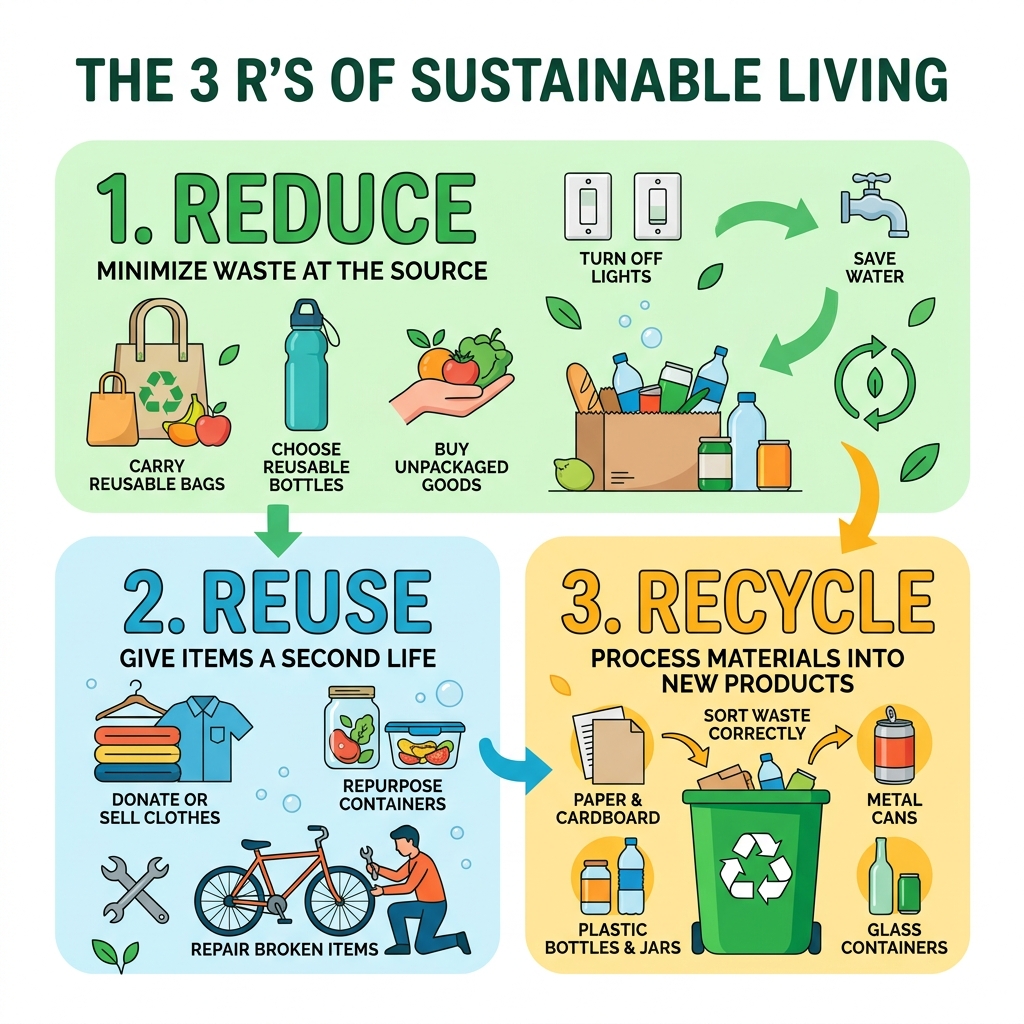
What Are Eco Friendly Habits for a Sustainable Future?
When we talk about what are eco friendly habits, we are essentially discussing a lifestyle designed to minimize our “environmental footprint.” This means making choices that protect our natural resources and prevent pollution of our air, water, and land.

One of the most pressing issues we face is the explosion of single-use plastics. Every year, about 8 million metric tons of plastic waste enters our oceans. This doesn’t just look ugly on a beach; it breaks down into microplastics that enter the food chain and affect ocean health. In fact, humanity produces 430 million tonnes of plastic annually, and by 2040, plastic production could account for 19% of global greenhouse gas emissions.
Adopting Five tips for living more sustainably starts with looking at your trash. We often think of “green living” as a series of grand gestures, but it’s actually found in the quiet moments of Creating Eco-Friendly Daily Routines. By replacing that daily plastic water bottle with a stainless steel one, you are saving the energy equivalent of 2,000 times what it takes to get water from a tap.
When we Embrace the Green: Sustainable Habits for Everyday Living, we aren’t just helping the planet; we’re protecting ourselves. Research shows that conventional products can lead to indoor air being up to ten times more polluted than outdoor air. By shifting our habits, we create a cleaner, safer environment for our families.
Beginner-Friendly Steps to Start Building Eco Friendly Habits Today
If you’re feeling overwhelmed, don’t worry! We recommend a psychological trick called “habit stacking.” This involves taking a habit you already have—like drinking your morning coffee—and “stacking” a new green habit onto it, such as putting your reusable grocery bags by the front door right after you finish your cup.
For those looking for Sustainable Living Tips for Beginners, start with these simple swaps:
- Beeswax wraps: These are a fantastic alternative to plastic cling wrap. They are washable, reusable, and keep your food just as fresh.
- Bamboo toothbrushes: Since plastic toothbrushes can take centuries to decompose, switching to a compostable bamboo handle is an easy win.
- Reusable containers: Instead of using plastic sandwich bags, try glass or stainless steel containers for your lunch.
Building Daily Habits for Sustainability is about consistency, not perfection. If you forget your reusable bag once, don’t give up! Just try again tomorrow.
How Eco Friendly Habits Save Money and the Planet
There is a common myth that being eco-friendly is expensive. In reality, many of these habits are designed to help you consume less, which naturally keeps more money in your pocket.
By making small changes, you can reduce your carbon footprint by 30–40% and save up to $2,400 annually. For example, simply washing your clothes in cold water can save you about $200 a year on your utility bills. Switching to LED bulbs might cost a little more upfront, but they can save an average household $1,000 over ten years because they last longer and use significantly less energy.
Investing in durable goods rather than “disposable” versions is another way to save. A high-quality safety razor might cost $30, but it replaces the 2 billion non-recyclable plastic razors thrown out in the US annually. For more tips on how to be green without breaking the bank, check out The Lazy Person’s Guide to Environment-Friendly Habits.
Simple Changes to Conserve Energy and Water at Home
Our homes are where we have the most control over our environmental impact. Most of us don’t realize that an average American family of four uses 400 gallons of water every single day.
Energy efficiency is one of the pillars of Energy Saving Habits for Families. One of the easiest upgrades is installing a smart thermostat. By adjusting your thermostat by just 7-10 degrees when you are away from home, you can save 10% on your annual energy bills.
We also need to watch out for “energy vampires.” These are electronic devices that continue to draw power even when they are turned off but still plugged in. For instance, a laptop in standby mode can use about a third of its live power. Simply unplugging these devices or using a power strip you can turn off makes a huge difference.
When it comes to water conservation, the bathroom is the biggest culprit—over half of household water usage happens there. A 10-minute shower uses about one-third the water of a full bath (roughly 25 gallons vs. 70 gallons). Installing low-flow showerheads can further reduce this usage to about 3 gallons per minute.
Don’t forget about the products you use to clean your home. Our Eco-Friendly Cleaning Products Guide highlights how natural cleaners like vinegar, baking soda, and lemon can replace toxic chemicals. This doesn’t just help the planet; it drastically improves your indoor air quality, which is vital since we spend so much of our time inside.
Mindful Consumption: From Thrifting to Zero Waste
The way we shop has a massive impact on the Earth. The “fast fashion” industry is a major contributor to landfill waste and water pollution. By shifting toward a circular economy—where we reuse and repair items instead of tossing them—we can break the cycle of waste.
Fast Fashion vs. Sustainable Thrifting
| Feature | Fast Fashion | Sustainable Thrifting / Secondhand |
|---|---|---|
| Environmental Impact | High (water use, pesticides, dyes) | Low (reuses existing resources) |
| Cost | Low upfront, high long-term (low quality) | Very low to moderate |
| Durability | Often low; designed to be replaced | Varies, but often higher quality finds |
| Waste | Contributes to millions of tons of landfill | Reduces landfill waste |
Secondhand shopping isn’t just for clothes; you can find books, electronics, and furniture at thrift stores or online marketplaces. We love seeing our community embrace Eco-Friendly Shopping Habits like the “30-day rule”: if you want to buy something non-essential, wait 30 days. Often, the urge passes, saving you money and clutter.
If you have items that are a bit worn out, consider upcycling. We have plenty of DIY Upcycling Ideas to turn old jars into planters or worn-out t-shirts into cleaning rags. This is a core part of Zero Waste Living: Transforming Your Home.
One of the most impactful zero-waste habits is composting. Food waste is the largest stream of material in American trash, and in a landfill, it produces methane—a potent greenhouse gas. By following A Composting Guide for Beginners, you can turn those scraps into nutrient-rich soil for your garden. For more advice on reducing waste while you’re out and about, see our Zero Waste Shopping Tips.
Lowering Your Carbon Footprint Through Diet and Travel
What we eat and how we move around are two of the biggest contributors to our personal carbon footprints.
Agricultural expansion drives 90% of global deforestation, and livestock farming alone causes 15% of human-caused greenhouse gases. You don’t have to go fully vegan to make an impact. Participating in “Meatless Mondays” or simply cutting back on beef can significantly lower your footprint. For example, skipping just one serving of beef every week for a year saves emissions equivalent to driving 348 miles.
Check out our Tips for Sustainable Eating for more ideas, such as buying local produce to reduce “food miles.” As Sustainable Living Tips | Conservation International points out, even your digital habits matter; a cluttered email inbox consumes power at data centers, so a quick digital declutter is actually an eco-friendly move!
Transportation is another major area for improvement. 95% of the world’s transport is fossil-fuel-powered. Choosing sustainable transportation like walking or biking for short trips (under 2 km) is great for your health and the planet. If you must travel far, public transit is much more efficient than solo driving. When flying is unavoidable, you can look into carbon offsets to help balance out the emissions. Every little bit counts when we look at Green Living: Small Steps to Big Impact.
Frequently Asked Questions about Sustainable Living
What does it mean to be eco-friendly?
Being eco-friendly means living in a way that is “friendly to the earth.” It involves making conscious decisions to reduce environmental harm, preserve natural resources, and prevent pollution. It’s about understanding that our individual actions—from the products we buy to the way we dispose of waste—have a collective impact on the planet’s future.
Are eco-friendly products more expensive?
While some eco-friendly products have a higher upfront cost, they are often a better sustainable investment because they are more durable and save money over time. For example, a reusable silicone bag costs more than a box of plastic baggies, but it replaces hundreds of those boxes over its lifetime. When you factor in the long-term durability and the reduction in waste, eco-friendly choices are often the most cost-effective option.
How can I involve my community in sustainability?
Education and advocacy are key! You can start by hosting a small workshop or a community cleanup. Share your journey toward Habits for a Zero Waste Lifestyle with friends and family. Sometimes, the most powerful thing you can do is lead by example. When people see how easy (and rewarding) it is to live sustainably, they are much more likely to join in.
Conclusion
At the end of the day, the answer to what are eco friendly habits isn’t about achieving a state of “perfect” green living. It’s about individual impact and consistency. Whether it’s taking a shorter shower, choosing a bamboo toothbrush, or biking to work once a week, these small steps create a massive wave of change when we do them together.
At Refugio do Jardim, we believe that every person has the power to be an advocate for the Earth. We don’t need a few people doing zero waste perfectly; we need millions of people doing it imperfectly.
Start your journey toward a more sustainable lifestyle today and see how much of a difference you can make for your wallet, your health, and our beautiful planet.
