
Why Plastic Free Dental Care Matters (And Where to Start)
Plastic free dental care is the practice of replacing traditional plastic-heavy oral hygiene products with sustainable, low-waste alternatives. Here’s a quick overview of the core swaps:
| Traditional Product | Plastic-Free Alternative |
|---|---|
| Plastic toothbrush | Bamboo toothbrush or replaceable-head brush |
| Toothpaste tube | Toothpaste tablets or paste in glass/metal packaging |
| Nylon floss in plastic case | Silk or corn-fiber floss in glass or cardboard packaging |
| Plastic mouthwash bottle | Mouthwash tablets or glass bottle rinse |
| Plastic floss picks | Stainless steel or cornstarch picks |
Most people don’t think twice about their morning brush. But those two minutes a day add up to a serious waste problem.
Around 3.5 billion toothbrushes are sold globally every year. Most end up in landfills — or worse, the ocean — where they’ll sit for centuries. And that’s just the toothbrush. Add toothpaste tubes (made from layered plastics and aluminum that can’t be recycled), plastic floss containers, and mouthwash bottles, and your bathroom sink becomes a surprising source of plastic pollution.
It gets more personal than that, too. Plastics can contain more than 16,000 different chemicals. At least 4,200 of them are already known to be harmful to human health and the environment. Every time you use a plastic dental product, there’s potential exposure — not just waste.
The good news? A few simple swaps can cut your dental plastic footprint by up to 90%. And unlike many green living changes, switching your dental routine doesn’t require extra time, money, or effort. It’s one of the easiest places to start.
This guide walks you through everything — from the best bamboo toothbrushes to toothpaste tablets, plastic-free floss, DIY recipes, and how to dispose of it all properly.
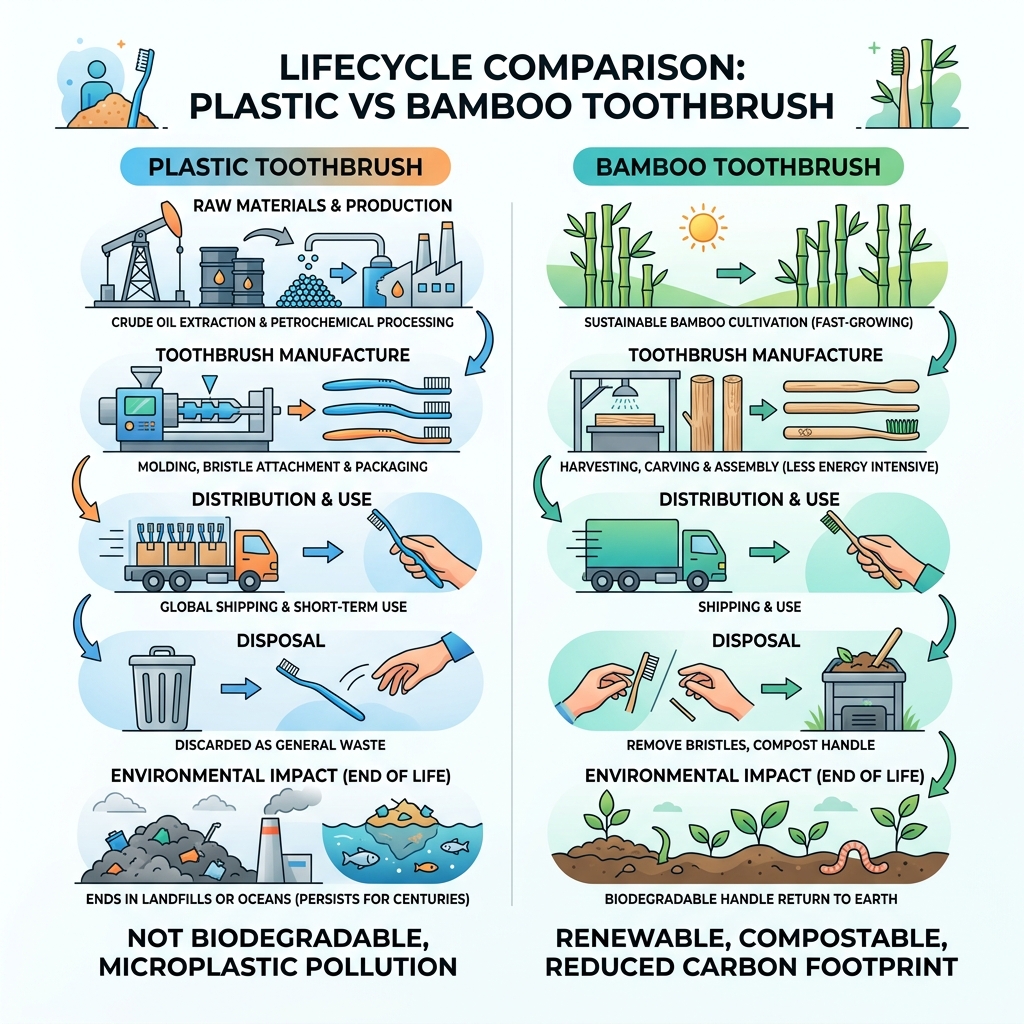
The Environmental and Health Impact of Traditional Dental Care
When we toss a plastic toothbrush into the bin, it doesn’t just disappear. It’s estimated that over 23 billion toothbrushes are discarded each year worldwide. Because they are typically made of polypropylene or nylon, they aren’t biodegradable. Instead, they break down into microplastics and nanoplastics—tiny particles that persist in our soil and waterways for centuries.

The impact on our health is equally concerning. Research on microplastics in the human body has shown that these particles have been detected in our blood, lungs, and even reproductive organs. Furthermore, many conventional dental products contain Bisphenol-A (BPA), a known endocrine disruptor that can leach into our systems. With toxic chemicals in plastics numbering in the thousands, the move toward plastic free dental care isn’t just about saving the planet; it’s about protecting our bodies from unnecessary chemical exposure.
The waste problem extends to the dentist’s chair as well. An average of 21 single-use plastic items are used during a single routine dental treatment, including gloves, suction tips, and patient bibs. While infection control is vital, the sheer volume of non-biodegradable waste is staggering. By choosing sustainable home routines, we send a message to the industry that we value both hygiene and the environment.
Essential Swaps for Plastic Free Dental Care
Transitioning to a sustainable routine is easier when you break it down into simple, effective swaps. We recommend starting with the “Big Three”: your brush, your paste, and your floss.
Toothbrushes: Beyond the Plastic Handle
The most iconic swap is the bamboo toothbrush. Bamboo is a fast-growing, renewable resource that is naturally antimicrobial.
- Bamboo Handles: These are fully compostable.
- Bristle Options: This is where it gets tricky. Most “eco-friendly” brushes still use nylon bristles. While not perfect, they represent a massive reduction in plastic compared to a full plastic handle. For a truly 100% plastic-free option, some brands offer boar hair or horse hair bristles. These are traditional, natural materials that are fully biodegradable, though they may feel different than the synthetic bristles you’re used to.
- Castor Bean Oil Bristles: These are often marketed as “bio-plastic.” While they are derived from plants, they are often still a form of nylon (Nylon 1010) and may not be backyard compostable.
For more on how to overhaul your home habits, check out our more info about sustainable personal care.
Toothpaste: Tablets and Glass Jars
Traditional toothpaste tubes are a recycling nightmare because they fuse plastic and aluminum layers. Toothpaste tablets are the modern, zero-waste solution. They are pre-portioned, dry “bits” that you chew into a paste before brushing.
They offer several benefits:
- Zero Plastic: Usually packaged in glass jars or compostable paper refills.
- Travel-Friendly: No liquids means no TSA headaches.
- Clean Ingredients: Many formulas avoid harsh foaming agents like SLS.
If you prefer a paste, look for brands that use metal tubes (which are infinitely recyclable) or glass jars. When choosing a formula, look for ingredients like hydroxyapatite, a mineral that helps strengthen enamel, or ensure the product contains fluoride if that is a priority for your cavity prevention.
Choosing Effective Plastic Free Dental Care Products
Not all “green” products are created equal. To avoid greenwashing, we need to be savvy consumers. Look for clear ingredient lists and third-party certifications like FSC-certified wood or Leaping Bunny cruelty-free labels.
We’ve put together a clean living guide to help you navigate these labels. A key tip: check the packaging! A bamboo toothbrush wrapped in three layers of plastic film isn’t truly helping the cause. Opt for brands that use cardboard or paper-based shipping materials.
Also, pay attention to bristle softness. Some natural fiber brushes can be quite stiff. Dentists generally recommend soft bristles to protect your gums and enamel from over-abrasion.
DIY Recipes for Plastic Free Dental Care
If you want total control over your ingredients and zero packaging waste, you can make your own dental products at home.
Simple DIY Toothpaste Recipe:
- 6 tablespoons of softened coconut oil (naturally antibacterial)
- 4 tablespoons of baking soda (a gentle abrasive)
- 20–40 drops of peppermint or oregano essential oil (for freshness)
- Optional: A pinch of stevia for sweetness
Mix until smooth and store in a small glass jar.
Traditional Alternatives: For those who want to go truly “old school,” consider Ayurvedic chewing sticks made from neem or babool trees. These have been used for thousands of years in India and contain natural oils that fight plaque. Another gentle method, especially for babies, is using a clean, thin cotton face towel to wipe away food debris from new teeth.
Advanced Zero Waste Oral Hygiene: Floss, Mouthwash, and Tools
Once you’ve mastered the basics, it’s time to look at the smaller items that often go overlooked.
Flossing Without the Plastic
Most drugstore floss is essentially a thin string of plastic (nylon or polyester) coated in synthetic wax. Worse, some contain PFAS (per- and polyfluoroalkyl substances) to help the floss glide. Research on PFAS-free dental floss suggests looking for natural silk floss or corn-fiber alternatives.
- Silk Floss: Biodegradable and often comes in refillable glass dispensers.
- Corn Starch Floss: A great vegan alternative that is often backyard compostable.
- Warning: Be wary of “bamboo fiber” floss that is actually a blend of bamboo and polyester—these are not fully plastic-free!
Mouthwash and Tools
Instead of buying heavy plastic jugs of liquid mouthwash (which is mostly water anyway), try mouthwash tablets. You simply drop one into a small amount of water, let it fizz, and gargle. For a simpler version, a saltwater rinse is a classic, dentist-approved way to soothe gums and balance oral pH.
Don’t forget your tongue! Metal tongue scrapers (made of stainless steel or copper) are far more effective than plastic versions and will last a lifetime. For those who prefer picks, look for stainless steel dental picks or compostable cornstarch versions.
For a deeper dive into reducing waste throughout your house, read our guide on minimizing plastic use at home.
How to Transition and Dispose of Your Dental Waste
You don’t need to throw away your current plastic products today—that would just create more waste! The best way to transition is to use up what you have and replace items one by one as they wear out.
The Art of Composting a Toothbrush
When your bamboo toothbrush has reached the end of its 3-month life, you can’t just toss it in the compost bin whole.
- Remove the Bristles: Use a pair of pliers to pull the bristles out. These usually go in the trash (unless you have a specialized recycling program).
- Compost the Handle: The bamboo handle can go in your backyard compost, or you can upcycle it as a garden marker for your herbs!
Recycling and Conservation
If you use toothpaste tablets, remember to recycle the glass jar or, better yet, reuse it for travel. If you use metal tubes, use a metal tube roller to squeeze out every last drop before recycling the aluminum.
We also believe that plastic free dental care includes resource conservation. Turning off the tap while you brush can save up to 8 gallons of water a day!
For more tips on choosing the right materials, see our list of eco-friendly alternatives to plastic.
Maintaining Oral Health with Plastic Free Dental Care
While we love sustainability, we never want to sacrifice health. It is essential to consult your dentist before making major changes, especially if you have a history of cavities or gum disease.
- Enamel Safety: Be careful with DIY powders or pastes containing high amounts of charcoal or baking soda. If used too aggressively, they can be overly abrasive and wear down your enamel.
- The Fluoride Debate: Many plastic-free options are fluoride-free. If you are prone to cavities, look for tablets that include fluoride or nano-hydroxyapatite, a biocompatible alternative that helps remineralize teeth.
- Professional Care: Ask your dentist about biocompatible composites (like ceramic or porcelain) for fillings and crowns, which avoid the plastic resins found in many modern dental restoratives.
Frequently Asked Questions about Plastic Free Dental Care
Do plastic-free dental products provide effective cavity prevention?
Yes! Effectiveness depends on the ingredients, not the packaging. Look for products containing fluoride, xylitol, or hydroxyapatite to ensure you are protecting your enamel and fighting decay-causing bacteria.
How do I properly compost a bamboo toothbrush?
As mentioned above, you must remove the nylon bristles with pliers first. The handle can then be composted. It takes about 6 months to a year to fully break down in a home compost pile.
Are toothpaste tablets more expensive than traditional toothpaste?
Initially, they may seem more expensive, but because they are pre-portioned, there is zero waste. You aren’t paying for water (which makes up a large part of tube paste), and subscription models often bring the price down to a level comparable with premium drugstore brands.
Conclusion
At Refugio do Jardim, we believe that big changes start with small, intentional habits. Transitioning to plastic free dental care is one of the most impactful shifts you can make in your daily routine. By swapping out just a few items, you can reduce your personal plastic footprint by up to 90%, protect your body from harmful chemicals, and keep our oceans cleaner.
Whether you start with a simple bamboo toothbrush or go all-in with DIY toothpaste and silk floss, sustainability is about progress, not perfection.
Ready to take the next step in your zero-waste journey? Visit Refugio do Jardim to explore more ways to live a beautiful, sustainable life.
