
Top Rated Plastic Free Products for a Sustainable Lifestyle
Why Your Water Bottle Might Still Contain Plastic (And What to Do About It)
If you want a quick answer, here are the best plastic free water bottle options available right now:
| Bottle Type | Material | Best For | Price Range |
|---|---|---|---|
| Minimalist Recycled Steel | Recycled stainless steel + bamboo cap | Daily use, minimalist design | ~$30-45 |
| All-Silicone Sport Bottle | Stainless steel + medical-grade silicone | Athletes, sport use | ~$35-50 |
| Borosilicate Glass Bottle | Borosilicate glass + stainless lid | Pure taste, home/office | ~$39 |
Most people assume switching to a stainless steel bottle means they’ve ditched plastic for good. Not quite.
Many popular bottles still have exposed plastic under the lid, meaning your water touches plastic every time you drink. A 2024 study found roughly 240,000 detectable plastic particles in a typical liter of bottled water. The risks don’t disappear just because you switched to a reusable bottle if plastic contact remains.
The good news? Truly plastic-free options exist — and they’re easier to find than you’d think. Whether you choose stainless steel with a bamboo cap or a borosilicate glass bottle with a stainless lid, small swaps like this are exactly the kind of low-effort, high-impact changes that fit a busy lifestyle.
This guide cuts through the noise so you can make one smart purchase and move on.
What Defines a Truly Plastic Free Water Bottle?
When we talk about a plastic free water bottle, we aren’t just talking about the body of the flask. Many manufacturers advertise “stainless steel bottles” that actually feature a plastic lid, a plastic straw, or a plastic “plug” on the underside of a metal cap. To be truly plastic-free, the liquid inside should never come into contact with synthetic polymers.
Material Integrity and Leaching Risks
The primary reason we advocate for zero plastic contact is to avoid chemical leaching. Even “BPA-free” plastics can contain alternative bisphenols like BPS, which may have similar hormone-disrupting effects. When water sits in a bottle- especially if it gets warm in a car or a bag – chemicals like phthalates and antimony can migrate into your drink. The World Health Organization also provides broader public health information on drinking-water safety and contamination risks.
By choosing materials like 18/8 food-grade stainless steel or borosilicate glass, you ensure that your hydration remains pure. If you are interested in further detoxing your home environment, we’ve put together a guide on minimizing plastic use at home that covers more than just your drinkware.
The Microplastic Problem
Beyond chemical leaching, there is the mechanical issue of microplastics. Every time you screw a plastic lid onto a plastic thread, friction creates microscopic shavings. These tiny particles end up in your water. A 100% plastic free water bottle uses stainless steel threads or glass-on-metal friction to eliminate this shedding entirely.

Top Rated Stainless Steel Options for Durability
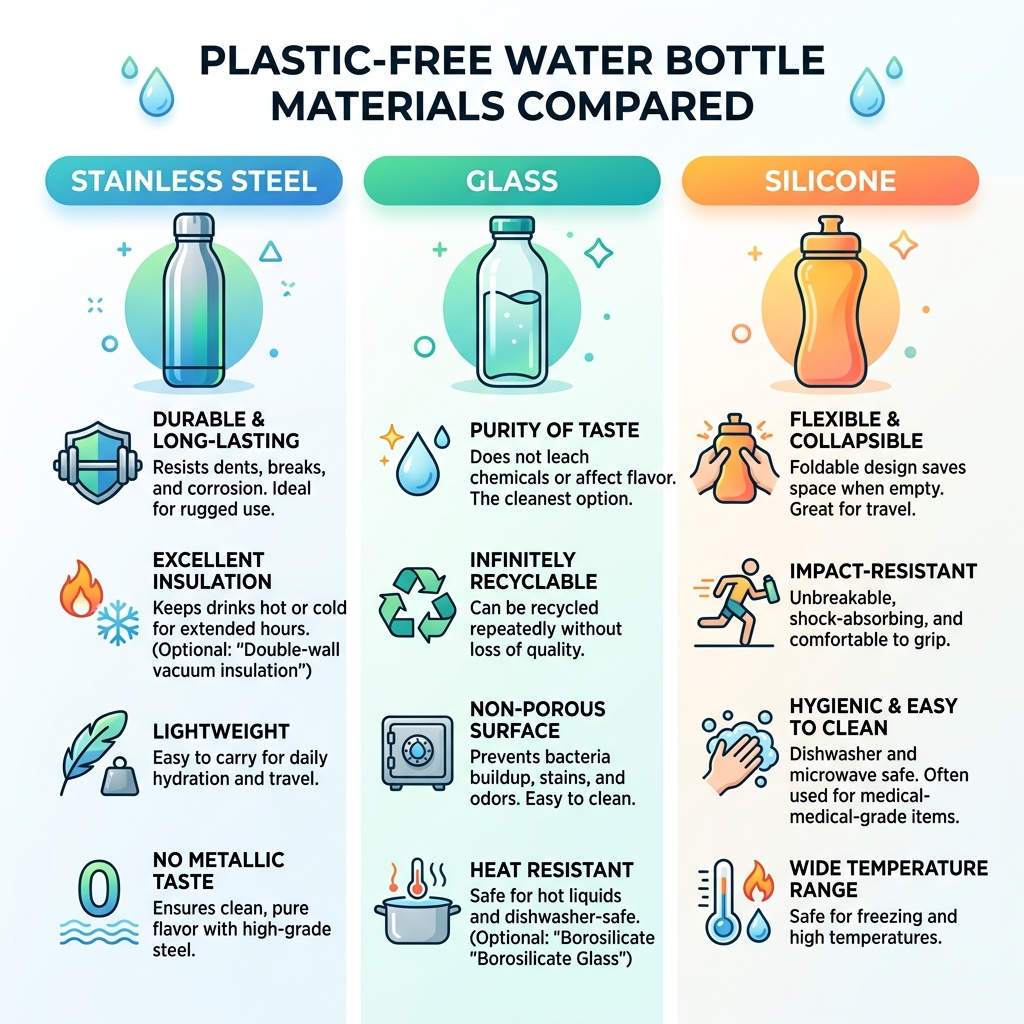
Stainless steel is the workhorse of the sustainable world. It’s nearly indestructible, lightweight, and—when designed correctly—completely non-toxic. For those looking for eco-friendly alternatives to plastic, high-quality steel is often the first recommendation.
The Gold Standard: Minimalist Recycled Steel
High-quality minimalist steel bottles are a masterclass in design. They are often crafted from just three materials: sustainably harvested bamboo, food-grade silicone, and 18/8 stainless steel.
- No Paint or Plastic: Polished stainless finishes ensure there are no coatings to chip off and no plastic parts to wear down.
- Recycled Materials: Newer models are increasingly made from 90% post-consumer recycled stainless steel.
- Bamboo Cap: These lids feature a stainless steel interior so your water only touches steel and a small silicone gasket for a leak-proof seal.
The Best Plastic Free Water Bottle for Athletes
If you’ve ever tried to drink from a screw-top bottle while running or cycling, you know the struggle. Most “sport” tops are made of hard plastic, but innovative manufacturers have changed the game.
Top-tier sport bottles are now “Made Safe” certified and 100% plastic-free, including the lid. Instead of a plastic spout, they use medical-grade silicone tops. This allows for a fast flow of water without the “plastic-y” taste or the risk of leaching. These systems are often modular, allowing you to swap the sport top for a silicone straw, making it a lifetime investment.
Choosing a Plastic Free Water Bottle for Daily Use
For the office or a day of errands, insulation is often a top priority. Premium insulated models feature advanced vacuum insulation, which can keep drinks iced for up to 60 hours.
If you prefer a thermos-style experience, high-performance plastic-free thermoses are available. They feature integrated stainless steel cups and “pour-through” lids that don’t require plastic valves to function. This level of intentional design is similar to what we recommend in our guide to plastic-free oral hygiene, where every material is chosen for health and longevity.
Glass and Silicone Alternatives for Pure Taste
While stainless steel is durable, some people find it leaves a faint metallic “tinge” to the water. If you are a water connoisseur, glass is your best friend.
Borosilicate Glass: Lab-Grade Purity
Standard glass can crack under thermal shock (like pouring hot tea into a cold bottle). However, borosilicate glass—the same stuff used in chemistry labs—is highly resistant to temperature changes.
High-quality glass bottles stand out in this category by featuring:
- A high-quality borosilicate glass body.
- A protective food-grade silicone sleeve to prevent breakage.
- A stainless steel lid with a silicone gasket that screws directly onto the glass.
Another excellent option is modular glass systems, which are engineered for hydration purity. They use lab-grade glass and feature designs that allow you to disassemble the bottom for deep cleaning—perfect for those who use electrolyte powders or supplements that often leave a residue in plastic bottles.
The Role of Silicone
You’ll notice that almost every plastic free water bottle still uses a silicone ring or sleeve. Is this a “cheat”? Not really. While silicone is a synthetic polymer, it is chemically inert and does not leach toxins like BPA or phthalates. Most experts consider food-grade or medical-grade silicone to be a safe, non-plastic alternative for seals and protective grips.
For more ideas on replacing synthetics in your home, check out our top 20 eco-friendly alternatives to plastic.
Maintenance and Safety: Lead, Microplastics, and Care
Buying a sustainable bottle is only half the battle; you also have to keep it clean and safe.
The Lead Concern
Recent viral news has raised concerns about lead in stainless steel bottles. Some brands use a small lead solder “dot” at the base to create the vacuum seal. While this lead is usually covered by a stainless steel disc, it can become a risk if the bottle is severely damaged.
To be safe, look for brands that are 100% lead-free. According to research, reputable eco-conscious manufacturers use lead-free glass sealing processes instead of solder.
Durability vs. Weight
Choosing between glass and steel often comes down to your lifestyle. Here is a quick breakdown:
| Feature | Stainless Steel | Borosilicate Glass |
|---|---|---|
| Durability | Extremely High (Dents, doesn’t break) | Moderate (Shatter-resistant but breakable) |
| Weight | Lightweight (Single wall) to Heavy (Insulated) | Heavy |
| Insulation | Excellent (Vacuum models) | Poor (Usually single wall) |
| Taste | Neutral (Electropolished) | Purest possible |
| Dishwasher Safe | Usually (Hand wash bamboo caps) | Usually (Top rack) |
Cleaning Tips
- Bamboo Caps: Never put a bamboo cap in the dishwasher. The heat and moisture will cause the wood to crack. Hand wash and occasionally rub with a bit of food-safe oil.
- Electropolished Interiors: Many high-end bottles use electropolishing to create a smooth interior surface. This makes it harder for bacteria to “grip” the walls, making the bottle easier to clean with just a bottle brush and warm soapy water.
- Gaskets: Remove the silicone gasket every few weeks to clean the groove underneath. This is where mold loves to hide!
Frequently Asked Questions about Plastic-Free Hydration
Is silicone considered safe or equivalent to plastic?
Silicone is generally considered much safer than plastic. It is more heat-resistant and does not contain the endocrine disruptors found in many plastics. While it is still a man-made material, food-grade silicone (and especially medical-grade silicone used by premium brands) is the industry standard for plastic-free seals because it remains flexible without the need for toxic plasticizers.
How do I verify if a bottle is 100% plastic-free?
Don’t just trust the front of the box. Look at the underside of the lid. If you see a plastic “plug” that fits into the mouth of the bottle, it isn’t plastic-free. A true plastic free water bottle will have a lid where the interior is entirely stainless steel or glass. Also, check the threads; if the threads on the bottle neck are plastic, it’s a no-go.
Are there plastic-free bottles with straws or sport tops?
Yes, but they are rare. Most straws are made of plastic (even in “eco” bottles). However, specialized brands offer 100% silicone straws and sport tops. Some glass bottles also come with glass straws protected by silicone bottoms. If you want a straw, ensure it is made of stainless steel or medical-grade silicone rather than “BPA-free” plastic.
Conclusion
Switching to a plastic free water bottle is one of the most effective ways to reduce your daily exposure to microplastics and chemical leachables. Whether you choose the rugged, recycled steel of a bamboo-capped bottle or the pure taste of a borosilicate glass bottle, you are making a choice that benefits both your health and the planet.
At Refugio do Jardim, we believe that sustainability shouldn’t be a chore—it should be a series of simple, high-quality upgrades to your everyday life. By investing in a bottle that lasts a lifetime, you’re not just buying a container; you’re voting for a cleaner, plastic-free future.
Visit Refugio do Jardim for more sustainable essentials and continue your journey toward a more conscious lifestyle.
