
Upgrade Your Space with These Essential Eco-Friendly Products for Home
The Average American Produces 5 lbs. of Waste Per Day — Here’s How to Change That
Eco-friendly products for home are the fastest, most practical way to cut your waste, lower your bills, and breathe cleaner air — without overhauling your entire life.
Here are the best categories to start with:
| Category | Example Products | Key Benefit |
|---|---|---|
| Kitchen | Swedish dishcloths, silicone bags, solid dish soap | Cuts plastic and paper waste |
| Bathroom | Shampoo bars, bamboo toothbrushes, safety razors | Reduces single-use plastic |
| Cleaning | Low-VOC cleaners, reusable wipes | Fewer harmful chemicals indoors |
| Energy | LED bulbs, smart thermostats, ENERGY STAR appliances | Lower utility bills |
| Water | WaterSense toilets, low-flow showerheads | Up to $3,400 in lifetime savings |
| Outdoor | Composters, rain barrels, native plants | Reduces landfill and water waste |
Think small changes don’t matter? One Swedish dishcloth can replace 17 rolls of paper towels. That’s one product making a real dent.
The good news for busy people: you don’t need a total lifestyle overhaul. Swapping a few everyday items — your dish sponge, your light bulbs, your cleaning spray — adds up fast.
This guide walks you through the most impactful eco-friendly home products across every room, what to look for, and how to avoid being misled by vague “green” marketing.
Defining Eco-Friendly Products for Home and Their Core Principles
When we talk about eco-friendly products for home, we aren’t just talking about things that look “natural” or come in brown paper packaging. True sustainability is built on core principles that address the entire lifecycle of a product—from how the raw materials are harvested to how the item is disposed of years later.
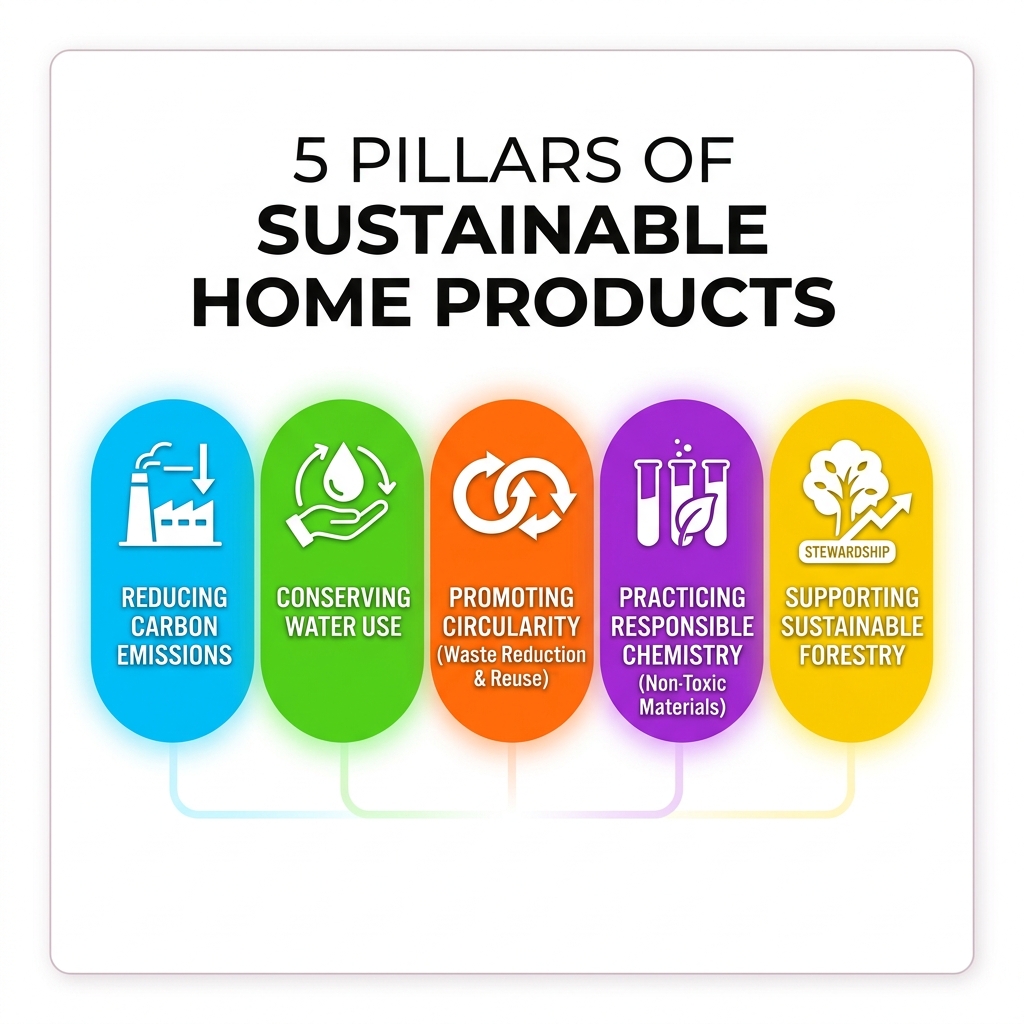
To help you navigate this, we look at five main “Eco Actions”: reducing carbon emissions, conserving water, promoting circularity (keeping materials out of landfills), practicing responsible chemistry, and supporting sustainable forestry. You can dive deeper into these basics in our guide on Eco-Friendly Products 101.
Identifying Sustainable Materials
A product is only as green as what it’s made of. We prioritize materials like regenerative bamboo, which grows incredibly fast and requires minimal water, or FSC-certified wood, which ensures forests are managed responsibly. We also look for “circular” materials—things like Luxe Bamboo Solid Rugs made from plant-based fibers that are actually biodegradable.
Avoiding the Greenwashing Trap
“Greenwashing” is a term for when companies use vague language like “eco-conscious” or “all-natural” without any proof. To avoid this, we rely on third-party certifications. These are the “gold standards” that prove a product does what it says it does.

| Certification | What it Means | Environmental Focus |
|---|---|---|
| ENERGY STAR | Meets strict energy-efficiency guidelines set by the EPA. | Carbon Emissions & Energy Savings |
| WaterSense | Uses at least 20% less water than standard models. | Water Conservation |
| FSC-Certified | Wood or paper from responsibly managed forests. | Sustainable Forestry |
| USDA Organic | Produced without synthetic fertilizers or pesticides. | Responsible Chemistry |
| B Corp | Verified high social and environmental performance. | Overall Ethical Impact |
| GOTS/GOLS | Global standards for organic textiles and latex. | Material Purity |
Top Eco-Friendly Products for Home to Reduce Waste
The average American produces about five pounds of trash every single day. That is a staggering amount of plastic, paper, and food scraps heading to landfills. Transitioning to a plastic-free lifestyle doesn’t have to happen overnight, but making a few key swaps can drastically reduce your footprint. For a head start, check out our Go Green: Top 20 Eco-Friendly Alternatives to Plastic for a Sustainable Household.
Essential Eco-Friendly Products for Home in the Kitchen
The kitchen is often the “waste capital” of the house. Between paper towels, plastic wrap, and dish soap bottles, the trash adds up.
- Swedish Dishcloths: As mentioned, one of these can replace 17 rolls of paper towels. They are made of cellulose and cotton, meaning they are compostable at the end of their life.
- Beeswax Wraps: Say goodbye to plastic cling wrap. These breathable, reusable wraps use the warmth of your hands to seal over bowls or fruit.
- Silicone Bags: Platinum-grade silicone bags are a one-time purchase that replaces thousands of single-use Ziplocs.
- Solid Dish Soap: Switching to a Zero Waste Dish Block eliminates plastic bottles entirely. Pair it with a wooden brush for a completely plastic-free sink setup.
- Composters: Instead of throwing food scraps in the bin where they produce methane in a landfill, use a countertop composter to turn scraps into nutrient-rich soil. Learn more in our Waste-Free Kitchen Guide.
Sustainable Bathroom and Personal Care Swaps
The bathroom is another area where “disposable” culture reigns supreme. However, there are many sustainable personal care products that work just as well as their plastic counterparts.
- Shampoo and Conditioner Bars: These concentrated bars eliminate the need for plastic bottles and are great for travel.
- Bamboo Toilet Paper: Bamboo grows much faster than trees and requires less energy to process into paper.
- Plastic-Free Safety Razors: Unlike disposable plastic razors, a stainless steel safety razor lasts a lifetime. You only replace the metal blade, which is recyclable.
- Bamboo Toothbrushes: Billions of plastic toothbrushes are thrown away every year. A bamboo handle is biodegradable, making it a much kinder choice for the planet.
Maximizing Efficiency with Energy and Water-Saving Solutions
One of the biggest myths about eco-friendly products for home is that they are just “expensive hobbies.” In reality, many of these products pay for themselves through utility savings.
Energy-Saving Powerhouses
- Smart Thermostats: Systems like the Nest Learning Thermostat adjust temperatures automatically based on whether you’re home. This can lead to significant savings on heating and cooling.
- ENERGY STAR Windows and Doors: Replacing old, drafty windows can save between $280 and $570 per year on utility bills.
- LED Bulbs: These use up to 90% less energy than incandescent bulbs and last 25 times longer. For more on this, see our Guide to Eco-Friendly Lighting Solutions.
- Solar Panels: While a larger investment, solar panels can power nearly 80% of an average home’s needs with clean, renewable energy.
Water Conservation Heroes
Water is a finite resource, and saving it also saves you money on your monthly bill.
- WaterSense Toilets: These use 20%–60% less water than older models. Over the lifetime of the toilet, this can save you up to $3,400.
- Irrigation Timers: Smart timers ensure you only water your garden when needed, reducing water waste by up to 15,000 gallons a year.
- Low-Flow Showerheads: These reduce water usage by 25% without sacrificing water pressure, helping you save on both water and the energy used to heat it.
Creating a Healthier Indoor Environment with Non-Toxic Choices
We spend the majority of our time indoors, yet indoor air can be significantly more polluted than outdoor air due to “off-gassing” from furniture, paints, and cleaners. Choosing environmentally safe and sound cleaning products is a great first step toward a healthier home.
Responsible Chemistry in Cleaning
Many conventional cleaners contain VOCs (Volatile Organic Compounds) that can irritate the lungs. Look for products like the Seventh Generation All Purpose Cleaner, which is USDA Certified Biobased and uses botanical scents rather than synthetic fragrances. Some leading eco-brands even ban over 3,000 harmful ingredients, including parabens, phthalates, and chlorine bleach.
Sustainable Furniture and Bedding
Your mattress and sofa can also be sources of chemicals.
- Non-Toxic Mattresses: Products like the Avocado Hybrid Organic Mattress or the Parachute Eco Mattress use organic wool, cotton, and latex instead of polyurethane foams and chemical flame retardants.
- Low-VOC Paints: When refreshing a room, choose Zero- or Low-VOC paints to avoid that “new paint smell,” which is actually the sound of chemicals entering your air.
- Sustainable Furniture: Look for pieces made from solid, FSC-certified wood or recycled materials. Avoid “pressed wood” or particle board, which often uses glues containing formaldehyde. Check out our Top Picks for Eco-Friendly Furniture for more inspiration.
Frequently Asked Questions about Eco-Friendly Products for Home
Are eco-friendly products for home more expensive?
Upfront, some eco-friendly products do carry a higher price tag. This is often because they use higher-quality, sustainably sourced materials and pay fair wages to workers. However, when you look at the “lifetime value,” they are often much cheaper.
For example, an ENERGY STAR water heater might cost more today but can save you up to $5,600 over its lifespan. Similarly, a reusable product for daily life like a silicone bag replaces hundreds of boxes of plastic bags. We’ve broken down more of these cost comparisons in our article on Eco-Friendly Products That Won’t Cost the Earth.
How do I identify genuine sustainable materials?
Look for materials that are renewable or recycled. Regenerative bamboo is excellent for everything from bedding to flooring because it grows back quickly after harvesting. Recycled polyester (made from plastic bottles) and organic cotton (grown without toxic pesticides) are also great choices. If you are looking for things that won’t sit in a landfill forever, check our Biodegradable Product Recommendations.
What are the most impactful eco-friendly products for home to start with?
If you’re feeling overwhelmed, start with these three “high-impact” swaps:
- LED Light Bulbs: The easiest way to lower your electricity bill immediately.
- Smart Thermostat: Automates your energy savings without you having to think about it.
- WaterSense Showerhead: Saves thousands of gallons of water and reduces your water heating bill.
For more beginner-friendly tips, read The Green Home: Best Sustainable Products for Eco-Friendly Living.
Conclusion
At Refugio do Jardim, we believe that creating a sustainable lifestyle shouldn’t feel like a chore. By choosing eco-friendly products for home, you aren’t just helping the planet—you’re creating a space that is healthier for your family and easier on your wallet.
Whether you start by swapping your paper towels for a Swedish dishcloth or by upgrading to an Indura Eco-C™ Mattress, every choice matters. For a deeper dive into transforming your space, explore our Creating an Eco-Friendly Home: A Comprehensive Guide or browse our curated Eco-Friendly Home Category to find your next favorite sustainable swap.
Remember: the goal isn’t to be perfectly “zero waste” overnight. The goal is to make better choices, one product at a time. Happy greening!
