
Zero Waste Cooking Tips for Chefs Who Give a Fork
Your Kitchen Is Wasting More Than You Think — Here’s How to Fix It
Zero waste cooking tips can make a real difference — both for your grocery bill and the planet. Here’s a quick overview to get you started:
Quick-start zero waste cooking tips:
- Freeze veggie scraps in a bag to make homemade broth later
- Store herbs upright in a jar of water like flowers to extend their life
- Use a “use-it-up” bin in your fridge for ingredients that need to go first
- Label leftovers and frozen items with dates using the FIFO method (first in, first out)
- Plan one “buy nothing new” dinner each week using what’s already in your kitchen
- Regrow green onions in a jar of water on your windowsill
- Save aquafaba (the liquid from canned chickpeas) as an egg substitute in baking
- Revive stale bread by running it under water and baking it for 15 minutes
- Compost what you can’t eat — eggshells, coffee grounds, and vegetable peels all qualify
- Use pasta water to add body and flavor to sauces without any extra ingredients
Here’s a number that should stop you mid-scroll: the average American wastes 238 pounds of food every year. For a family of four, that adds up to between $1,350 and $2,275 thrown in the trash annually — and that’s before factoring in the environmental cost.
43% of all food waste in the US happens at home. Not in restaurants. Not in factories. In our own kitchens.
The good news? You don’t need to overhaul your life to make a dent in this. Zero waste cooking is not about being perfect. As one often-cited idea in the sustainability world puts it: we don’t need a handful of people doing this flawlessly — we need millions of people doing it imperfectly.
Small shifts add up fast. And most of them will actually make your meals taste better.

Why Zero Waste Cooking Matters for Your Wallet and the Planet
When we talk about zero waste cooking tips, we aren’t just talking about being “eco-friendly” for the sake of a trend. We are talking about a fundamental shift in how we value resources. Currently, nearly 40% of all food in America is wasted. When that food hits a landfill, it doesn’t just disappear; it rots and produces methane, a greenhouse gas far more potent than carbon dioxide. In fact, wasted food accounts for nearly 8% of global greenhouse gas emissions.
But let’s look at the immediate perks for you. Adopting tips for sustainable eating is like giving yourself a massive annual raise. By reducing spoilage and using every part of the ingredients you buy, the average household can save up to $2,275 a year.
Beyond the cash, there’s a health angle. Scientific research on the benefits of zero-waste cooking suggests that focusing on whole foods and “root-to-stem” methods actually increases your nutrient density. When you eat the fiber-rich skins of potatoes or the antioxidant-packed stalks of broccoli, you’re getting more vitamins for the same price. Plus, by reducing your reliance on heavily packaged processed foods, you naturally lower your exposure to the chemicals often found in plastic linings.
Essential Kitchen Setup and Organization
A chaotic kitchen is the natural enemy of sustainability. If you can’t see what you have, you won’t use it. Success starts with a waste-free kitchen guide mentality: organize so that nothing gets “lost” at the back of the shelf.
The gold standard here is the FIFO method (First In, First Out). When you come home from the grocery store, move the older items to the front and put the new stuff in the back. To make this easier, we highly recommend using transparent containers. Seeing a half-empty jar of quinoa reminds you to make it for dinner, whereas an opaque box might sit there until 2026.
We also suggest creating a dedicated “Use-It-Up” bin. This is a specific box in your fridge where you put the “sad” vegetables, the half-used onion, or the yogurt that expires in two days. Make it a rule: check this bin before opening anything new.
Storage Comparison: Glass vs. Plastic
| Feature | Glass Containers | Plastic Containers |
|---|---|---|
| Porosity | Non-porous; won’t absorb smells or stains | Porous; often retains odors and oils |
| Visibility | Crystal clear; easy to track inventory | Can become cloudy over time |
| Safety | BPA-free; safe for microwave and dishwasher | May leach chemicals when heated |
| Longevity | Lasts a lifetime if handled carefully | Degrades, cracks, and needs replacing |
| Shelf-Life | Better seal for keeping dry goods crisp | Seal often weakens with age |
Master the Art of Root-to-Stem: Zero Waste Cooking Tips for Produce
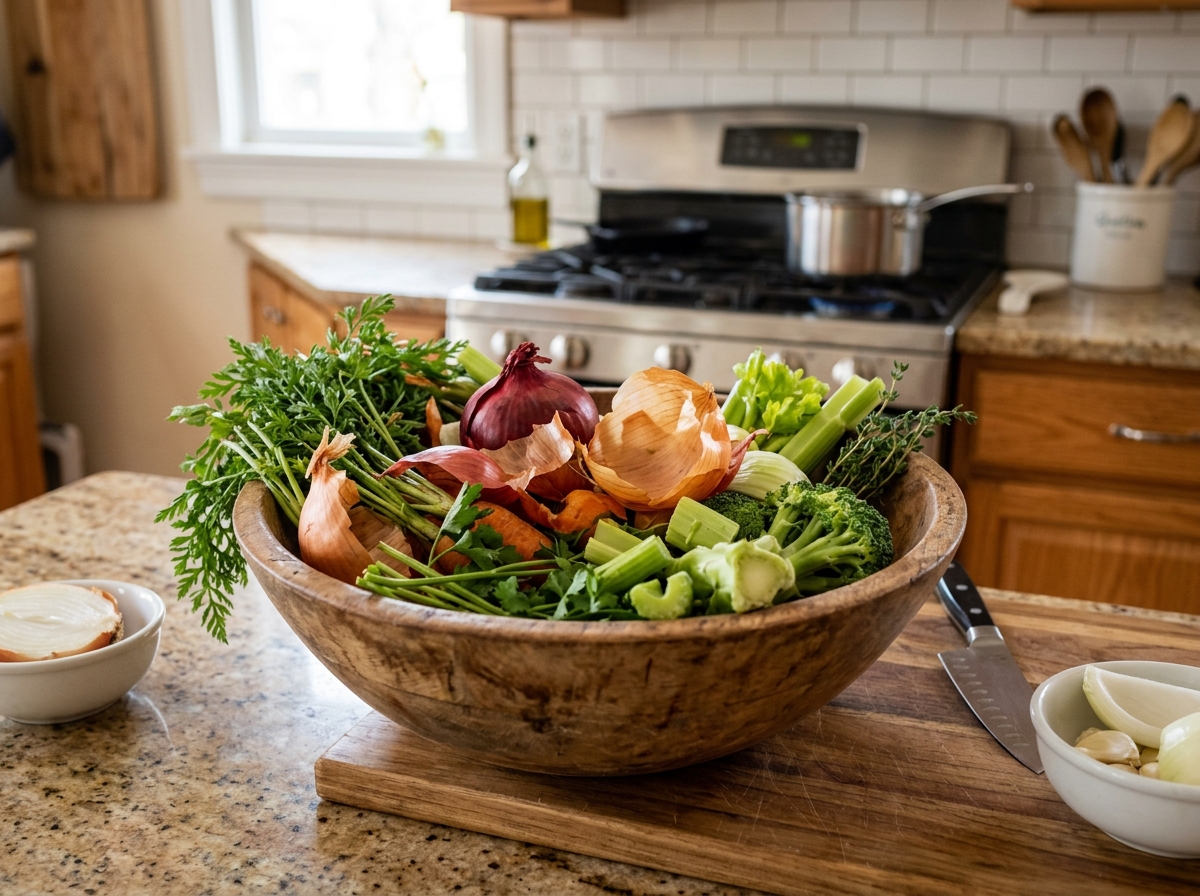
In professional kitchens, “root-to-stem” cooking is a badge of honor. It means treating the trash can as if it doesn’t exist. Most of the parts we throw away are not only edible but delicious.
- Broccoli Stems: Don’t toss them! Peel the woody outer layer, and the inside is sweet and crunchy. You can slice them into “coins” for stir-fries or even grate them for a zero-waste slaw.
- Carrot Tops: These bitter greens are essentially an herb. Use them to make a vibrant pesto or finely chop them into a chimichurri.
- Potato Skins: If you prefer mashed potatoes without skins, toss the peels with olive oil and salt and bake them until crispy for a high-fiber snack.
- Citrus Zest: Before you juice a lemon or lime, zest it. You can freeze the zest or dry it to make your own citrus salt.
- Herb Stalks: Parsley and cilantro stems have more flavor than the leaves. Chop them finely and sauté them with your garlic and onions at the start of a recipe.
For more inspiration, check out these 17 Zero Waste Cooking Ideas to expand your repertoire.
Zero waste cooking tips for beginners
If you’re just starting out, don’t feel pressured to ferment everything in sight. Start with these simple, daily habits found in our waste-free kitchen guide-2:
- The Scrap Bag: Keep a gallon-sized silicone bag in your freezer. Every time you have an onion end, a mushroom stem, or a withered carrot, toss it in. When the bag is full, boil it with water for an hour to create a rich, free vegetable stock.
- Regrow Your Veggies: Put the white root ends of green onions in a small jar of water on your windowsill. They will regrow indefinitely, giving you a “buy once, eat forever” supply.
- The Herb Revival: If your cilantro or mint looks limp, treat it like flowers. Trim the bottoms and place them in a glass of water in the fridge. They’ll perk up within hours.
Freezer Hacks and Preservation Strategies
The freezer is your “pause button” for food. It is perhaps the most powerful tool in your arsenal for zero waste cooking tips.
- Herb Oil Cubes: If you have a bunch of herbs about to turn slimy, blend them with a little olive oil and freeze them in ice cube trays. Pop one into a pan whenever you start a soup or stew.
- Wine Cubes: Never pour leftover wine down the drain. Freeze it in trays to deglaze pans later.
- Blanching: If you have too many greens, quickly boil them for 30 seconds, plunge them in ice water, and freeze. This stops the enzymes that cause spoilage, keeping them fresh for months.
- Overripe Bananas: Peel them before they go black and freeze them. They are the secret to “nice cream” or the perfect base for smoothies.
If you find yourself with a surplus of seasonal produce, consider pickling or fermentation. These ancient reducing-food-waste-tips not only extend shelf life but also add probiotics to your diet. For more advanced preservation methods, see our tips-for-sustainable-eating-2.
Creative Ways to Upcycle Leftovers and Pantry Scraps
Leftovers shouldn’t be a “duty” to eat; they should be a head start on a better meal. “Fridge-raid” cooking is where culinary creativity truly shines.
- Stale Bread: This is a goldmine. You can make homemade croutons, Panzanella salad, or a classic bread pudding. If it’s just slightly hard, run it under a tap and bake it at 350°F for 10-15 minutes—it will emerge as fresh and crusty as the day you bought it.
- Aquafaba: That “gross bean water” from your chickpea can? It’s liquid gold. It can be whipped into meringues, used as a binder in vegan mayo, or added to baked goods as an egg replacer.
- Pasta Water: Always save a cup of the starchy, salty water your pasta cooked in. It’s the secret to making sauces cling to noodles and adding a silky texture without extra fat.
- Jam Jar Dressings: When a jam or peanut butter jar is almost empty, don’t struggle to scrape it. Add oil, vinegar, and spices directly to the jar, shake it up, and you have a gourmet dressing that uses every last bit of flavor.
Explore these Zero Waste Recipes For Every Day to see how pros turn scraps into five-star meals.
Zero waste cooking tips for leftovers
Transforming yesterday’s dinner into today’s lunch is an art form.
- Rice Transformation: Leftover rice is actually better for fried rice because it has dried out slightly.
- Blended Soups: Any roasted vegetable that’s looking a bit tired can be blended with some stock and a splash of coconut milk for a creamy, comforting soup.
- Tortilla Chips: Stale corn tortillas can be sliced into triangles and air-fried or baked into crunchy chips.
Building these earth-friendly-habits-for-your-kitchen ensures that “leftover night” becomes the most anticipated night of the week.
Beyond the Plate: Handling Non-Edible Scraps
Sometimes, despite our best efforts, there are parts we simply can’t eat. But that doesn’t mean they belong in the trash.
- Composting: This is the “Rot” in the five rules of zero waste. Whether you have a backyard pile or a small indoor worm bin, composting turns food waste into “black gold” for your plants.
- Coffee Grounds: These are fantastic for your garden. They add nitrogen to the soil and can even act as a natural pest repellent.
- Eggshell Fertilizer: Dry out your eggshells, crush them into a powder, and sprinkle them around your tomato plants to provide a calcium boost.
- Citrus Cleaners: Fill a jar with citrus peels and cover them with white vinegar. Let it sit for two weeks, strain it, and you have a powerful, non-toxic, grease-cutting all-purpose cleaner.
- Banana Peel Remedies: While it sounds like an old wives’ tale, rubbing the inside of a banana peel on a bug bite can actually help soothe the itch!
For more ways to green your home, check out our guide on earth-friendly-habits-for-your-kitchen.
Frequently Asked Questions about Zero Waste Cooking
What are the 5 rules of zero-waste?
The framework for a zero-waste lifestyle follows five steps in order of importance:
- Refuse: Don’t buy what you don’t need (like that third bag of spinach).
- Reduce: Buy only what you will actually use.
- Reuse: Find a second life for everything (like jam jar glasses).
- Recycle: If you can’t reuse it, make sure it’s processed correctly.
- Rot: Compost the organic remains.
Does zero-waste cooking actually save money?
Absolutely. By buying in bulk (which reduces packaging costs), reducing spoilage through better storage, and stretching ingredients (like making two meals out of one chicken), most people see a significant drop in their monthly grocery spending. It’s about getting 100% of the value out of the 100% you paid for.
How do I handle meat and dairy waste?
While you shouldn’t compost meat or dairy in a standard home bin, you can still reduce their waste.
- Bone Broth: Save all bones in the freezer to make a mineral-rich broth.
- Parmesan Rinds: Throw the hard ends of cheese into your soups or pasta sauces while they simmer to add a deep, umami flavor.
- Fat Rendering: Save bacon grease or chicken fat (schmaltz) in a jar in the fridge to use as a flavorful cooking oil for roasting vegetables.
Conclusion
At Refugio do Jardim, we believe that the kitchen is the heart of a sustainable home. Adopting zero waste cooking tips isn’t just a chore; it’s a mindset shift that fosters resilience, saves money, and sparks incredible culinary creativity.
When you stop seeing scraps as “trash” and start seeing them as “ingredients,” a whole new world of flavor opens up. You don’t have to be perfect—you just have to give a fork about the future. Start with one tip today, whether it’s regrowing your onions or starting a scrap bag, and watch how quickly those small changes add up.
For more inspiration and deep dives into sustainable living, explore more info about waste reduction tips on our blog. Happy (zero-waste) cooking!
